算力概念炒作

Search documents
果然财评|海南华铁不够铁:36.9亿元算力“意向书”骗了谁
Qi Lu Wan Bao· 2025-10-09 09:53
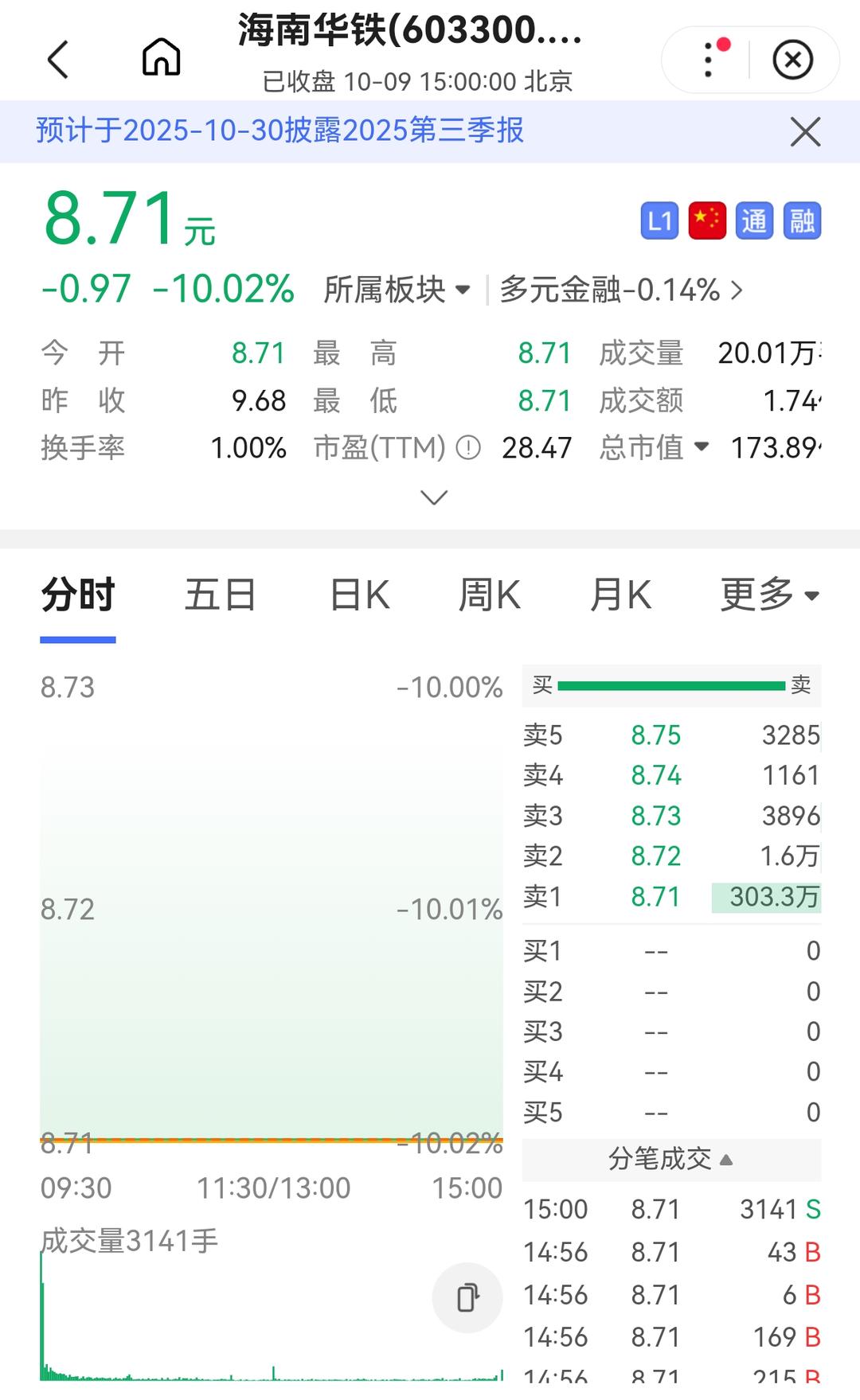
Core Viewpoint - The termination of a significant computing power contract has led to a drastic drop in the stock price of Hainan Huatie, highlighting the risks associated with speculative contracts in the computing power industry [3][6][9] Group 1: Contract Termination and Market Reaction - Hainan Huatie's stock opened at a limit down of 8.71 yuan per share, with a sell order amount exceeding 14 billion yuan following the announcement of the contract termination [3] - The computing power service agreement signed with Hangzhou X Company in March 2025 was valued at 3.69 billion yuan, accounting for 70% of the company's projected revenue for 2024 [5][9] - The stock price surged from an average of 4.76 yuan to a peak of 13.26 yuan after the contract announcement, increasing the number of shareholders from 46,000 to 220,000 [5][6] Group 2: Company’s Financial Position and Contract Details - The company claimed that the contract termination did not materially affect its financial status, despite the contract's projected capital expenditure exceeding 2 billion yuan, which would have significantly impacted its financials [7][9] - The contract was characterized as a framework agreement rather than a binding contract, lacking essential terms such as prepayment mechanisms and specific delivery schedules [8][9] - The identity of the "mysterious party" Hangzhou X Company remains undisclosed, raising questions about the legitimacy of the contract [7][8] Group 3: Regulatory Response and Future Prospects - The Shanghai Stock Exchange issued a regulatory letter on the same day as the contract termination announcement, indicating a swift response to the situation [8] - Despite the termination of the 3.69 billion yuan contract, Hainan Huatie continues to pursue other computing power collaborations, including a 1 billion yuan agreement with Anhui Haima Cloud Technology, which also lacks clear terms and has not resulted in actual orders [9]



海南华铁不够铁:36.9亿元算力“意向书”骗了谁
Qi Lu Wan Bao Wang· 2025-10-09 09:30
Core Viewpoint - Hainan Huatie's stock price plummeted to a limit down of 8.71 yuan per share following the termination of a significant computing power contract, which was expected to contribute 70% of its 2024 revenue [1][3][4] Group 1: Contract Termination - The termination of a 5-year computing power service agreement with Hangzhou X Company, valued at 3.69 billion yuan, was cited as the direct cause of the stock's decline [3][4] - The company claimed the contract was terminated due to "market environment changes" and stated that no actual orders were received during the contract period [3][5] - The announcement of the contract termination was made just before the National Day holiday, leaving investors unable to react in the market, which heightened anxiety [4][6] Group 2: Shareholder Actions - The second-largest shareholder, Hu Danfeng, initially planned to reduce his stake by 2.22% but reversed this decision on the night of the contract termination, opting to increase his holdings instead [4][5] - This move was perceived as an attempt to stabilize the stock price amid the negative news, raising suspicions about the timing and motivations behind the shareholding changes [4][6] Group 3: Financial Implications - The company stated that the contract's termination did not have a substantial impact on its financial status, despite the contract's projected capital expenditure exceeding 2 billion yuan, which would have significantly affected its financial health [5][6] - The lack of actual orders and the company's previous financial struggles, including a high debt-to-asset ratio of 71.42%, raised concerns about the viability of its computing power business [5][7] Group 4: Industry Context - The computing power contract was criticized for lacking essential terms such as prepayment mechanisms and specific delivery schedules, indicating it was more of a framework agreement than a binding contract [6][7] - The company's transition from its core business of equipment rental to the computing power sector has been marked by speculative practices, leading to a disconnect between market expectations and actual performance [6][7]