
管理层收购(MBO)

Search documents
思创医惠MBO式控股背后:国资"隐身"魏乃绪冲台前 财务造假事项是否出清
Xin Lang Cai Jing· 2025-12-19 10:24
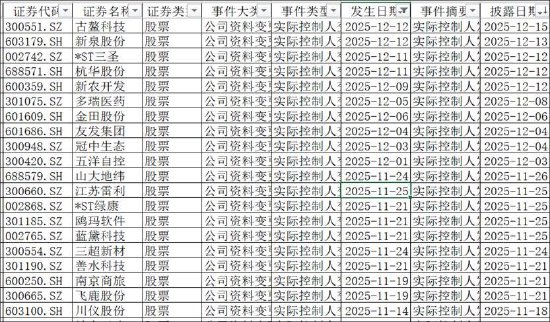
Core Viewpoint - The transaction of control rights in Sichuang Medical Technology involves the general manager Wei Naixu achieving MBO through a "share transfer + voting rights" model. The company previously attempted to sell to state-owned assets but was terminated due to non-compliance with relevant state-owned asset regulations. Notably, state-owned assets are indirectly involved in the MBO process [1][6][8]. Group 1: Control Rights Transactions - As of December 15, over 170 listed companies have undergone changes in actual controllers, with methods including agreement transfers, voting rights entrustment, and judicial auctions [1]. - The "small shareholding + voting rights entrustment" model is frequently used in control rights transactions, as seen in companies like Guao Technology and ST Zhiyun [2][14]. Group 2: Advantages of the New Transaction Model - The "small shareholding + voting rights entrustment" model allows acquirers to achieve control at a minimal cost, providing significant leverage and reducing premium payments [4][16]. - This model can facilitate control transfer for sellers facing restrictions on share freezing or reduction, enhancing transaction efficiency by avoiding mandatory tender offer obligations [4][16]. Group 3: Case Study of Sichuang Medical Technology - In the control rights transaction, Wei Naixu acquired 5.61% of shares through a transfer agreement priced at 2.872 yuan per share, totaling 180 million yuan [6][17]. - After the transaction, Wei Naixu indirectly held 7.47% of shares and controlled 13.18% of voting rights, making him the actual controller of Sichuang Medical Technology [7][18]. Group 4: Historical Issues and Risks - Sichuang Medical Technology has faced regulatory penalties for financial fraud, including inflated revenues and profits in previous years, leading to significant fines and market bans for executives [11][22]. - The company is currently under investigation for fraudulent issuance, with ongoing legal scrutiny affecting its stock performance [12][23].


470亿美元收购告吹,7-Eleven便利店不卖了
2 1 Shi Ji Jing Ji Bao Dao· 2025-07-21 11:40
Core Insights - Alimentation Couche-Tard (ACT) has withdrawn its nearly $47 billion acquisition proposal for Seven & i Holdings (7&i), marking the end of a potential major merger in the convenience store sector [1][4] - The withdrawal highlights the strategic challenges faced by traditional retail giants amid a shift from growth to competition in the convenience store market [2][10] Company Overview - ACT operates over 16,700 stores across 31 countries, primarily under the Couche-Tard and Circle K brands, while 7&i, the parent company of 7-Eleven, has over 80,000 stores globally [3] - ACT's Circle K holds a 3.8% market share in the U.S., while 7&i leads with an 8.5% share [3] Financial Performance - 7&i's financial struggles are evident, with a 0.7% year-on-year decline in revenue for Q1 2025, marking five consecutive quarters of negative growth [7] - In China, 7-Eleven's sales growth has slowed significantly, dropping from 30.0% in 2023 to 19.7% in 2024 [7] Strategic Challenges - The failed acquisition reflects broader issues in the Japanese market, including regulatory complexities and the need for improved corporate governance to attract foreign investment [5][6] - 7&i's leadership changes and restructuring efforts, including the sale of non-core assets and plans for an IPO of its North American business, indicate attempts to enhance operational efficiency and shareholder value [9][10] Market Dynamics - The convenience store industry is experiencing saturation, cost pressures, and intensified competition, necessitating a reevaluation of business strategies [8][10] - The Japanese merger and acquisition landscape is evolving, with significant growth in transaction volumes, indicating a potential shift in market dynamics [5]