粮食单产

Search documents
新疆粮食单产蝉联全国第一
Xin Hua She· 2025-12-15 08:39
Core Viewpoint - The National Bureau of Statistics has released data indicating that Xinjiang's grain yield per mu has reached 552.8 kilograms in 2025, marking an increase of 28 kilograms from 2024, and maintaining its position as the highest grain yield per mu in the country for two consecutive years [1] Group 1 - Xinjiang's grain yield per mu is reported at 552.8 kilograms for 2025 [1] - The increase of 28 kilograms per mu from 2024 represents a continuous rise of over 20 kilograms for two consecutive years [1] - Xinjiang has retained the title of the highest grain yield per mu in the nation [1]
黄淮降水为何机构认为玉米丰收?踏入农产品领域该如何解读数据
Xin Lang Cai Jing· 2025-11-17 14:44
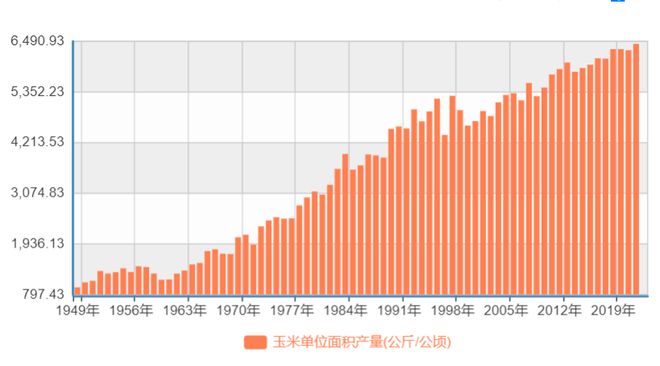
Group 1: Corn Yield Analysis - The analysis of corn yield focuses on two dimensions: per unit yield and planting area [1] - Since the founding of New China, corn yield per hectare has shown a consistent upward trend, with significant increases occurring approximately every 15 years [3][4] - As of 2022, the corn yield reached 6436 kg/hectare, indicating a stable growth pattern over time [4] Group 2: Corn Planting Area - The increase in corn planting area is primarily driven by two factors: the emergence of new arable land and the decrease in planting area of competing crops [7] - Corn has surpassed rice to become the largest grain crop in terms of planting area in China, reflecting a shift in agricultural priorities [7] - Over the past decade, the total grain planting area has remained relatively stable, suggesting that changes in planting area among different crops are largely competitive [9] Group 3: Quality of Corn in Huang-Huai Region - Continuous rainfall in the Huang-Huai region has impacted corn quality, with varying assessments from different institutions regarding the extent of this impact [14] - Concerns have been raised about high moisture levels and the presence of mycotoxins, which could affect animal health and feed quality [16] - The situation is reminiscent of past regulatory changes, indicating a trend towards more stringent quality control in grain purchases [16]