种植面积

Search documents
全球棉花供需与价格推演
2026-01-26 02:49
Summary of Cotton Market Conference Call Industry Overview - The global cotton supply and demand for the 2025-2026 season is expected to be balanced, with supply around 26 million tons and demand approximately 25.89 million tons, resulting in a stock-to-use ratio of 62.6%, consistent with the averages of the past three to five years [1][2] - China's cotton market in 2026 is projected to be in a tight balance, with production estimated at 7.5 million tons, imports at 1 million tons, and total demand around 8.6 million tons, indicating a slightly tight market [1][2] - The U.S. cotton market is expected to have a relatively loose supply-demand balance due to a lack of demand from China, with exports to China accounting for only 5% of total exports in 2026 [2] Key Points on Cotton Prices - Future cotton prices will be influenced by several factors, including planting area reductions in the U.S., Brazil, China, and Australia, particularly in the U.S. due to low cotton prices and high planting costs [1][3] - The recent increase in cotton prices since November 2023 is driven by low valuations, rapid sales progress, expectations of reduced production in Xinjiang, and strong consumer performance [4][5] - The monthly consumption in China from September to December 2023 has been stable at around 750,000 tons, which, if maintained, would result in an annual consumption of 9 million tons, the best performance since the pandemic recovery [1][5] Factors Affecting Future Price Trends - Key factors to monitor for future cotton price trends include: 1. Changes in planting area policies in Xinjiang, with expectations of a 10% reduction [8] 2. Sustained monthly consumption levels around 750,000 tons [8] 3. National policies regarding stockpiling and quotas [8] 4. The price gap between domestic and international markets affecting import flows [8] U.S. Cotton Market Insights - U.S. cotton prices are currently at a near 10-year low, with the main contract at 64 cents, reflecting a long-term balance in supply and demand [9] - Recent weeks have seen a significant improvement in U.S. cotton export volumes, with exports reaching 84,000 tons in the week ending January 8, 2024, and 90,000 tons in the week ending January 15, 2024, marking the highest levels for this period in a decade [13] Brazilian Cotton Production - Brazil is expected to reduce cotton production in 2026 due to unfavorable price ratios with other crops, leading some farmers to switch to corn or leave land fallow [12] - The increase in planting costs, primarily driven by fertilizer prices, is not expected to significantly impact planting area due to prior purchases [16] Price Projections - If major cotton-producing countries like the U.S., Brazil, Australia, and China reduce their production, and global consumption remains stable or slightly increases, the market could shift from a surplus of 110,000 tons in 2026 to a deficit of 400,000 tons in the following year, potentially driving prices up from 67 cents to 77 cents [18] - Increased purchases of U.S. cotton by China could further elevate prices, potentially reaching 85 cents or higher if trade relations improve [19]
黄淮降水为何机构认为玉米丰收?踏入农产品领域该如何解读数据
Xin Lang Cai Jing· 2025-11-17 14:44
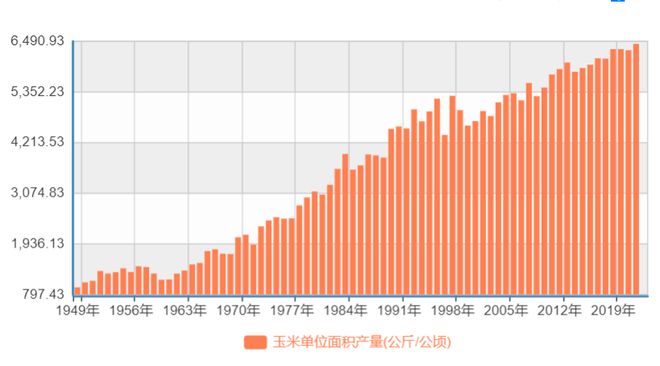
Group 1: Corn Yield Analysis - The analysis of corn yield focuses on two dimensions: per unit yield and planting area [1] - Since the founding of New China, corn yield per hectare has shown a consistent upward trend, with significant increases occurring approximately every 15 years [3][4] - As of 2022, the corn yield reached 6436 kg/hectare, indicating a stable growth pattern over time [4] Group 2: Corn Planting Area - The increase in corn planting area is primarily driven by two factors: the emergence of new arable land and the decrease in planting area of competing crops [7] - Corn has surpassed rice to become the largest grain crop in terms of planting area in China, reflecting a shift in agricultural priorities [7] - Over the past decade, the total grain planting area has remained relatively stable, suggesting that changes in planting area among different crops are largely competitive [9] Group 3: Quality of Corn in Huang-Huai Region - Continuous rainfall in the Huang-Huai region has impacted corn quality, with varying assessments from different institutions regarding the extent of this impact [14] - Concerns have been raised about high moisture levels and the presence of mycotoxins, which could affect animal health and feed quality [16] - The situation is reminiscent of past regulatory changes, indicating a trend towards more stringent quality control in grain purchases [16]