精神疾病治疗

Search documents
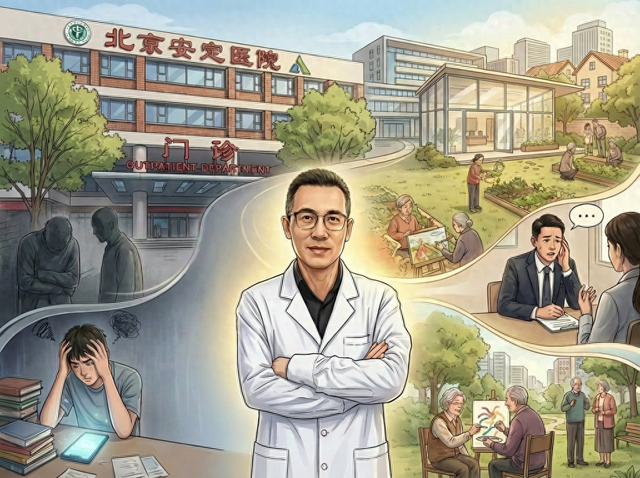
何以安定?精神科医生姜涛谈他诊室里的中国病人
Xin Lang Cai Jing· 2026-02-07 04:20
Core Insights - The article discusses the evolution of mental health treatment in China, highlighting significant milestones such as the introduction of second-generation antipsychotic drugs in 1997 and the shift from hospital-based care to community rehabilitation [3][12] - It emphasizes the rising prevalence of mental health issues among adolescents, particularly after the COVID-19 pandemic, and the need for better understanding and treatment of these conditions [5][6][7] Group 1: Historical Development of Mental Health Treatment - The introduction of second-generation antipsychotic drugs in 1997 marked a pivotal change in the treatment of mental illnesses, transitioning from symptom control to functional recovery [3] - A significant epidemiological survey in 2005 revealed that over 6% of individuals aged 15 and above in Beijing suffered from depression, leading to increased societal awareness of mental health issues [3] - The mental health treatment system in China has gradually aligned with international standards, with some areas surpassing global averages [3] Group 2: Current Challenges and Trends - There is a notable increase in mental health issues among children and adolescents, with higher rates of depression and anxiety compared to the general population, particularly exacerbated by the pandemic [5][6] - Factors contributing to the rise in adolescent mental health issues include lack of resilience education, excessive reliance on technology, and academic pressure [6][7] - The stigma surrounding mental health has decreased, leading to more individuals seeking help, although many still experience mild emotional issues that do not meet clinical diagnosis [9][10] Group 3: Treatment and Rehabilitation - The current healthcare system has improved access to mental health treatment, with many medications now covered by insurance, and free treatment available for impoverished patients [12][13] - Community rehabilitation is essential for long-term recovery, yet many patients face challenges post-discharge due to a lack of support systems [14][16] - The concept of "living with illness" has emerged, allowing patients to manage symptoms while maintaining quality of life and social integration [34][35] Group 4: Future Directions and Innovations - The integration of AI in mental health care is being explored, although it cannot replace the empathetic connection required in treatment [17][18] - There is a pressing need for community-based rehabilitation facilities to support patients after hospital discharge, which is currently lacking in many areas [14][16] - The healthcare system must balance the high demand for mental health services with the limited number of professionals available, emphasizing the importance of early detection and community support [16][32]

丽珠集团首季净利润6.37亿元增4.75% 精神及消化道类产品贡献增量
Zheng Quan Shi Bao Wang· 2025-04-23 13:32
Core Insights - Lijun Group reported a revenue of 3.181 billion yuan for Q1 2025, a year-on-year decrease of 1.92%, while net profit reached 637 million yuan, reflecting a year-on-year increase of 4.75% [1] - The growth in net profit marks a continued trend of stable growth for the company over several years [1] Product Performance - Key contributors to the company's performance include products for mental and gastrointestinal diseases [1] - In the mental health sector, Lijun Group has developed a product matrix covering common conditions such as schizophrenia and depression, with core products including Ruili (fluvoxamine) and Kanger (paliperidone), both recognized as first-line treatments in authoritative guidelines [1] - Additional products like Litingxin (bupropion), Shulida (lurasidone), and Ruisi Tuo (quetiapine) form a multi-target, multi-mechanism treatment network, providing personalized treatment options for patients with schizophrenia and bipolar disorder [1] Research and Development Pipeline - Lijun Group's R&D pipeline is characterized by a complete and well-structured approach in the mental health field [2] - The company is addressing difficult-to-treat conditions with innovative targets, such as NS-041, which shows promise for drug-resistant epilepsy and severe depression [2] - Long-acting formulations, including injectable aripiprazole microspheres and paliperidone palmitate, are being developed to improve patient compliance [2] - NS-041, a new generation KCNQ2/3 activator, is expected to enter Phase II clinical trials, with potential applications extending to severe depression, bipolar disorder, neuropathic pain, and amyotrophic lateral sclerosis [2] - The company anticipates approval for its significant schizophrenia treatment, aripiprazole microspheres, in the near future [2]