个体化治疗

Search documents
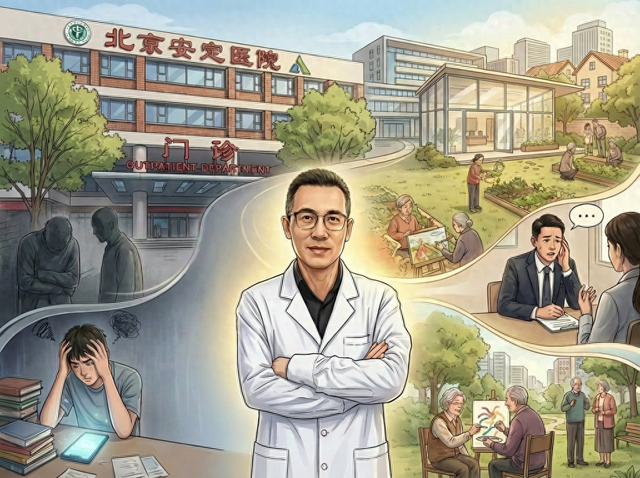
何以安定?精神科医生姜涛谈他诊室里的中国病人
Xin Lang Cai Jing· 2026-02-07 04:20
Core Insights - The article discusses the evolution of mental health treatment in China, highlighting significant milestones such as the introduction of second-generation antipsychotic drugs in 1997 and the shift from hospital-based care to community rehabilitation [3][12] - It emphasizes the rising prevalence of mental health issues among adolescents, particularly after the COVID-19 pandemic, and the need for better understanding and treatment of these conditions [5][6][7] Group 1: Historical Development of Mental Health Treatment - The introduction of second-generation antipsychotic drugs in 1997 marked a pivotal change in the treatment of mental illnesses, transitioning from symptom control to functional recovery [3] - A significant epidemiological survey in 2005 revealed that over 6% of individuals aged 15 and above in Beijing suffered from depression, leading to increased societal awareness of mental health issues [3] - The mental health treatment system in China has gradually aligned with international standards, with some areas surpassing global averages [3] Group 2: Current Challenges and Trends - There is a notable increase in mental health issues among children and adolescents, with higher rates of depression and anxiety compared to the general population, particularly exacerbated by the pandemic [5][6] - Factors contributing to the rise in adolescent mental health issues include lack of resilience education, excessive reliance on technology, and academic pressure [6][7] - The stigma surrounding mental health has decreased, leading to more individuals seeking help, although many still experience mild emotional issues that do not meet clinical diagnosis [9][10] Group 3: Treatment and Rehabilitation - The current healthcare system has improved access to mental health treatment, with many medications now covered by insurance, and free treatment available for impoverished patients [12][13] - Community rehabilitation is essential for long-term recovery, yet many patients face challenges post-discharge due to a lack of support systems [14][16] - The concept of "living with illness" has emerged, allowing patients to manage symptoms while maintaining quality of life and social integration [34][35] Group 4: Future Directions and Innovations - The integration of AI in mental health care is being explored, although it cannot replace the empathetic connection required in treatment [17][18] - There is a pressing need for community-based rehabilitation facilities to support patients after hospital discharge, which is currently lacking in many areas [14][16] - The healthcare system must balance the high demand for mental health services with the limited number of professionals available, emphasizing the importance of early detection and community support [16][32]

专家科普:规范化诊疗需从“早”到“晚”
Xin Jing Bao· 2025-11-11 07:56
Core Insights - Lung cancer is the most prevalent and deadly malignancy in China, with 1.0606 million new cases and 733,000 deaths reported in 2022 [1] - The five-year survival rate for lung cancer patients in China is gradually increasing, supported by national cancer prevention strategies [2] - Early diagnosis and treatment are crucial for improving survival rates, with multidisciplinary teams (MDT) playing a significant role in personalized treatment plans [3][4] Group 1: Lung Cancer Statistics and Trends - In 2022, China reported 1.0606 million new lung cancer cases and 733,000 deaths, highlighting the severity of the disease [1] - The "Healthy China 2030" initiative aims to increase the overall five-year cancer survival rate to 46.6% by 2030, with lung cancer survival rates also on the rise [2] Group 2: Early Detection and Management - The detection rate of lung nodules in China is approximately 20%, emphasizing the importance of public awareness regarding lung nodules as early signs of lung cancer [2] - Comprehensive management of lung nodules should include screening, follow-up, and intervention to enhance early detection and treatment [2] Group 3: Treatment Advances - Surgical intervention remains key for early-stage lung cancer, with minimally invasive techniques improving recovery times and treatment outcomes [3] - For late-stage lung cancer patients, treatment goals shift from cure to prolonging survival and enhancing quality of life, with new therapies like targeted and immunotherapy showing promise [3] Group 4: Multidisciplinary Approach - MDTs facilitate collaborative treatment planning by integrating expertise from various medical fields, leading to personalized and effective treatment strategies [4] - The MDT approach allows for a comprehensive evaluation of treatment options, optimizing decision-making and improving patient outcomes [4]
临沂市肿瘤医院放疗科三病区引领乳腺癌放疗进入精准个体化新时代
Qi Lu Wan Bao Wang· 2025-10-17 07:20
Core Insights - The Linyi Cancer Hospital's Radiotherapy Department has established a precision radiotherapy technology platform focusing on TOMO, VMAT, and IGRT, leading the region into a new era of personalized breast cancer treatment [1][2][3] Group 1: Precision Radiotherapy Technology - The technology integrates comprehensive management of breast cancer, ensuring tumor control while achieving aesthetic results and preserving organ function [1][2] - Advanced techniques like VMAT and TOMO are utilized to optimize treatment for various stages of breast cancer, significantly reducing local recurrence risks and enhancing patient quality of life [2][4] Group 2: Clinical Achievements and Innovations - The department has been recognized as a key specialty in Linyi for radiation therapy since 2012 and is a national training base for standardized residency [2] - The team actively participates in academic exchanges and has received multiple local awards for research, enhancing their clinical capabilities and regional influence [2][5] Group 3: Patient-Centric Approach - The department customizes treatment plans for patients, balancing treatment efficacy with quality of life, as demonstrated by successful cases of patients achieving long-term survival without recurrence [4][5] - The use of TOMO technology allows for precise targeting of tumors while protecting surrounding healthy tissues, contributing to improved patient outcomes [4][5] Group 4: Future Directions - The department aims to continue advancing breast cancer radiotherapy standards and ensure high-quality medical services are accessible to patients in Linyi and surrounding areas [5]
报名:第四届临床质谱技术与应用进展网络研讨会
仪器信息网· 2025-06-11 07:48
Core Viewpoint - The article emphasizes the growing importance of mass spectrometry technology in clinical diagnostics, driven by the need for earlier detection, more precise diagnosis, and comprehensive evaluation in the context of precision medicine and individualized treatment [1]. Group 1: Industry Trends - The trend in clinical diagnostics is moving towards "earlier detection, more precise diagnosis, and comprehensive evaluation," which aligns with the advancements in precision medicine [1]. - Mass spectrometry is recognized for its high sensitivity, specificity, and capability for simultaneous detection of multiple components, making it a key technology in the transformation of clinical testing [1]. Group 2: Clinical Applications - Mass spectrometry has been widely applied for the precise detection of small molecules and is gradually expanding into the detection of larger biomolecules such as proteins, peptides, and nucleic acids [1]. - The technology supports early disease screening, subtype diagnosis, and efficacy evaluation, providing reliable technical support for clinical applications [1]. Group 3: Upcoming Event - A network seminar titled "Fourth Clinical Mass Spectrometry Technology and Application Progress" is scheduled for June 12, 2025, organized by Instrument Information Network, to discuss the future development paths of clinical mass spectrometry [2][3].