纪法贯通

Search documents
悟规律 明方向 学方法 增智慧丨善用法治思维和法治方式正风肃纪反腐
Zhong Yang Ji Wei Guo Jia Jian Wei Wang Zhan· 2025-12-16 00:49
Core Viewpoint - The article emphasizes the importance of enhancing the legal awareness and capabilities of disciplinary inspection and supervision cadres in China, focusing on the integration of legal thinking and methods in their work to improve the quality and efficiency of anti-corruption efforts [3][4][6]. Group 1: Training and Education - The Anhui province's Guande city is prioritizing the study and implementation of the Supervision Law and its regulations as a key part of the education and training for disciplinary inspection and supervision cadres [3]. - Various training methods are being employed, including theoretical learning, practical training, and the establishment of learning platforms to ensure comprehensive coverage of legal education among all cadres [5][6]. - The integration of political and legal education is emphasized, with a focus on Xi Jinping's legal thought as a foundational element in training programs [6][7]. Group 2: Practical Application and Quality Control - The article discusses the necessity of strict adherence to legal procedures and standards in disciplinary inspection work, highlighting the establishment of quality assurance measures for handling cases [8][9][10]. - A collaborative approach is encouraged, with mechanisms for inter-departmental cooperation to enhance the quality of case handling and ensure compliance with legal standards [10][11]. - The use of digital technology and data analysis is being implemented to monitor and improve the processes involved in disciplinary actions, ensuring transparency and accountability [11]. Group 3: Integration of Disciplinary and Legal Frameworks - The integration of disciplinary measures and legal frameworks is crucial for effective governance, with a focus on ensuring that disciplinary actions are in line with legal standards [12][13][14]. - The establishment of communication mechanisms between disciplinary bodies and judicial authorities is highlighted as a means to enhance the efficiency and effectiveness of handling corruption cases [14][15]. - The article stresses the importance of a systematic approach to addressing challenges in the integration of disciplinary and legal processes, aiming for a cohesive and coordinated response to corruption [15].


长春:强化纪法培训 学用结合促履职
Zhong Yang Ji Wei Guo Jia Jian Wei Wang Zhan· 2025-12-04 00:14
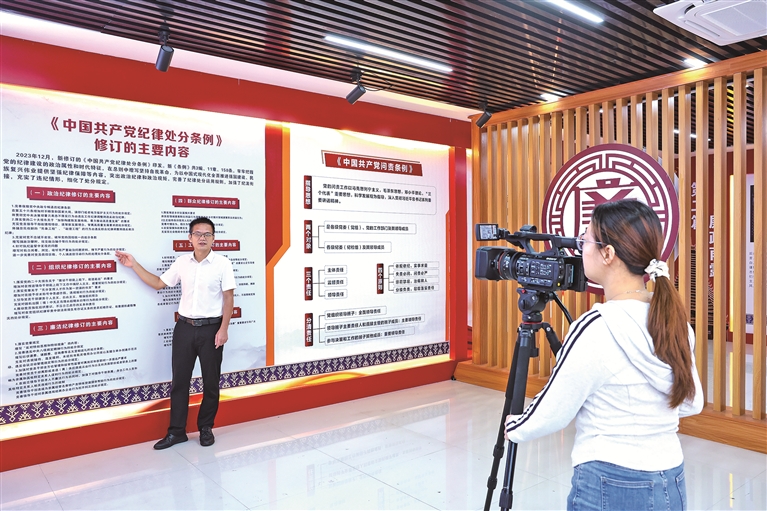
Group 1 - The core focus of the training program is to enhance the legal literacy of new disciplinary inspection and supervision cadres in Changchun City, Jilin Province, emphasizing the integration of party regulations and laws in their work [1][2] - The training includes a dedicated course on interpreting internal party regulations, particularly the supervision law and its implementation regulations, aiming to strengthen the legal awareness and thinking of the participants [1] - The Changchun City Discipline Inspection Commission and Supervisory Commission has established a comprehensive learning mechanism that includes leadership-led learning, group discussions, and individual study to ensure deep and practical learning [1] Group 2 - The commission emphasizes precise legal interpretation to empower practical application, utilizing both online and offline platforms for continuous learning and resource sharing [2] - Activities such as the "Supervision Law and its Implementation Regulations Awareness Exhibition" and "Legal Learning Month" are organized to create a strong learning atmosphere and enhance the practical skills of the cadres [2] - A total of 54 thematic discussions and 4 specialized training sessions have been conducted, along with 9 legal interpretation seminars and 14 collaborative discussions to address business challenges [2]
学纪知纪明纪守纪丨善用法治思维和法治方式正风肃纪反腐
Zhong Yang Ji Wei Guo Jia Jian Wei Wang Zhan· 2025-10-29 00:20
Core Viewpoint - The article emphasizes the importance of deeply understanding and implementing Xi Jinping's rule of law thought to enhance the standardization, legalization, and normalization of disciplinary inspection and supervision work [5][9]. Group 1: Learning and Implementation - The study and implementation of Xi Jinping's rule of law thought is fundamental for disciplinary inspection and supervision agencies, serving as a basic skill and compulsory course [5]. - Continuous learning and practical application of Xi Jinping's rule of law thought are essential for improving the quality and efficiency of disciplinary inspection and supervision work [6][9]. Group 2: Enhancing Legal Awareness - Strengthening legal awareness among disciplinary inspection and supervision personnel is crucial, with a focus on integrating legal thinking into daily operations [7][8]. - Training programs should cover the entire disciplinary inspection and supervision process, ensuring that personnel are well-versed in legal requirements [6][8]. Group 3: Integration of Discipline and Law - The integration of discipline and law is necessary to achieve unified political, disciplinary, and social effects, with a focus on ensuring that disciplinary actions are in line with legal standards [13][15]. - Disciplinary inspection agencies must adhere to both party regulations and national laws, ensuring that their actions are legally sound and politically aligned [12][14]. Group 4: People-Centric Approach - A people-centered approach is fundamental, with a commitment to addressing corruption and misconduct that directly affects the public [9][16]. - Disciplinary inspection and supervision work should focus on resolving prominent issues that the public is concerned about, ensuring that the outcomes are felt by the community [10][16]. Group 5: Continuous Improvement - There is a need for ongoing improvement in the legal capabilities of disciplinary inspection and supervision personnel, with practical training and real-case simulations being emphasized [6][8]. - The establishment of effective internal control mechanisms and streamlined processes is essential for enhancing the quality of disciplinary inspection and supervision work [14][19].