经验实证

Search documents
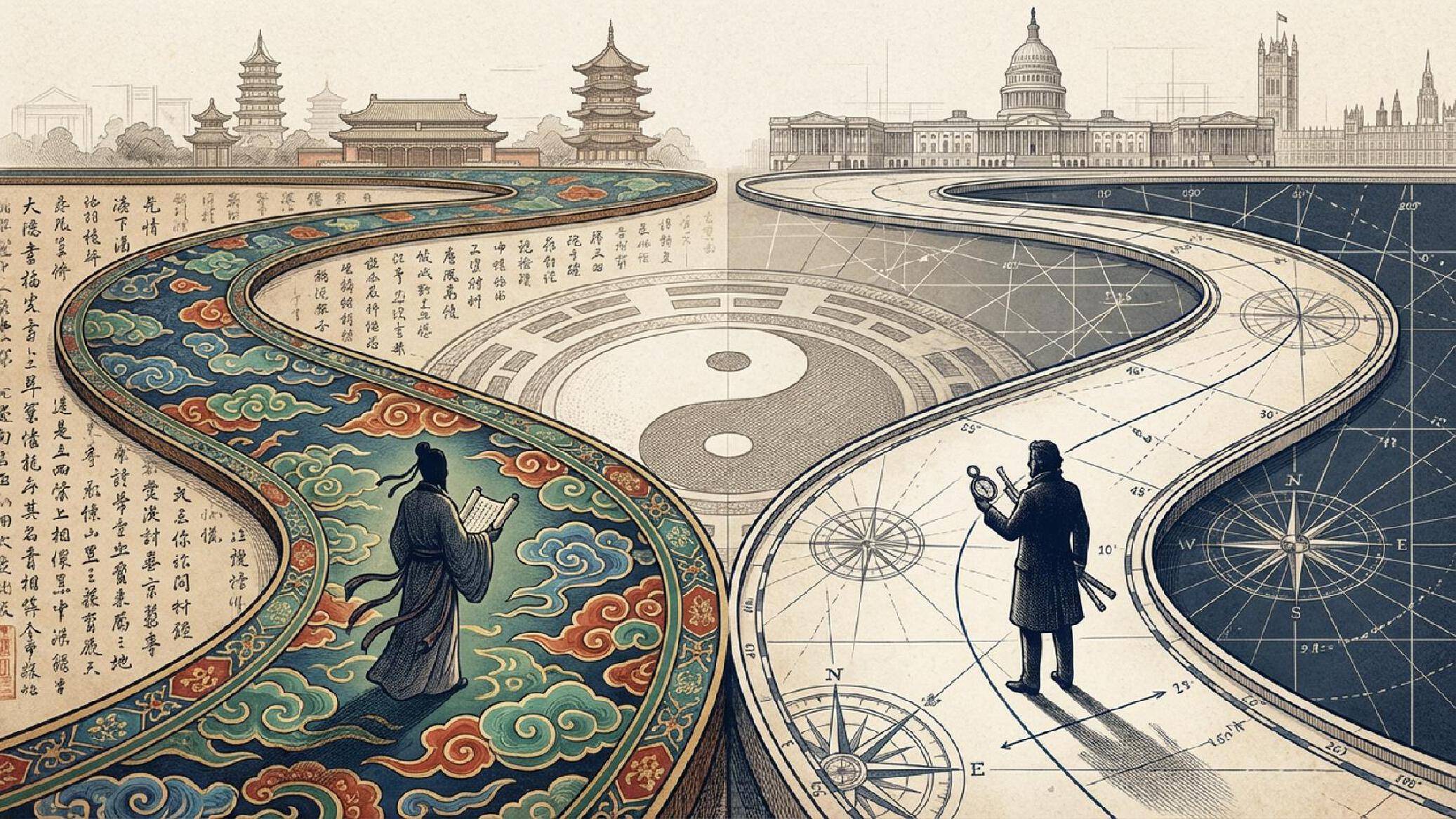
通往现代性的两条道路——康氏经学之路和郭氏经验之路
Sou Hu Cai Jing· 2026-02-27 13:33
Core Viewpoint - Kang Youwei's "Three Ages and Two Governance" theory reinterprets the Analects of Confucius, positioning it within the context of "Confucius's reform" and providing a systematic framework for integrating Confucianism with modern political systems [2][4][23] Summary by Sections Three Ages - The "Three Ages" refers to the political and civilizational evolution stages: chaotic era (monarchical autocracy), peaceful era (constitutional monarchy), and prosperous era (democratic republic) [3][7] - Each stage corresponds to specific ethical and governance principles, with the chaotic era emphasizing "benevolence" as corrective education, the peaceful era focusing on "benevolence" as shared governance, and the prosperous era advocating for "benevolence" as equality for all [3][7] Two Governance - The "Two Governance" concept consists of "ritual governance" and "legal governance," which together form the structural basis of state governance [4][8] - Kang emphasizes that governance should not solely rely on moral teachings but should integrate both rituals and laws, highlighting the rigid role of institutions in governance [4][9] Historical and Political Theory - Kang's framework combines the historical evolution of governance with the types of governance, suggesting a transition from ritual-based governance to law-based governance as modern order [4][9] - The reinterpretation of the Analects aims to provide legitimacy for reforms, transforming it from a guide for personal cultivation to a program for state governance [4][10] Response to Western Influence - Kang's theories represent a systematic response to the challenges posed by Western thought, attempting to find a modern basis for Confucianism and addressing the dual demands of national salvation and enlightenment during the late Qing period [4][23] - The integration of Confucian ideals with modern political concepts aims to bridge the gap between traditional ethics and contemporary governance [4][23] Comparison with Guo Songtao - Guo Songtao's empirical observations of Western constitutional monarchy provide a contrasting perspective to Kang's theoretical constructs, emphasizing practical experience over theoretical interpretation [11][20] - Guo's approach highlights the importance of gradual reform and practical implementation, while Kang's focus is on legitimizing reforms through classical texts [20][22]