
君主立宪

Search documents
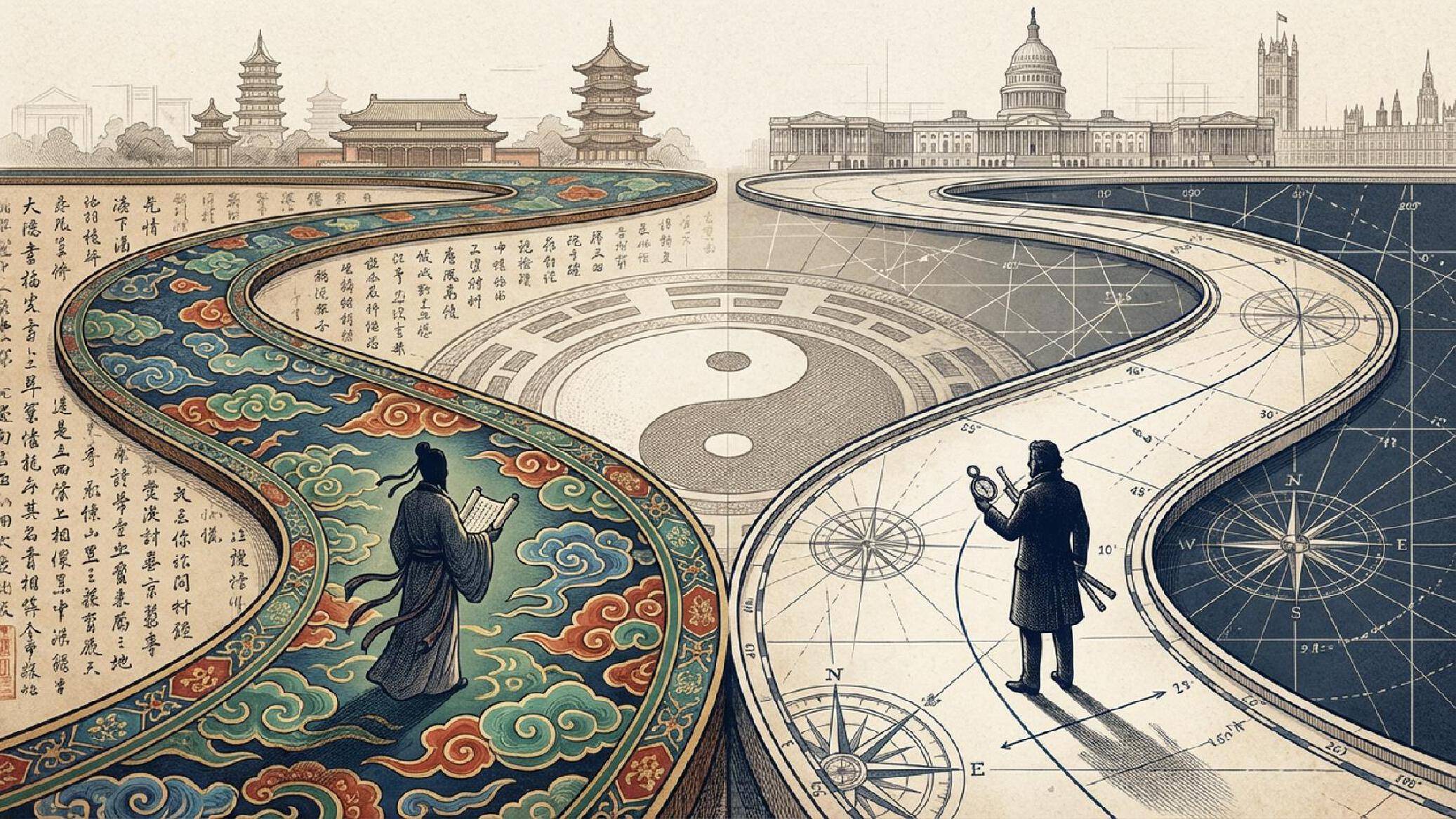
通往现代性的两条道路——康氏经学之路和郭氏经验之路
Sou Hu Cai Jing· 2026-02-27 13:33
Core Viewpoint - Kang Youwei's "Three Ages and Two Governance" theory reinterprets the Analects of Confucius, positioning it within the context of "Confucius's reform" and providing a systematic framework for integrating Confucianism with modern political systems [2][4][23] Summary by Sections Three Ages - The "Three Ages" refers to the political and civilizational evolution stages: chaotic era (monarchical autocracy), peaceful era (constitutional monarchy), and prosperous era (democratic republic) [3][7] - Each stage corresponds to specific ethical and governance principles, with the chaotic era emphasizing "benevolence" as corrective education, the peaceful era focusing on "benevolence" as shared governance, and the prosperous era advocating for "benevolence" as equality for all [3][7] Two Governance - The "Two Governance" concept consists of "ritual governance" and "legal governance," which together form the structural basis of state governance [4][8] - Kang emphasizes that governance should not solely rely on moral teachings but should integrate both rituals and laws, highlighting the rigid role of institutions in governance [4][9] Historical and Political Theory - Kang's framework combines the historical evolution of governance with the types of governance, suggesting a transition from ritual-based governance to law-based governance as modern order [4][9] - The reinterpretation of the Analects aims to provide legitimacy for reforms, transforming it from a guide for personal cultivation to a program for state governance [4][10] Response to Western Influence - Kang's theories represent a systematic response to the challenges posed by Western thought, attempting to find a modern basis for Confucianism and addressing the dual demands of national salvation and enlightenment during the late Qing period [4][23] - The integration of Confucian ideals with modern political concepts aims to bridge the gap between traditional ethics and contemporary governance [4][23] Comparison with Guo Songtao - Guo Songtao's empirical observations of Western constitutional monarchy provide a contrasting perspective to Kang's theoretical constructs, emphasizing practical experience over theoretical interpretation [11][20] - Guo's approach highlights the importance of gradual reform and practical implementation, while Kang's focus is on legitimizing reforms through classical texts [20][22]

爱新觉罗·良弼:王朝末期精英的悲剧
Hu Xiu· 2025-05-19 10:55
Core Viewpoint - The article examines the life and contributions of Aisin Gioro Liangbi, a prominent military figure during the late Qing Dynasty, highlighting his role in military reforms and the political landscape during the Xinhai Revolution, while advocating for further research into his legacy [1]. Group 1: Liangbi and "Strategic Essentials" - Liangbi's ancestry traces back to Nurhaci's fifth brother, and he faced significant challenges in his early life, including the loss of his father and poverty [2]. - He studied in Japan, where he published "Strategic Essentials" in 1903, a collaborative work that analyzed military structures of various countries, showcasing his early recognition of the importance of a general staff [2][3]. - The book reflects Liangbi's aspirations for military reform and his ideal image as a military officer, emphasizing the need for strategic planning in national defense [3][4]. Group 2: Liangbi's Character and Relationships - Liangbi was known for his dedication to duty, simplicity in lifestyle, and lack of interest in personal wealth, which earned him respect among his peers [5][6]. - He maintained close friendships with revolutionary figures like Wu Lvzhen, despite differing political views, indicating his complex relationships within the revolutionary context [11][12]. - His commitment to the Qing Dynasty and military service was seen as a form of patriotism, and he was viewed as a capable leader among the Manchu elite [6][22]. Group 3: Liangbi and the Revolutionary Movement - Upon arriving in Tokyo, Liangbi faced hostility from revolutionary students, reflecting the tensions between Manchu and Han students during that period [8][9]. - Despite being targeted by revolutionary propaganda, Liangbi engaged with Han students and sought to bridge divides, although he was often misrepresented as a proponent of anti-Han sentiment [10][21]. - His efforts to prevent ethnic violence during the Xinhai Revolution demonstrated his understanding of the potential consequences of racial conflict [20][22]. Group 4: Liangbi During the Xinhai Revolution - Liangbi expressed optimism about the government's ability to quell the revolutionary uprising, advocating for military action to restore order [13][14]. - He organized a constitutional monarchy movement opposing the abdication of the Qing Emperor, reflecting his commitment to preserving the dynasty [14]. - His assassination in 1912 raised suspicions of political conspiracy, highlighting the dangerous environment for those loyal to the Qing [15][16]. Group 5: Posthumous Recognition - After his death, Liangbi's legacy remained controversial, with efforts to honor him met with resistance due to the prevailing revolutionary sentiments [17][19]. - Supporters sought to establish a memorial for him, emphasizing his contributions and loyalty to the Qing, but faced challenges in gaining broader acceptance [18][19]. - The narrative surrounding Liangbi's life and death illustrates the complexities of loyalty and betrayal during a transformative period in Chinese history [22].