续航能力与绿色动力革新

Search documents
行业聚焦:全球高尔夫拾球机器人市场头部企业份额调研(附Top 5 厂商名单)
QYResearch· 2025-10-22 08:34
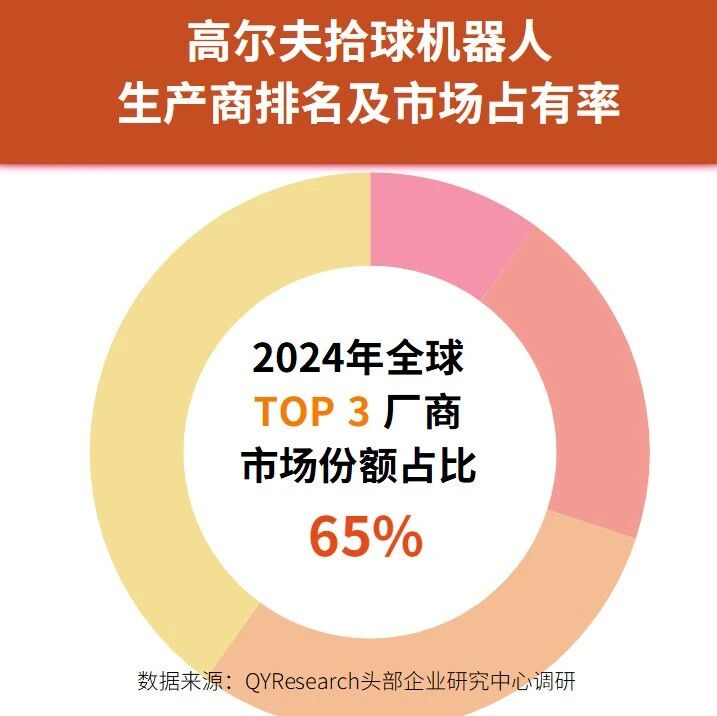
Core Insights - The global golf ball picking robot market is projected to reach $170 million by 2031, with a compound annual growth rate (CAGR) of 11.6% over the coming years [3]. Market Overview - Golf ball picking robots are designed for golf courses to automate the collection of scattered golf balls, enhancing efficiency and reducing labor costs [2]. - The market is characterized by a growing demand for automation solutions in golf course maintenance due to rising labor costs and a shortage of workers [19]. Market Leaders - The top six manufacturers in the global golf ball picking robot market and their market shares for 2024 are as follows: - Korechi: 25% - Range Servant: 22% - Wayrobo: 18% - Relox Robotics: 12% - GroundTech: 10% - Steele Robotics: 8% - Others: 5% [8]. Company Profiles - **Korechi**: Recognized as a market leader, Korechi focuses on outdoor automation solutions, with its flagship product, GolfRoam, known for its advanced navigation technology and efficiency in ball collection [9]. - **Range Servant**: Known for its durable and efficient robots, Range Servant emphasizes low maintenance costs and long lifespan, catering to high-end golf clubs and large practice facilities [11]. - **Wayrobo**: An emerging player, Wayrobo integrates advanced sensors and AI algorithms into its robots, aiming to enhance operational efficiency and expand functionalities beyond ball collection [13][14]. Industry Chain Analysis - The upstream of the golf ball picking robot industry consists of core component suppliers, including perception systems, energy systems, and motion control systems, which are crucial for product performance [15]. - The downstream customers primarily include renowned golf courses and large practice facilities that demand reliable and efficient automation solutions [15]. Market Development Trends - **Technological Integration and Smart Upgrades**: The industry is evolving towards high levels of automation, integrating computer vision and AI for improved functionality [16]. - **Battery and Green Power Innovations**: There is a trend towards higher energy density batteries and solar-assisted charging systems to enhance operational time and meet environmental standards [17]. - **Service-Oriented Business Models**: The "Robot as a Service" (RaaS) model is gaining traction, allowing golf courses to pay based on usage, thus lowering initial investment barriers [18]. Market Opportunities - The rising labor costs and the rigid demand for automation solutions are driving the market as golf courses seek to reduce reliance on manual labor [19]. - The maturity of technology and decreasing costs of core components are expanding the market to medium and small golf courses [20]. - The potential for data collection and analysis through robots is opening new revenue streams and enhancing customer engagement [21]. Market Barriers - The high initial investment and long return on investment periods pose challenges for many small and medium-sized golf courses [22]. - Technical reliability and adaptability in complex golf course environments remain significant hurdles for widespread adoption [23]. - Traditional industry mindsets and operational model transitions create resistance to adopting new technologies [24].