综合立体交通

Search documents
大道贯山河 高原焕新颜
Xin Lang Cai Jing· 2026-02-06 17:53
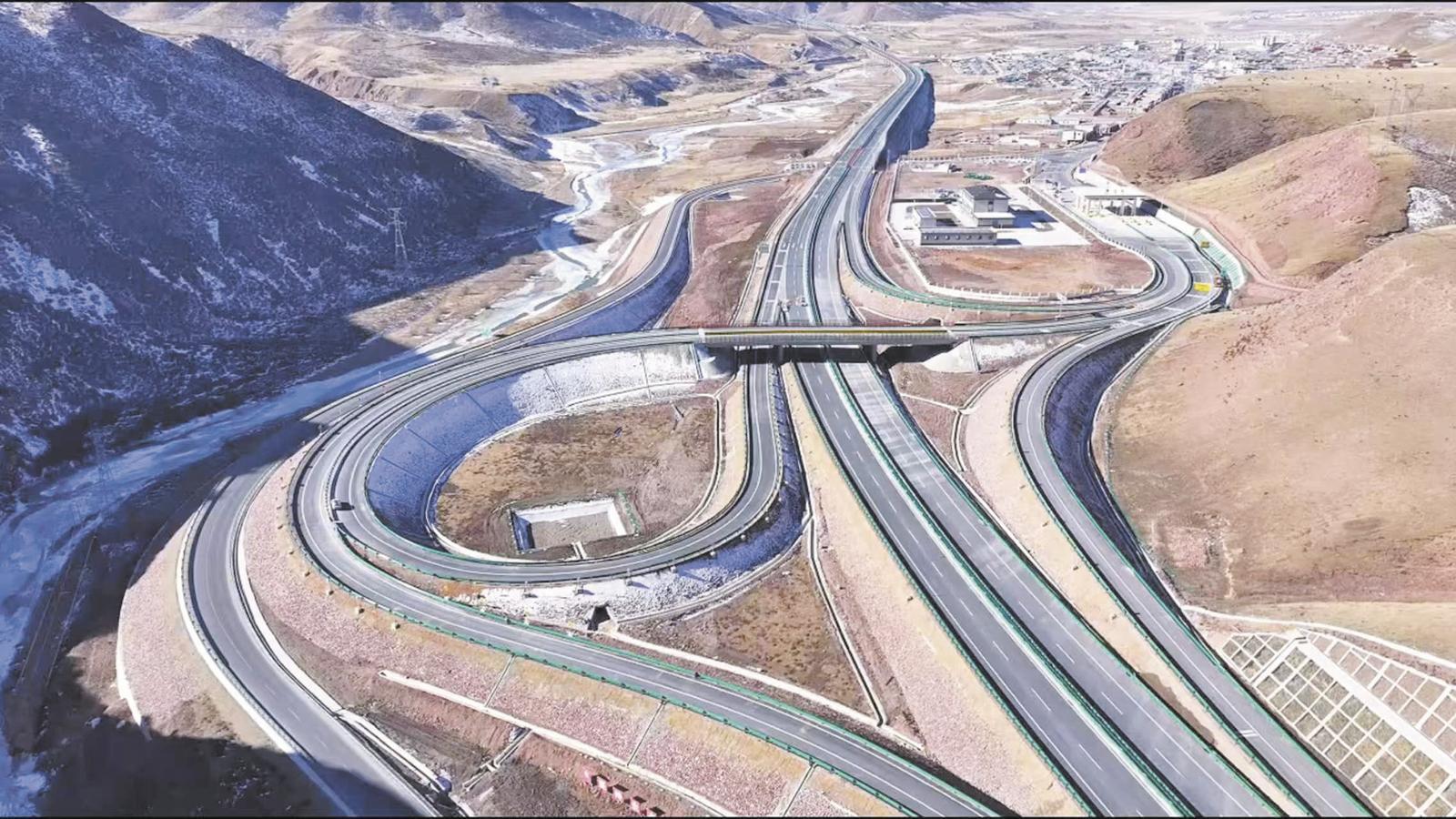
Core Viewpoint - The transportation system in Qinghai Province is undergoing significant development, focusing on enhancing connectivity, improving services, and supporting economic growth, with substantial investments and infrastructure upgrades planned for 2025 [1]. Investment and Economic Growth - In 2025, Qinghai Province plans to complete transportation fixed asset investments of 15.6 billion yuan, representing a 23% year-on-year increase [1] - The value added by the transportation, warehousing, and postal industries is expected to grow by over 7% year-on-year [1] - Qinghai's passenger traffic is projected to reach 18.78 million, a 4.2% increase, marking a historical high for the same period [1] Infrastructure Development - The province aims to upgrade and construct 4,000 kilometers of ordinary provincial and rural roads, achieving 86% of townships connected to third-level or higher roads [3] - The completion of 500 convenience bridges is planned to address the challenges faced by farmers and herders in crossing rivers [3] - The upgrade of the Alhua Highway has significantly improved local commerce, with daily sales at a local shop increasing four to five times due to enhanced road access [2] Transportation Services Enhancement - The Qinghai-Tibet Railway Group is optimizing its service offerings, including the introduction of new train routes to improve accessibility for local residents [6] - In 2025, the company is expected to transport 30.7 million tons of goods, a 5.6% increase, while also enhancing logistics through a multi-modal transport model [7] - The opening of new international air routes has improved the export of local products, with a 12-fold increase in international export volume for agricultural products [8] Passenger and Cargo Transport Growth - Qinghai Airport Company anticipates handling 7.88 million passengers and 40,000 tons of cargo, reflecting year-on-year growth of 12% and 7.6% respectively [9] - The airport's passenger growth rate is the highest among provincial capitals and municipalities in the country [9] - The introduction of new flight routes and increased frequency has significantly boosted international passenger traffic, with a 54% increase in international travelers [9]

济南“大机场时代”来临,谁来支撑5500万客流?
Qi Lu Wan Bao· 2025-05-25 07:15
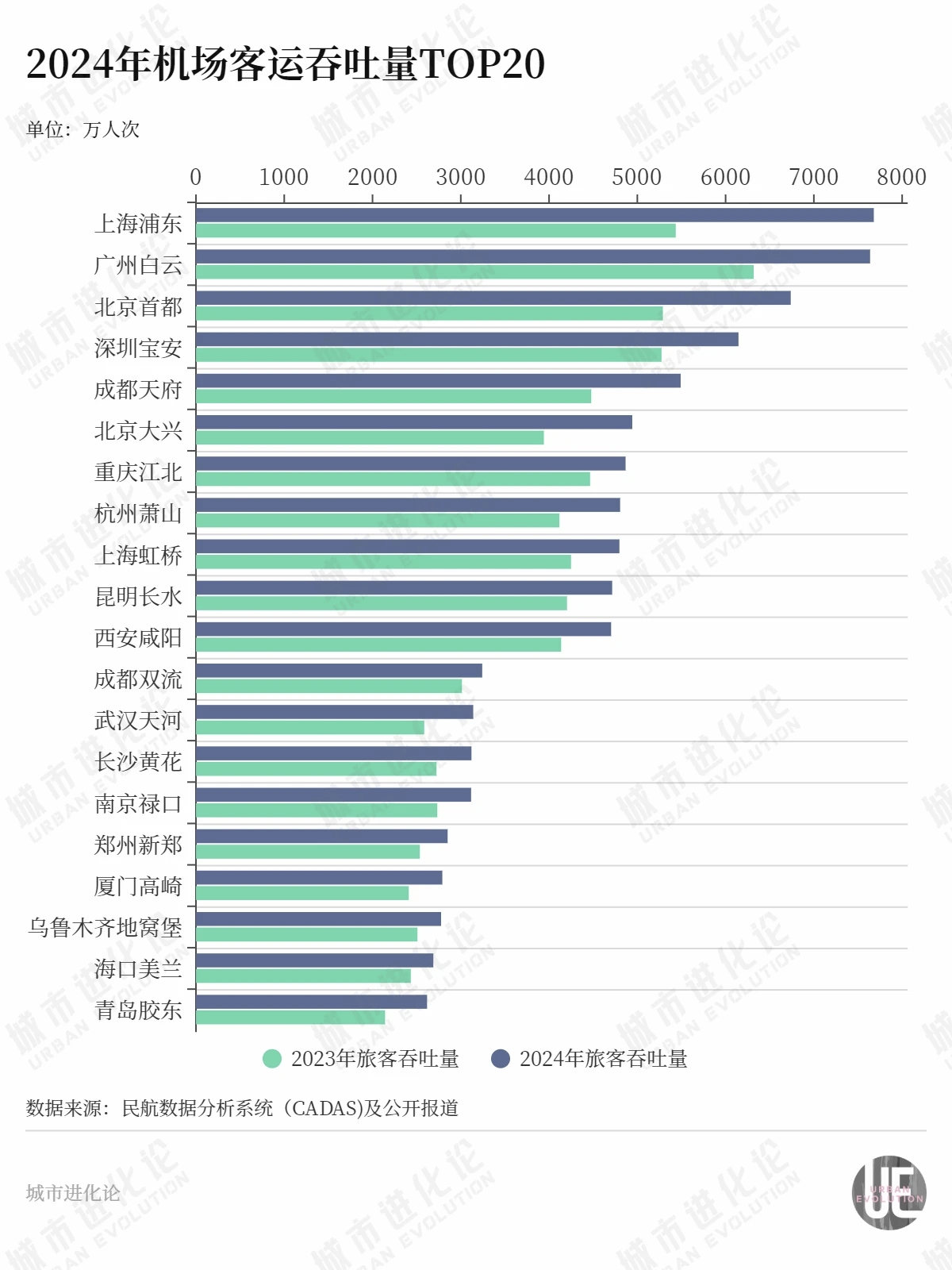
Core Insights - The Jinan Airport Phase II expansion project is a significant infrastructure investment aimed at transforming Jinan into a major transportation hub, with a projected annual passenger throughput of 55 million and cargo capacity of 520,000 tons by 2026 [1][9][20] - The expansion is part of a broader trend in China where major cities are enhancing their airport capacities to support urban integration and regional economic development [12][22] Investment and Infrastructure - The total investment for the Jinan Airport expansion is nearly 70 billion yuan, marking it as the largest investment in Shandong's civil aviation history [1] - Jinan Airport's current passenger throughput reached 20.01 million in 2024, a 14% increase from 2023, while cargo throughput grew by 6.7% to 153,600 tons [2][3] Regional Development and Planning - The Jinan metropolitan area is recognized as a national-level urban agglomeration, with a population of 18.1 million and an economic output exceeding 3 trillion yuan in 2024 [9][20] - The Shandong provincial government has approved multiple planning documents to enhance Jinan and Qingdao's roles as dual core cities, emphasizing the need for integrated transportation systems [9][10] Transportation Integration - The new airport's design includes a 380,000 square meter comprehensive transportation center, facilitating seamless connections between air, rail, and road transport [16][17] - The integration of high-speed rail and urban transit systems is crucial for maximizing the airport's catchment area, targeting a population coverage of 70 million [16][18] Challenges and Considerations - The rapid expansion raises questions about whether the airport can sustain the projected passenger volume, given the current growth trends in air travel [3][8] - Local governments face the challenge of balancing infrastructure investment with economic growth, especially in light of shifting policy priorities from investment-driven growth to consumption-driven growth [11][21]