
绿色资本

Search documents
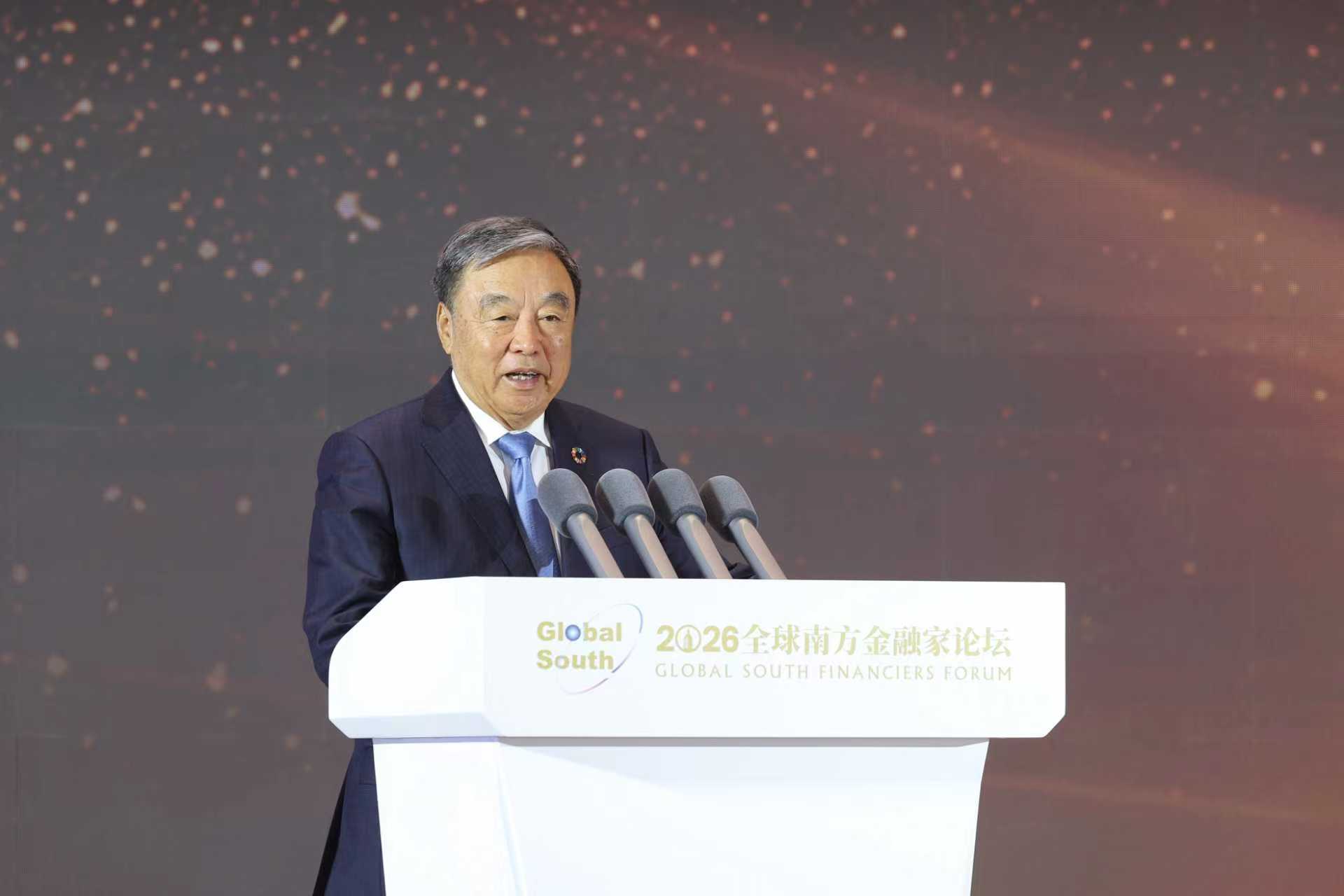
招商银行原行长马蔚华:聚焦三大核心方向 畅通全球绿色资本
Zhong Guo Jin Rong Xin Xi Wang· 2026-03-25 08:14
Core Viewpoint - The former president of China Merchants Bank, Ma Weihua, emphasized the need to gather global financial wisdom to facilitate the flow of green capital to regions and sectors in need, particularly in the context of the global green transition and the significant funding gap for climate financing [3][4]. Group 1: Global Green Transition - The global green transition is an urgent requirement as the world faces developmental bottlenecks, with a predicted annual climate financing demand of $9 trillion by 2030 [3]. - Emerging markets and developing countries, which are expected to account for 80% of future energy demand growth, receive less than 15% of global green capital inflows, indicating a significant imbalance in capital distribution [3][4]. Group 2: Structural Challenges - There are three main structural challenges hindering the flow of green capital to developing countries: rating monopolies distorting risk pricing, inconsistent standards creating "regulatory barriers," and a severe lack of adaptable financial tools [4]. Group 3: Proposed Solutions - Establish a mutually recognized standard system to eliminate "regulatory barriers" for cross-border capital flow, promoting unified financial language through multilateral recognition of green finance standards [4]. - Innovate risk mitigation mechanisms to activate commercial capital's "liquidity potential," utilizing financial tools that balance risk and return, such as mixed financing and carbon-linked loans [4]. - Deepen South-South cooperation and enhance "Belt and Road" green financing to broaden practical channels for capital flow, including building international cooperation on green financial infrastructure [4].


以区域性股权市场助力云南经济高质量发展
Zheng Quan Shi Bao Wang· 2026-01-07 12:24
Core Viewpoint - The development of regional equity markets, particularly in Yunnan, is crucial for supporting small and medium-sized enterprises (SMEs) and driving local economic transformation through innovative financial infrastructure [1][2]. Group 1: National Strategy and Development Positioning - The core mission of regional equity markets is to serve the real economy and facilitate capital circulation, with Yunnan's equity market having established strategic partnerships with over 20 institutions since its operation began in September 2021 [2]. - Yunnan's equity market has supported over 500 enterprises and facilitated financing of 2.578 billion yuan, demonstrating its effectiveness in fostering enterprise growth [2]. - The market is positioned as a comprehensive service platform for SMEs, enhancing its role in resource integration and financial empowerment for industries [2]. Group 2: Learning from Other Provinces - The development of regional equity markets shows a pattern where eastern provinces lead, central provinces follow, and western provinces, like Yunnan, are catching up by combining effective market mechanisms with proactive government support [3]. - Yunnan aims to enhance its market services for SMEs by exploring a full lifecycle service model and aggregating various resources to promote enterprise growth and industrial upgrading [3]. - The optimization of Yunnan's equity market structure includes accelerating the establishment of specialized boards and enhancing cooperation with major stock exchanges [3]. Group 3: Building a Differentiated Path - Yunnan is developing a unique model for its regional equity market by focusing on "green, digital, and international" initiatives to avoid homogenization and competition pitfalls [4]. - The establishment of a "biodiversity protection board" within Yunnan's equity market aims to attract green energy and environmental technology firms, providing them with financing and certification services [4]. - Yunnan seeks to create a cross-border connectivity mechanism with equity markets in neighboring countries, enhancing its role as a capital hub for South Asia and Southeast Asia [4].