网球行业市场化产业升级

Search documents
预见2025:《2025年中国网球行业全景图谱》(附市场规模、竞争格局和发展趋势等)
Qian Zhan Wang· 2026-02-01 02:15
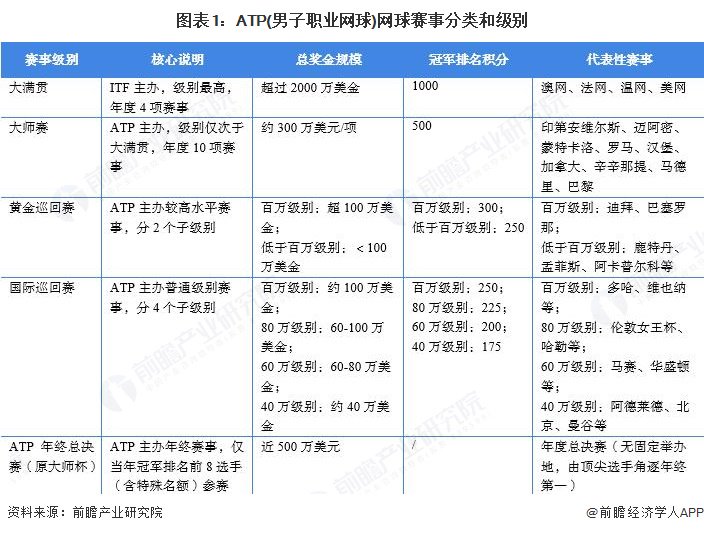
Industry Overview - Tennis is a sport typically played between two players or two pairs, aiming to hit a ball over a net using rackets, with the goal of making it difficult for opponents to return the ball [1] - The tennis events are categorized into ATP (men's professional tennis) and WTA (women's tennis), with ATP being the Association of Tennis Professionals and WTA being the Women's Tennis Association [1] Prize Money and Rankings - Grand Slam events, the highest level of tournaments, have a total prize pool exceeding $20 million, awarding 1000 ranking points [2] - ATP Masters events, the second highest level, offer around $3 million per event and 500 ranking points [2] - WTA events also have a similar structure, with Grand Slams offering approximately $3 million and various levels of tournaments providing different prize amounts and ranking points [3] Industry Chain Structure - The tennis industry chain consists of three main segments: upstream (equipment supply and venue construction), midstream (tennis services), and downstream (consumer spending) [5][7] - Upstream focuses on equipment suppliers, including brands like YONEX and DUNLOP, while midstream includes tennis clubs and training services [7] - Downstream encompasses ticket sales, equipment purchases, venue rentals, and media dissemination [5] Market Growth - The Chinese tennis market is experiencing rapid growth, with a market size of 37 billion yuan in 2024, reflecting a 14.4% increase from the previous year [18] - The market is expected to continue expanding, with projections indicating it could exceed 65 billion yuan by 2030, driven by increased participation and interest in the sport [27] Competitive Landscape - The tennis industry is concentrated in economically developed regions, particularly Guangdong and Beijing, which host a significant number of enterprises across the industry chain [18][22] - Guangdong is identified as a core area for production, while other provinces like Jiangsu and Zhejiang also have notable industry presence [22] Policy and Development Trends - Recent policies have shifted from focusing solely on competitive performance to supporting the entire industry chain, promoting infrastructure, event ecosystems, and talent development [11][13] - The industry is moving towards a more diversified participation model, aiming to attract various demographics through community programs and partnerships [23] - The government is actively encouraging the development of tennis through various initiatives, enhancing the sport's accessibility and integration into broader economic activities [13][16]