
美伊关系缓和

Search documents
美伊谈判进入方案磋商阶段 双方仍“同楼不同室”
Jing Ji Guan Cha Wang· 2026-02-06 11:55
Core Insights - The negotiations between the US and Iran have officially transitioned from the initial "proposal submission" phase to a deeper "proposal consultation" phase, with Oman playing a crucial mediating role [2] Group 1: Negotiation Phases - The negotiations are divided into two compact phases, with the first phase involving both parties submitting their position documents and core demands to the Omani Foreign Minister [2] - In the second phase, the US and Iran are engaging in interactions regarding these specific proposals [2] Group 2: Meeting Arrangements - Unlike previous arrangements, the US and Iranian delegations are now located in the same building, although they remain in separate meeting rooms to maintain the principle of "non-direct dialogue" [2] - Omani Foreign Minister Badr is acting as a "messenger" to relay information between the two parties [2] Group 3: Analysis and Implications - Analysts view the fact that both parties are negotiating in the same building as a positive signal for de-escalation, although the physical separation reflects ongoing significant challenges in political trust [2]

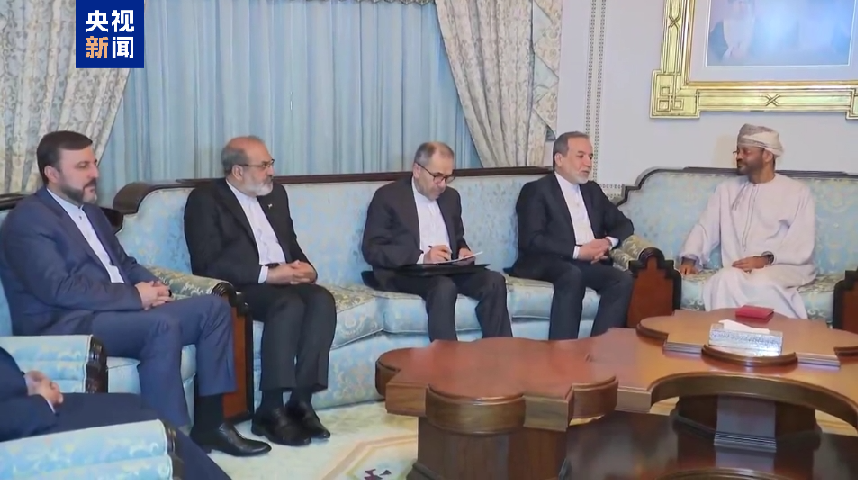
2月6日,美国与伊朗将在阿曼谈判
Xin Lang Cai Jing· 2026-02-04 04:02
Group 1 - The U.S. and Iran are signaling a potential easing of tensions, with a bilateral meeting scheduled for February 6 in Oman at Iran's request [1] - Iran's Foreign Minister has indicated that indirect talks with the U.S. are progressing, with Iran seeking the lifting of long-standing sanctions and the right to continue uranium enrichment under peaceful nuclear energy frameworks [1] - The Iranian Revolutionary Guard has denied plans for live-fire exercises in the Strait of Hormuz, a critical oil transport route [1] Group 2 - The White House has responded positively, with senior officials indicating a willingness to meet with Iran to negotiate an agreement [2] - Turkey, Egypt, and Qatar are facilitating meetings between U.S. and Iranian officials to prevent larger conflicts in the Middle East [2] - Since the U.S. withdrawal from the Iran nuclear deal in 2018, Iran has faced severe sanctions, leading to significant economic challenges, including currency devaluation and high inflation [2]
以总理会美特使 要求对伊朗“行动自由”
Xin Hua She· 2026-02-03 23:30
Group 1 - The core viewpoint of the article is that Israel is seeking "freedom of action" from the United States regarding the Iran issue, emphasizing distrust in Iran's commitments [1] - Israeli Prime Minister Netanyahu met with U.S. envoy Wittekov for over three hours, discussing demands for Iran to halt ballistic missile production and uranium enrichment activities [1] - The meeting also addressed the second phase of the ceasefire agreement in Gaza, with Netanyahu insisting on the disarmament of Hamas and the complete demilitarization of Gaza before reconstruction can begin [1] Group 2 - Netanyahu stated that the Palestinian Authority will not participate in the governance of Gaza in any form [1] - Wittekov is expected to meet with Iranian Foreign Minister Amir-Abdollahian to seek diplomatic solutions to ease tensions between the U.S. and Iran [1]
伊朗总统下令启动核谈判!油价大跌
证券时报· 2026-02-02 12:07
Core Viewpoint - Iran's president has ordered the initiation of nuclear negotiations with the United States, signaling a potential thaw in US-Iran relations and a decrease in expectations of military action against Iran, which has led to a significant drop in international oil prices [1][3]. Group 1 - Iran's president has officially ordered the commencement of specialized nuclear negotiations with the US, with high-level talks expected to occur in the coming days [3]. - The negotiations are anticipated to be conducted within the framework of the nuclear agreement, aiming to break a long-standing deadlock [4]. - Iran's Foreign Ministry spokesperson confirmed that discussions may involve direct meetings between Iranian Foreign Minister Amir-Abdollahian and US representative Robert Malley [3]. Group 2 - Iran has denied receiving any "ultimatum" from the US regarding military action, emphasizing that they are currently reviewing the overall situation and details for advancing the negotiation process [6]. - The spokesperson highlighted the importance of time in negotiations, stating that every day of reduced sanctions is considered a success [7]. - Iran's past experiences with US negotiations, including instances of betrayal and deception, will be taken into account in their decision-making process [7].

沙特方面密会特朗普,谈话内容曝光
Zhong Guo Ji Jin Bao· 2025-07-04 14:11
Group 1 - Saudi Arabia's Defense Minister Khalid bin Salman met with U.S. President Trump to discuss the situation with Iran and other Middle Eastern issues, including facilitating U.S.-Iran negotiations [1] - The discussions included steps for normalizing relations between Saudi Arabia and Israel, as well as progress on a bilateral defense and trade agreement between the U.S. and Saudi Arabia [1] - Trump indicated that U.S. Special Envoy for Iran, Witte, is responsible for pushing to restart negotiations with Iran, with Iran expressing a desire for direct dialogue with Trump [1][2] Group 2 - Iran's Deputy Foreign Minister stated that Iran does not plan further retaliation against the U.S. but requires guarantees that the U.S. will not strike Iran during negotiations [2] - Iran maintains its stance on uranium enrichment, indicating no change in its policy regarding this issue [2]
美国总统特朗普:为伊朗提供了一条通向更美好未来的道路;愿意结束过去的冲突。
news flash· 2025-05-13 16:07
Group 1 - The core message emphasizes President Trump's offer to provide Iran with a pathway to a better future and his willingness to end past conflicts [1]