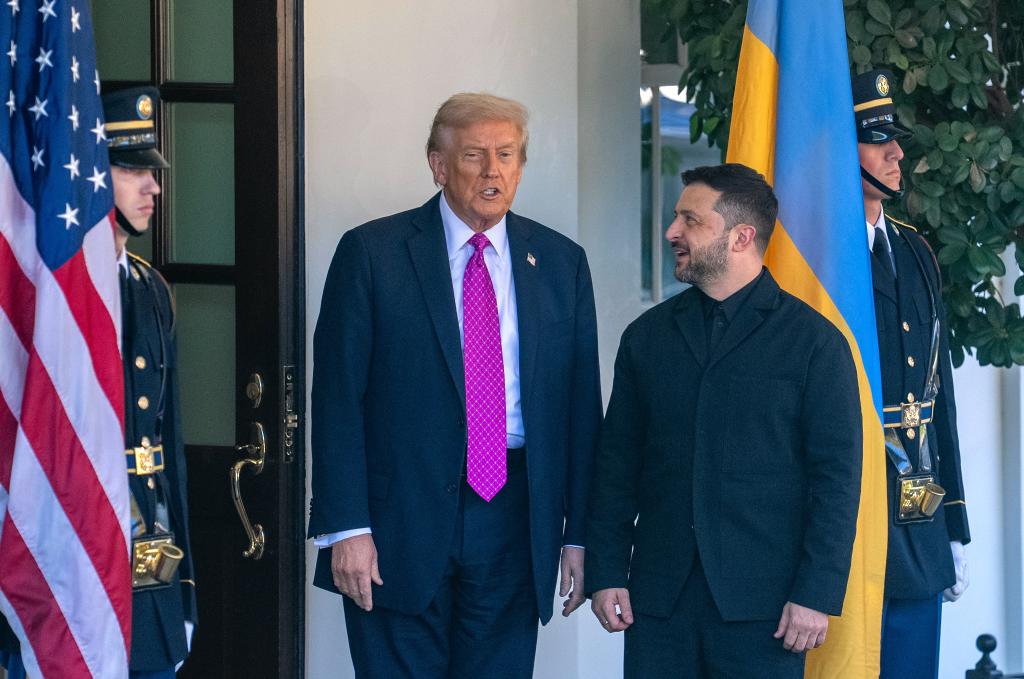
美国国家安全战略报告

Search documents
爆料:美国有意组建美中俄日印“核心五国集团”
Xin Lang Cai Jing· 2025-12-12 02:49
Core Viewpoint - The United States is reportedly considering the formation of a new "Core 5" group comprising the U.S., China, India, Japan, and Russia, contrasting with the existing G7 group, although the White House has denied these claims [1][5]. Group 1: Formation of Core 5 - The idea of forming the "Core 5" group originated from an unpublished version of the U.S. National Security Strategy report, which is longer than the public version [3][7]. - Experts in national security noted that Europe is not included in the "Core 5" concept [3][7]. Group 2: Reactions from Russia - Dmitry Medvedev, Deputy Chairman of the Russian Security Council, suggested that the U.S. intention to form "Core 5" appears to be a message to Europe [3][7]. - Kremlin spokesperson Dmitry Peskov stated that Russia has not received any invitation from the U.S. to join "Core 5" and expressed uncertainty about the implications of such a platform [3][7]. Group 3: U.S. National Security Strategy Report - The U.S. National Security Strategy report, released on December 4, focuses on America's core national interests, prioritizing the Western Hemisphere, sharply criticizing Europe, and downplaying the threat of terrorism [4][8]. - The report aims to maintain a high but manageable level of great power competition in the Asia-Pacific region and seeks to rebalance external commitments with internal capabilities [4][8]. - Although the report does not have legal binding power, it influences U.S. federal budget allocations and policy priorities [4][8].

全球瞭望|南非媒体:美对非战略凸显“工具化”倾向 非洲国家需加强合作应对
Xin Hua She· 2025-12-11 13:27
Core Viewpoint - The recent U.S. National Security Strategy report marginalizes African nations, viewing them primarily as sources of energy and critical minerals, reflecting a dismissive attitude towards these countries [1][2] Group 1: U.S. National Security Strategy Report - The report indicates that the U.S. government aims to shape the international order based on its own interests, prioritizing partnerships with "capable and reliable" African nations that commit to opening their markets to U.S. goods and services [1] - The report provides vague references to the expired African Growth and Opportunity Act (AGOA), which previously facilitated duty-free exports to the U.S. for South African products like automobiles, fruits, and wines, leaving its future uncertain [1] Group 2: Perspectives on African Development - Analysis by former UN Deputy Secretary-General Erik Solheim highlights that the U.S. government views Africa merely as a supplier of raw materials, emphasizing the need for African nations to rely on their own efforts and establish broad cooperation with various partners for development [2]
特朗普继续数落欧洲 默茨:要做好“欧美不同行”的准备
Xin Hua She· 2025-12-11 02:56
Group 1 - The core viewpoint of the articles highlights President Trump's criticism of European countries regarding their immigration policies and the ongoing Ukraine crisis, suggesting that Europe is in a state of "decline" [1][2][3] - Trump's remarks align with the U.S. National Security Strategy report, which emphasizes a focus on core national interests and critiques Europe for its immigration policies and regulatory overreach, warning of a "serious prospect of civilizational extinction" [3] - The U.S. is perceived to be in a position of power in the negotiations regarding the Ukraine conflict, with Trump accusing Europe of inaction and suggesting that Ukraine is using the war as an excuse to avoid elections [4] Group 2 - The U.S. National Security Strategy report calls for strengthening internal resistance within European countries against current trends, echoing sentiments similar to those of far-right groups in Europe [8] - European leaders, including the President of the European Council and the German Chancellor, have expressed the need for Europe to maintain its sovereignty and decision-making autonomy, indicating a desire for greater independence from U.S. influence in security matters [9]
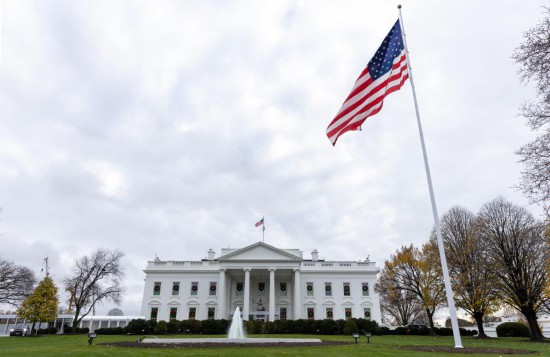
特朗普:对泽连斯基“失望”
中国能源报· 2025-12-08 12:07
Group 1 - President Trump expressed disappointment in Ukrainian President Zelensky for not having read the proposed peace plan, stating that "his people like this plan" [1] - The U.S. and Ukrainian delegations recently concluded three days of talks in Miami, focusing on territorial and security guarantees [1] - Zelensky described the negotiations with the U.S. as constructive but acknowledged the process is not easy [1] Group 2 - Russian President Putin has never publicly accepted the U.S. peace plan, and recent talks did not yield a compromise solution for the Ukraine issue [2] - The timing of Trump's public dissatisfaction with Zelensky is noted as significant, coinciding with Russia's welcoming of the U.S. National Security Strategy report [2] - The latest U.S. National Security Strategy no longer labels Russia as a "direct threat" and calls for cooperation in strategic stability, which Russia views as a positive shift [2]

特朗普对泽连斯基“失望” 美媒:时机耐人寻味
Xin Hua Wang· 2025-12-08 04:23
Group 1 - The core viewpoint of the article highlights President Trump's disappointment with Ukrainian President Zelensky for not having read the proposed peace plan from the U.S. [1] - Trump mentioned that recent talks were held with both Russian and Ukrainian leaders regarding the peace plan, expressing uncertainty about Zelensky's stance on it [2] - The U.S. and Ukrainian delegations recently concluded discussions in Miami, focusing on territorial and security guarantees, with Zelensky describing the negotiations as constructive yet challenging [2] Group 2 - Russian President Putin has not publicly accepted the U.S. peace plan, and discussions between him and U.S. envoy Witkoff did not yield a compromise on the Ukraine issue [4] - The timing of Trump's public dissatisfaction with Zelensky is noted as significant, coinciding with Russia's welcoming of the U.S. National Security Strategy report [4] - The latest U.S. National Security Strategy report no longer labels Russia as a "direct threat" and calls for cooperation in strategic stability, which Russia views as a positive shift [4]