美国政治撕裂

Search documents
52赞成47反对,美投票刚结束,特朗普直接下令,执法丑闻再发酵
Sou Hu Cai Jing· 2026-02-17 04:58
Core Viewpoint - The current political situation in the U.S. is characterized by significant turmoil, with a budget impasse threatening a government shutdown, ongoing immigration enforcement controversies, and a rapid regression in climate policy, all contributing to a deepening political divide [1][3][24]. Group 1: Budget and Government Shutdown - The recent Senate vote of 52 in favor and 47 against was a procedural step, failing to meet the 60-vote threshold required to advance funding, leaving the Department of Homeland Security (DHS) on the brink of a shutdown [1][5]. - The implications of a DHS funding halt are severe, as it encompasses critical areas such as national security, border management, and emergency response, potentially leading to significant operational delays and decreased morale among frontline workers [11][13]. Group 2: Immigration Enforcement Issues - The immigration enforcement controversies are escalating, particularly following shocking incidents that have heightened public sentiment, allowing the Democratic Party to leverage these issues in budget negotiations [8][15]. - The ongoing tensions between local and federal governments regarding immigration enforcement are likely to worsen, with budget constraints and unresolved conflicts exacerbating dissatisfaction [13][15]. Group 3: Climate Policy Reversal - President Trump's recent decision to revoke the Endangerment Finding related to greenhouse gas emissions is framed as a major deregulation move, claiming it could save Americans over $1.3 trillion, but it poses risks to the foundational climate governance framework [21][24]. - This action is expected to intensify political divisions, particularly alienating urban middle-class voters, young constituents, environmental organizations, and certain business coalitions [21][24]. Group 4: Political Strategy and Risks - The combination of budgetary issues, DHS funding challenges, immigration enforcement scandals, and climate policy rollbacks reflects a high-risk political strategy aimed at consolidating core support while pushing adversaries to concede under pressure [24]. - The potential backlash from moderate Republicans and the shrinking space for negotiation in Congress could lead to increased societal division and rapid political repercussions in the event of new enforcement controversies or economic fluctuations [24][27]. Group 5: Key Signals to Watch - Three critical signals to monitor include the duration of the DHS shutdown, the potential inclusion of enforcement rules in funding conditions, and the legal battles stemming from the revocation of the Endangerment Finding, which may prolong the conflict between federal and state authorities [27].

【环球财经】美国在混乱与撕裂中走向治理失序
Xin Hua She· 2025-12-29 15:01
Group 1: Economic Indicators and Trends - The U.S. Consumer Price Index (CPI) rose by 2.7% year-on-year in November, down from 3.0% in September and below the market expectation of 3.1%. However, the data is considered distorted due to the government shutdown affecting data collection for October [2] - The stock market has shown strong performance, with the S&P 500 index increasing over 17% and the Nasdaq rising more than 21% by late December. This growth is largely driven by major tech companies, with five stocks contributing nearly 45% to the index's gains [8] - There is a significant disparity in economic growth, with the wealthiest 1% owning nearly 50% of stock market value, while the bottom 50% hold just over 1%. The wealth of the top 10 billionaires increased by $698 billion in the past year, highlighting the growing wealth gap [8][9] Group 2: Political Climate and Governance - The release of documents related to the Jeffrey Epstein case has intensified political tensions, with accusations of selective disclosure between the Republican and Democratic parties. The documents have been criticized for having significant portions redacted [5] - The U.S. government has faced criticism for its arbitrary policy decisions, including trade wars and the handling of international relations, which may lead to increased isolation of the U.S. on the global stage [4] - The ongoing political polarization has resulted in a record 43-day government shutdown, causing significant economic losses and highlighting governance failures. The shutdown reflects deeper systemic issues rather than just policy disagreements [6][7] Group 3: Social Implications - The economic growth experienced by the wealthy contrasts sharply with the struggles of ordinary Americans, with many unable to afford basic necessities. Nearly 40% of families in New York City cannot meet food expenses [9] - The political and economic landscape has led to a perception of a new oligarchy in America, where billionaires thrive while working families face increasing financial burdens [8][9]
华尔街日报建议:都别装了
Sou Hu Cai Jing· 2025-09-11 17:13
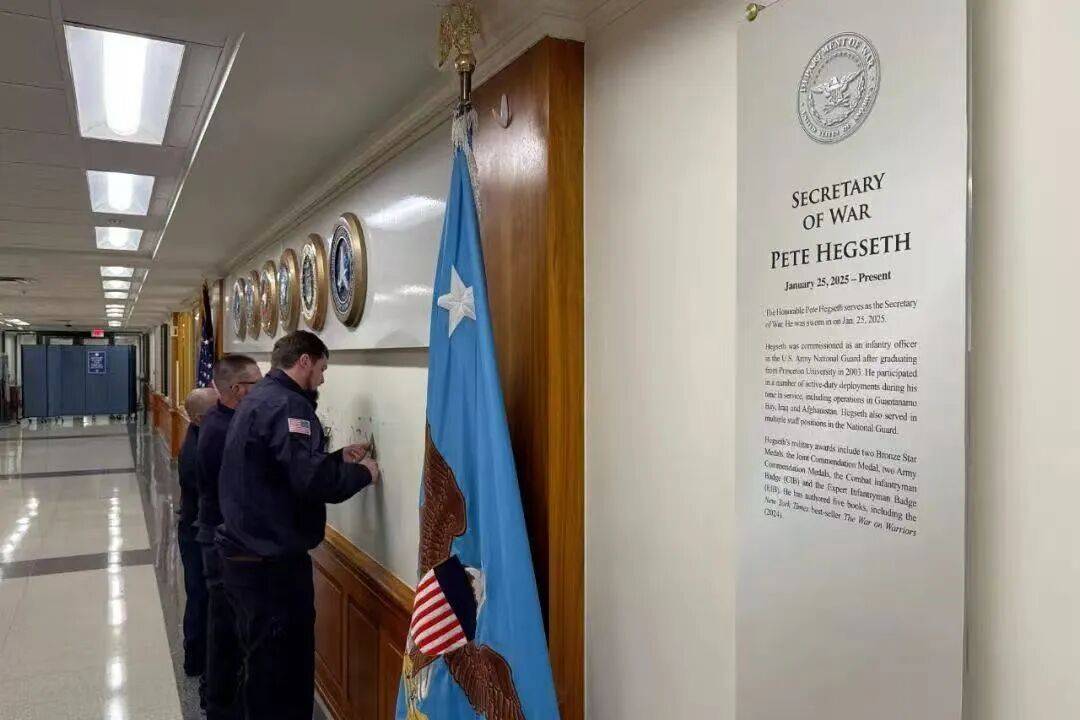
Group 1 - The article discusses the renaming of various U.S. government departments, reflecting a trend towards more straightforward and blunt titles, such as renaming the Department of Defense to "Department of War" [1][3] - The proposed name changes highlight the perceived dysfunction and issues within the U.S. political system, with the article suggesting that these changes are a form of satire on the current state of governance [1][3] - The renaming initiative is expected to cost around $1 billion, indicating a significant financial impact on the U.S. government and potentially affecting political dynamics and social issues [3][5] Group 2 - The article notes that the newly named "Department of War" has already received deployment orders, with a focus on Chicago, illustrating the immediate implications of this renaming on domestic policy [3][5] - Legal experts suggest that Trump's actions, including the renaming and military deployments, may reshape the power dynamics within the U.S. government, raising concerns about the stability and credibility of American politics [5] - The overall tone of the article conveys a sense of chaos and instability within the U.S., suggesting that the current political climate could lead to a re-evaluation of America's global standing and reputation [5]