美国法治

Search documents
白宫惊现违法总统?美国最高法:特朗普,关税权不属于你
Sou Hu Cai Jing· 2026-02-23 06:18
Core Viewpoint - The U.S. Supreme Court ruled that former President Trump did not have the authority to impose tariffs unilaterally under the International Emergency Economic Powers Act (IEEPA), declaring his actions illegal [1][6][10]. Group 1: Legal Context - The Supreme Court's decision was based on the interpretation that the IEEPA does not explicitly mention tariffs or taxes, and the government failed to provide legal precedents for such authority [6]. - The ruling comes after years of legal challenges to Trump's tariff policies, which began in 2018, and raises questions about the timing of the court's decision [8]. Group 2: Economic Impact - Economists estimate that tariffs imposed under the IEEPA exceeded $175 billion, which were intended to penalize foreign goods but ultimately harmed U.S. importers and consumers [13]. - The tariffs led to increased steel prices and manufacturing costs in the U.S., affecting small businesses and consumers rather than protecting domestic industries [13]. Group 3: International Relations - The ruling may influence perceptions among U.S. allies like the EU, Japan, Canada, and Mexico, who suffered from Trump's tariff policies, potentially leading to claims for compensation [16]. - Despite the ruling, the Biden administration has retained many of Trump's tariffs, indicating a continuation of a confrontational trade stance towards China [18]. Group 4: Political Implications - The Supreme Court's decision reflects a division within the U.S. political elite regarding Trump's policies, suggesting concerns about his potential return to power [18]. - The ruling does not eliminate Trump's ability to impose tariffs through other legal frameworks, indicating that the political landscape remains contentious [18].

美医保高管枪杀案嫌疑人不面临死刑
Xin Lang Cai Jing· 2026-02-02 04:35
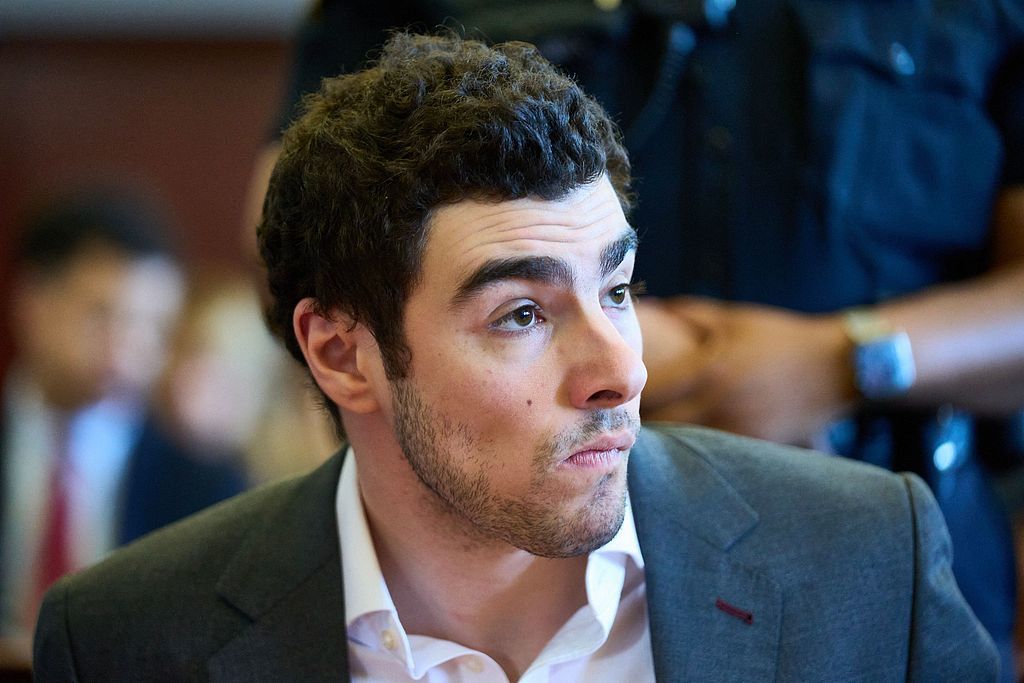
Core Viewpoint - The case of the murder of UnitedHealth Group CEO Brian Thompson by Luigi Mangione has seen a significant turn, as a federal judge ruled that Mangione is no longer at risk of the death penalty due to technical flaws in the prosecution's charges [1][2]. Group 1: Legal Proceedings - On January 30, a federal judge in Manhattan dismissed two of the four charges against Mangione, which included murder and gun-related crimes, citing "technical flaws" in the prosecution's arguments [1][2]. - The judge's ruling was based on the interpretation of a specific federal statute, which requires a direct connection between the murder charge and another violent crime for a death penalty to be applicable [2][4]. - The trial for Mangione is set to begin in mid-October, with jury selection scheduled for September [1]. Group 2: Public Reaction and Implications - The ruling has sparked confusion and criticism among the public, with many viewing it as a sign of a breakdown in the rule of law in the U.S. [3]. - Some commentators have pointed out that the judge herself acknowledged the ruling as counterintuitive, suggesting that it contradicts common perceptions of violent crime [3]. - The case has drawn political attention, particularly as it relates to the Trump administration's push to reinstate the death penalty, with implications that the prosecution's motives may be politically driven rather than based solely on legal grounds [4].
美医保高管枪杀案嫌疑人不面临死刑,但仍可能被判终身监禁
Huan Qiu Shi Bao· 2026-02-01 22:54
Core Viewpoint - The case of the murder of UnitedHealth Group CEO Brian Thompson has taken a significant turn, as a federal judge ruled that the suspect, Luigi Mangione, is no longer facing the death penalty due to technical flaws in the prosecution's charges [1][3]. Group 1: Legal Proceedings - On January 30, a federal judge in Manhattan dismissed two of the four charges against Mangione, citing "technical flaws" in the prosecution's case, which led to the rejection of the death penalty [3]. - The trial for Mangione is set to begin in mid-October, with jury selection scheduled for September [3]. - The prosecution initially charged Mangione with four counts, including murder and gun-related crimes, but the judge's ruling only left one charge that could lead to a death sentence [4]. Group 2: Judicial Interpretation - The judge interpreted the relevant federal statute, stating that the murder charge must be directly linked to another violent crime to warrant a death penalty, which the prosecution failed to establish [4][6]. - The judge acknowledged that the outcome might seem counterintuitive and could be perceived as a deviation from common legal understanding, yet emphasized adherence to Supreme Court precedents [5][6]. Group 3: Public Reaction and Political Context - The case has garnered significant public attention, with some viewing Mangione as a "folk hero" against corporate wrongdoing, while others criticize the ruling as indicative of a breakdown in the rule of law [5]. - The case is politically charged, as it aligns with former President Trump's push to reinstate the death penalty, with the Attorney General previously urging prosecutors to seek capital punishment [6].