
美欧关系不确定性

Search documents
达沃斯聚焦特朗普“夺岛”:加州州长喊话欧洲挺直腰杆、马克龙警告“帝国野心”,英国呼吁降温
Hua Er Jie Jian Wen· 2026-01-20 22:09
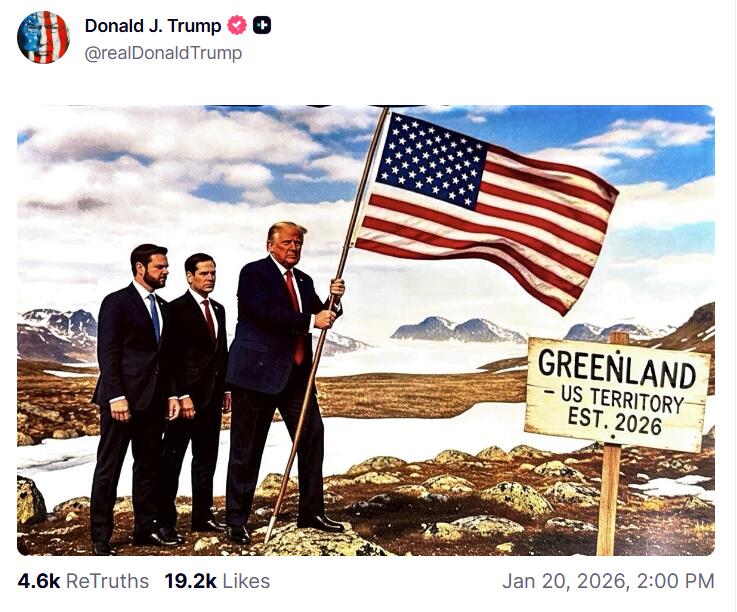
Core Viewpoint - The article highlights the escalating tensions between Western leaders and U.S. President Trump regarding his claims over Greenland, indicating a delicate moment in transatlantic relations [1][2]. Group 1: Reactions from Western Leaders - California Governor Gavin Newsom criticized European leaders for their "complicit" attitude towards Trump's Greenland claims, urging them to stand firm against him [1][3]. - French President Macron warned against U.S. tariff policies, stating that the EU should not hesitate to use counter-coercion tools in response to threats [1][7]. - European Commission President Ursula von der Leyen emphasized that the sovereignty of Greenland and Denmark is "non-negotiable" and criticized proposed tariffs as erroneous [1][9][10]. Group 2: Calls for Unity and Action - Newsom expressed that European leaders need to adopt a stronger stance against Trump, warning that failure to do so could lead to being "swallowed" by his ambitions [5][6]. - Macron called for the EU to utilize counter-coercion mechanisms and reduce investments in overseas bonds, hinting at potential leverage against the U.S. [7][9]. - Canadian Prime Minister Carney urged "middle powers" to unite, suggesting that without collective action, they risk becoming marginalized in negotiations [11][12]. Group 3: Trump's Social Media Strategy - Trump escalated his social media campaign by posting AI-generated images depicting U.S. flags over Greenland, reinforcing his territorial ambitions [13][16]. - He publicly shared private messages from Macron, indicating a willingness to expose diplomatic communications, which some view as part of his new diplomatic approach [15][16].

全球多国赴美商务出行预定下降 欧洲跌幅高达26%
news flash· 2025-06-03 07:47
Core Insights - Global business travel bookings to the U.S. have declined by 19.3% in April, indicating a significant drop in demand for U.S. business travel from multiple countries [1] - European countries have experienced particularly severe declines, with Germany down 30.4%, France down 22.4%, and the UK down 14.4% [1] - The decline is attributed to the deteriorating image of the U.S. among Europeans, influenced by U.S. tariff policies and uncertainties in U.S.-Europe relations [1] - Concerns over U.S. border control measures have also contributed to the decrease, as European travelers have faced various entry issues, including prolonged detentions [1]