反胁迫机制(ACI)

Search documents
达沃斯聚焦特朗普“夺岛”:加州州长喊话欧洲挺直腰杆、马克龙警告“帝国野心”,英国呼吁降温
Hua Er Jie Jian Wen· 2026-01-20 22:09
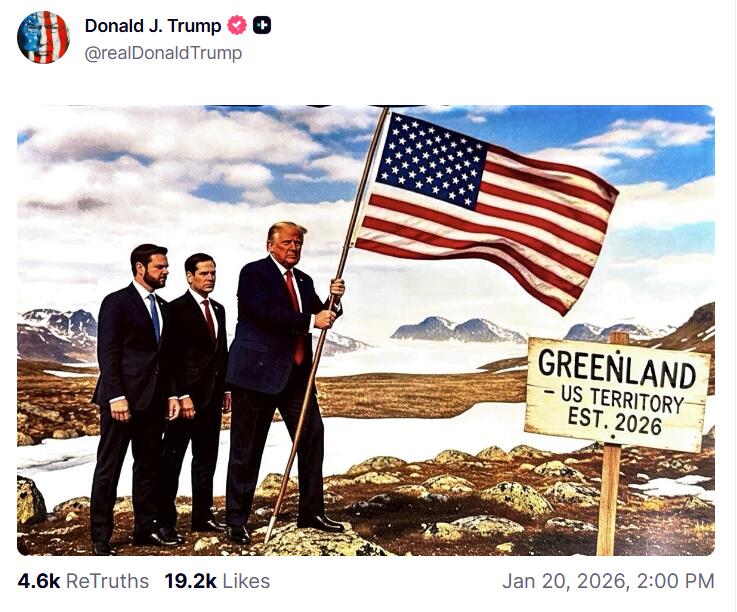
Core Viewpoint - The article highlights the escalating tensions between Western leaders and U.S. President Trump regarding his claims over Greenland, indicating a delicate moment in transatlantic relations [1][2]. Group 1: Reactions from Western Leaders - California Governor Gavin Newsom criticized European leaders for their "complicit" attitude towards Trump's Greenland claims, urging them to stand firm against him [1][3]. - French President Macron warned against U.S. tariff policies, stating that the EU should not hesitate to use counter-coercion tools in response to threats [1][7]. - European Commission President Ursula von der Leyen emphasized that the sovereignty of Greenland and Denmark is "non-negotiable" and criticized proposed tariffs as erroneous [1][9][10]. Group 2: Calls for Unity and Action - Newsom expressed that European leaders need to adopt a stronger stance against Trump, warning that failure to do so could lead to being "swallowed" by his ambitions [5][6]. - Macron called for the EU to utilize counter-coercion mechanisms and reduce investments in overseas bonds, hinting at potential leverage against the U.S. [7][9]. - Canadian Prime Minister Carney urged "middle powers" to unite, suggesting that without collective action, they risk becoming marginalized in negotiations [11][12]. Group 3: Trump's Social Media Strategy - Trump escalated his social media campaign by posting AI-generated images depicting U.S. flags over Greenland, reinforcing his territorial ambitions [13][16]. - He publicly shared private messages from Macron, indicating a willingness to expose diplomatic communications, which some view as part of his new diplomatic approach [15][16].

欧盟“两手准备”应对美国关税:一边加紧谈判,一边筹划反击
智通财经网· 2025-07-21 09:14
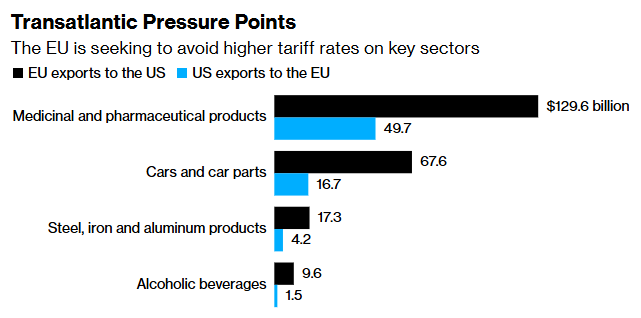
Core Points - The EU and US are entering another round of intensive trade negotiations, aiming to reach an agreement before the August 1 deadline, amidst increasing tensions over tariffs [1][6] - The US is reportedly seeking to implement nearly comprehensive high tariffs on EU goods, with rates exceeding 10%, while exemptions are becoming increasingly limited [2] - The EU is preparing for potential retaliatory measures if negotiations fail, including tariffs on US goods valued at €21 billion and an additional list targeting €72 billion worth of products [11][12] Group 1: Trade Negotiations - The EU and US representatives are set to engage in negotiations to break the deadlock before the August 1 deadline, with US Commerce Secretary expressing confidence in reaching an agreement [1][5] - The discussions include potential limits on certain industries, quotas on steel and aluminum, and the separation of supply chains from surplus metal sources [5][10] - The EU had previously been optimistic about nearing a preliminary framework for discussions on a unified tax rate of 10% on most exports [7] Group 2: Tariff Policies - Trump has warned that if no agreement is reached, a 30% tariff on EU imports will take effect on August 1, along with additional tariffs on cars, steel, aluminum, and other products [6][11] - The EU estimates that US tariffs currently cover €380 billion (approximately $442 billion) of its exports, accounting for about 70% of its total exports to the US [6] Group 3: Retaliatory Measures - The EU is considering rapid action plans for retaliatory tariffs if negotiations do not yield positive results, which could escalate into a broader transatlantic trade conflict [11][13] - The EU has already approved potential tariffs on US goods worth €21 billion in response to US metal tariffs, targeting politically sensitive products [11] - The EU is also exploring measures beyond tariffs, such as export controls and restrictions on public procurement contracts [12][14]