股东查阅权

Search documents
牛散“投诉”上市公司律师?
Zhong Guo Ji Jin Bao· 2025-09-20 11:53
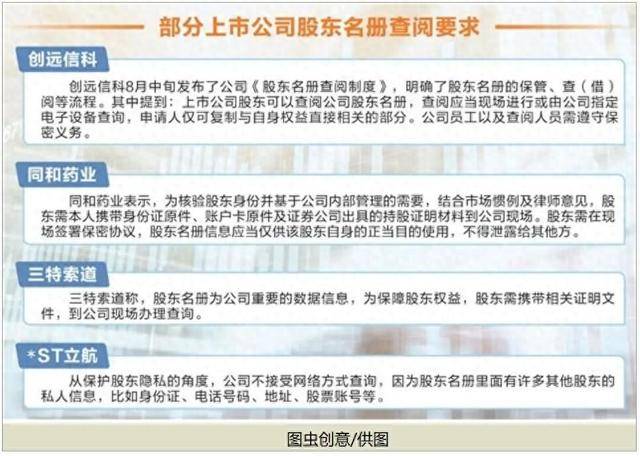
Core Viewpoint - The new Company Law, effective from July 1, 2024, allows shareholders to further copy shareholder information, but the access to shareholder registers is considered sensitive and may require regulation to balance interests [1][5]. Group 1: Shareholder Rights and Regulations - Shareholders have the right to access the company’s articles of association and shareholder register as per the Company Law [5]. - The new Company Law introduces a provision that shareholders must comply with the Securities Law and other regulations when accessing and copying relevant materials [5]. - Currently, only a few listed companies have established a system for accessing shareholder registers, indicating a need for more structured regulations [1][10]. Group 2: Case of Dispute - A well-known investor, Xie Kai, faced verbal abuse from a lawyer while attempting to access the shareholder register of *ST Lihang, leading to a public complaint [2][3]. - Xie Kai, known for his significant investments, has not been listed among the top shareholders of *ST Lihang but has shown interest in other Sichuan-listed companies [3][4]. Group 3: Variability in Access Procedures - Different companies have varying interpretations of shareholder access rights, with some allowing only personal access to one’s own shareholding information while others provide broader access [6][9]. - Companies like *ST Lihang require shareholders to provide identification and sign confidentiality agreements before accessing the register [7][8]. Group 4: Balancing Interests - The access to shareholder registers involves balancing shareholder rights with the need to protect company operations and market fairness [8]. - Legal experts suggest that unrestricted access could lead to unfair practices, and shareholders should demonstrate legitimate purposes for their inquiries [8][9]. - Recommendations include establishing clearer regulations on the scope of access to shareholder registers and implementing internal company guidelines to manage this process [9][10].
牛散“投诉”上市公司律师?关乎多方利益,A股股东名册查阅制度仍待完善
Sou Hu Cai Jing· 2025-09-20 11:31
Core Viewpoint - The new Company Law, effective from July 1, 2024, allows shareholders to further copy shareholder information, raising concerns about the sensitivity of shareholder registers and the need for appropriate regulations to balance shareholder rights and company operations [1][5][9]. Group 1: Shareholder Rights and Regulations - Shareholders have the right to access company articles and shareholder registers as per the Company Law [5]. - The new Company Law introduces a provision that shareholders must comply with the Securities Law and other regulations when accessing and copying relevant materials [5][10]. - There is a lack of uniformity among listed companies regarding the interpretation of shareholder access to shareholder registers, with some companies allowing broader access while others restrict it to personal holding information [6][9]. Group 2: Case of Shareholder Dispute - A well-known investor, Xie Kai, faced verbal abuse from a lawyer while attempting to access the shareholder register of *ST Lihang, highlighting tensions between shareholders and company representatives [2][3]. - Xie Kai, known for his significant investments, has shown interest in various Sichuan-listed companies but was not listed among the top shareholders of *ST Lihang as of mid-2025 [3][4]. Group 3: Access Procedures and Company Policies - Companies have different procedures for accessing shareholder registers, with some requiring in-person visits and confidentiality agreements, while others may allow access via email or phone after verifying shareholder identity [6][8]. - The necessity for shareholders to provide identification and proof of ownership is emphasized to protect sensitive information contained in the shareholder register [8][10]. - Some companies have begun to establish formal procedures for accessing shareholder registers, but only a few have implemented comprehensive systems [11].