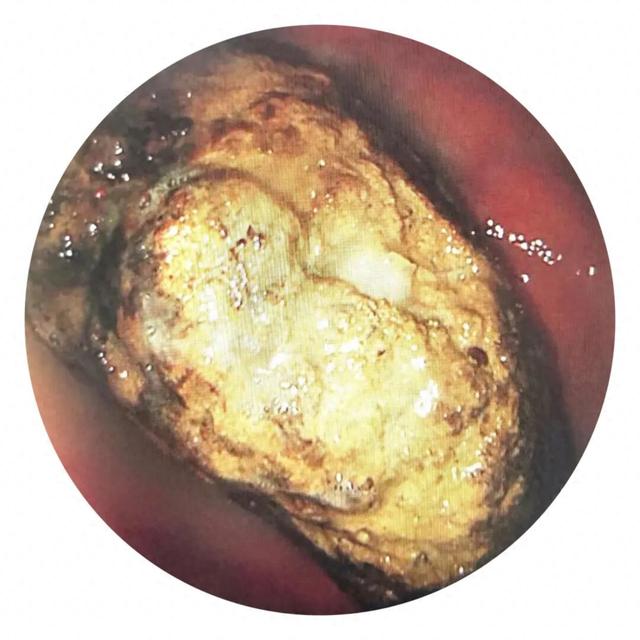
胃柿石

Search documents
秋冬季高发!空腹大量食柿导致胃结石
Xin Lang Cai Jing· 2026-01-11 18:12
Core Viewpoint - The successful non-surgical treatment of a large gastric stone using a combination of holmium laser and a specialized retrieval technique highlights advancements in minimally invasive medical procedures [1][2]. Group 1: Patient Case Summary - A patient from Jiangxi, suffering from a large gastric stone, underwent a successful non-surgical procedure at Southeast University Affiliated Zhongda Hospital, avoiding the need for surgery [1]. - The patient had been experiencing discomfort for over three months and had tried various treatments without success before seeking help from Zhongda Hospital [1]. - The patient was diagnosed with a 12 cm x 6 cm x 6 cm gastric stone, which was affecting her ability to eat and could lead to further complications [1][2]. Group 2: Medical Procedure Details - The medical team customized a treatment plan using "holmium laser + yellow stripe guide wire ring combined stone fragmentation" due to the size and hardness of the stone [2]. - The procedure lasted three hours and successfully removed the entire stone, which weighed over one pound, marking it as the largest single stone encountered clinically to date [2]. - The hospital has successfully performed minimally invasive treatments for over 100 gastric stone patients using holmium laser technology [2]. Group 3: Gastric Stone Information - The type of gastric stone the patient had is known as "gastric persimmon stone," which is common in the autumn and winter seasons [2]. - The formation of gastric persimmon stones is primarily linked to tannins and pectin found in persimmons, especially when consumed on an empty stomach [2].
柿子有3不吃女子空腹吃10个柿子致胃结石
Xin Lang Cai Jing· 2026-01-10 12:17
Core Viewpoint - A woman in Jiangxi experienced abdominal pain and gastric distension after consuming 10 persimmons on an empty stomach, leading to a diagnosis of gastric stones, specifically plant-based gastric stones known as persimmon stones [1] Summary by Relevant Categories Health Risks - The persimmons contain tannins and pectin, which can combine with gastric acid to form clots that harden into stones when consumed on an empty stomach [1] - Such stones can affect eating and may lead to complications like ulcers and inflammation if they remain in the stomach for an extended period [1] Consumption Guidelines - It is advised not to eat persimmons on an empty stomach [1] - Only fully ripe persimmons should be consumed [1] - Avoid consuming persimmons simultaneously with fish, shrimp, or milk [1] - Vulnerable groups such as the elderly, children, and individuals with high gastric acid or poor gastric motility should avoid high-tannin fruits like persimmons, hawthorns, and black dates [1] Symptoms and Medical Attention - Symptoms such as abdominal distension, pain, nausea, and vomiting should prompt immediate medical attention [1]
10个柿子下肚,女子胃里长出一斤多结石
Xin Lang Cai Jing· 2026-01-09 16:42
Core Viewpoint - The article highlights a successful non-surgical treatment for a patient with a large gastric stone using a combination of holmium laser and a specialized guidewire technique, showcasing advancements in minimally invasive medical procedures [1][5]. Group 1: Patient Case - A patient from Jiangxi, referred to as Aunt Xiao, suffered from a large gastric stone after consuming an excessive amount of persimmons, leading to three months of abdominal pain [1][6]. - The patient underwent various treatments at multiple hospitals, including medication and attempts to remove the stone, but was advised to undergo surgery, which she wanted to avoid [1][3]. Group 2: Treatment Method - The medical team at Southeast University Affiliated Zhongda Hospital customized a treatment plan using "holmium laser + yellow guidewire ring combined lithotripsy" due to the stone's size and hardness [5]. - The procedure lasted three hours and successfully removed a stone weighing over one pound, noted as the largest single stone encountered clinically to date [5]. Group 3: Medical Insights - The type of gastric stone diagnosed in the patient is known as "gastric persimmon stone," which is common in the autumn and winter seasons, with the hospital frequently treating similar cases [6]. - The formation of gastric persimmon stones is linked to tannins and pectin found in persimmons, particularly when consumed on an empty stomach [6]. Group 4: Prevention Tips - To prevent gastric stones, it is advised to avoid consuming large amounts of high-tannin fruits like persimmons on an empty stomach and to wait 2 to 4 hours before eating high-protein foods after consuming persimmons [7]. - High-risk groups, including the elderly and those with pre-existing gastric conditions, should be particularly cautious with such fruits [7].