胸有成竹

Search documents
从“胸有成竹”说开去
Xin Lang Cai Jing· 2025-12-25 19:23
Core Viewpoint - The concept of "having a bamboo in one's heart" emphasizes the importance of internal visualization and preparation in artistic creation, suggesting that a clear mental image is essential for successful execution in both painting and poetry [1][4]. Group 1: Development of the Concept - The theory of "having a bamboo in one's heart" has evolved, with Zheng Banqiao clarifying the distinction between the bamboo in the mind, the bamboo seen, and the bamboo created on paper, indicating that each stage involves a dynamic perception that requires timely expression [2][3]. - Contemporary writer Wang Zengqi expresses skepticism towards the strict interpretation of "having a bamboo in one's heart," advocating for spontaneity and improvisation in the creative process, which he believes is essential for true artistic expression [3]. Group 2: Importance of Timely Expression - The necessity of capturing and expressing the moment in artistic creation is highlighted, with references to various scholars who stress that failing to seize the moment leads to missed opportunities for genuine artistic representation [4][5]. - The success of poets like Yang Wanli is attributed to their ability to "capture" fleeting moments in their work, contrasting with the struggles of others who fail to express their inspirations promptly [5][6]. Group 3: Overcoming Creative Challenges - Artists often face the challenge of conveying their internal visions accurately, leading to feelings of regret when the final work does not match their initial inspiration, as noted by Zheng Banqiao [6]. - Continuous practice and innovation are suggested as methods to align technique with artistic intent, allowing for a more authentic representation of the artist's vision [6].
“胸有成竹”这一成语是咋来的
Qi Lu Wan Bao· 2025-06-20 21:34
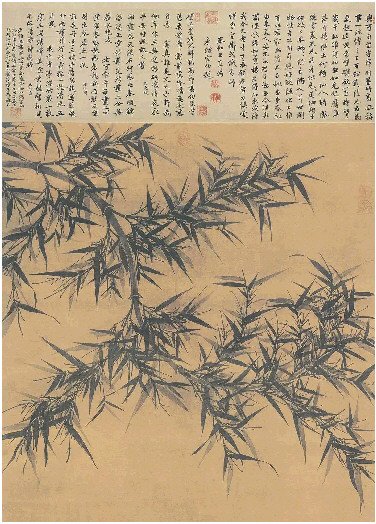
Core Viewpoint - The article discusses the historical significance of the phrase "胸有成竹" (having a bamboo in one's heart) and its connection to the painter Wen Tong and poet Chao Buzhi, highlighting their contributions to Chinese art and literature [2][20]. Group 1: Historical Context - Chao Buzhi, born in 1053, came from a family of officials and was well-educated, excelling in poetry and literature from a young age [3]. - He became a disciple of Su Shi, a prominent poet, and was recognized for his literary talent, particularly in his work "钱塘七述" [4][5]. - Chao Buzhi's career included various official positions, where he demonstrated a commitment to public welfare and governance [6][7]. Group 2: Artistic Influence - The phrase "胸有成竹" originated from Chao Buzhi's experience with Wen Tong, who was known for his exceptional bamboo paintings [8][9]. - Wen Tong's artistic philosophy emphasized the importance of understanding the subject deeply before attempting to depict it, which is encapsulated in the phrase [20]. - The remaining works of Wen Tong, particularly the "墨竹图," showcase his mastery of bamboo painting and the principles that influenced Chao Buzhi [20]. Group 3: Legacy and Impact - Chao Buzhi's later life saw him return to his hometown after a series of political upheavals, where he continued to reflect on his artistic and literary pursuits [12][21]. - His contributions to poetry and his connection to Wen Tong have left a lasting impact on Chinese cultural heritage, particularly in the realm of art and literature [20][21].