航母事业发展

Search documents
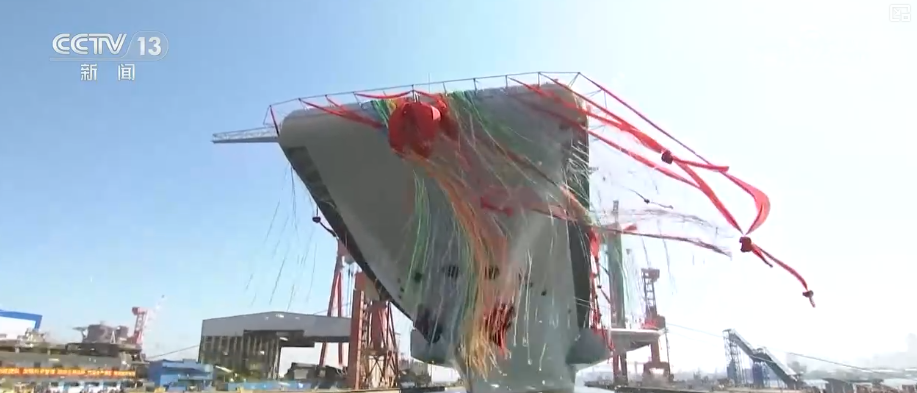
焦点访谈 | 多角度拍摄、全方位解析!回看福建舰硬核成长史
Yang Shi Wang· 2025-12-24 13:26
Core Viewpoint - The commissioning of the Fujian aircraft carrier marks China's entry into the "three aircraft carrier era," significantly enhancing the People's Navy's long-range defense capabilities and modernization level [1][16]. Group 1: Training and Operational Capabilities - The Fujian aircraft carrier completed its first live training mission, successfully testing its electromagnetic catapult, recovery, and deck operation capabilities with various carrier-based aircraft [3][5]. - During the training, the carrier group conducted multiple exercises, including joint search and rescue operations, improving emergency response capabilities and coordination between aircraft and personnel [5][6]. Group 2: Technological Advancements - The Fujian carrier, with a full displacement of over 80,000 tons, is China's first domestically designed and built electromagnetic catapult aircraft carrier, breaking the notion that only nuclear-powered carriers can support such systems [8][9]. - The electromagnetic catapult system allows for faster and more efficient aircraft launches, accommodating a wider variety of carrier-based aircraft, thus enhancing operational efficiency and combat readiness [8][12]. Group 3: Medical and Support Systems - The Fujian carrier features the largest medical center among naval combat vessels, equipped with advanced facilities for emergency medical care, including remote consultation capabilities with hospitals [14]. - The carrier's design includes a comprehensive support system for various operational scenarios, emphasizing the importance of medical and logistical support during long-range missions [12][14]. Group 4: Historical Context and Future Outlook - The development of the Fujian carrier reflects a significant leap in China's naval capabilities, following the commissioning of the Liaoning and Shandong carriers in 2012 and 2019, respectively [16]. - The Fujian carrier is expected to enhance the operational capabilities of the Chinese Navy, with a focus on integrating new equipment and forming a cohesive combat group [18].

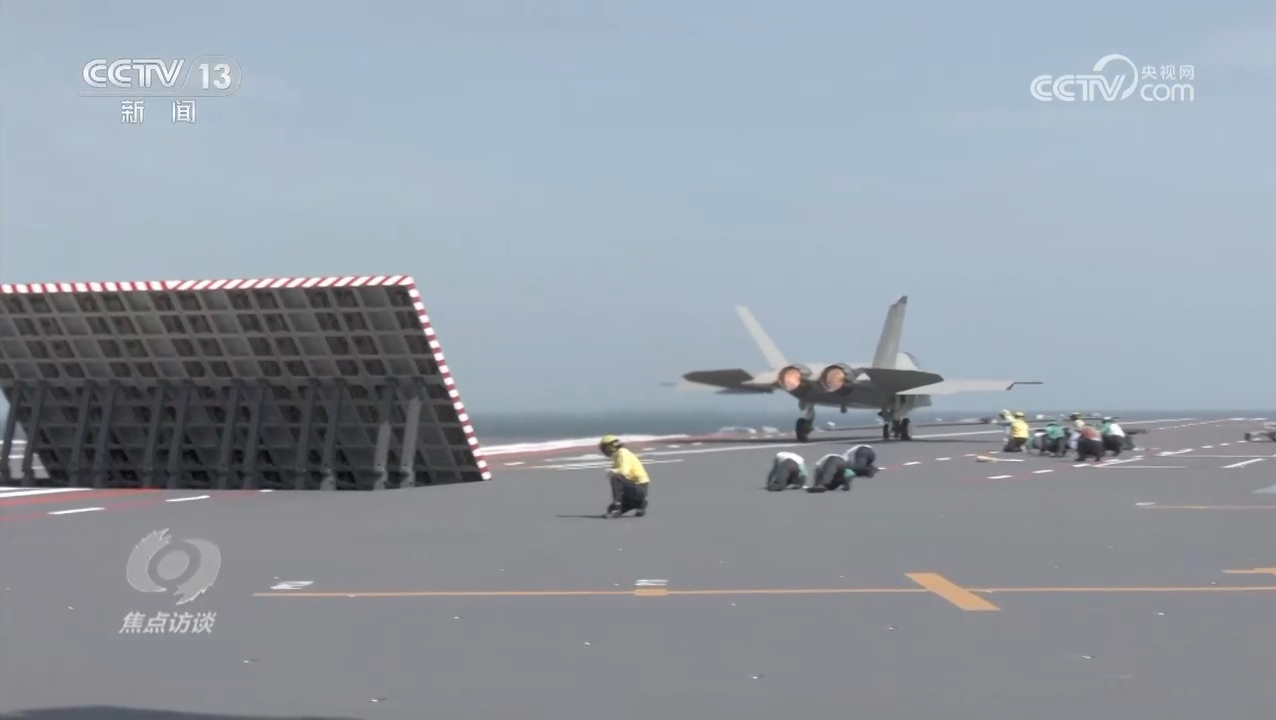
突破多项关键技术瓶颈,中国航母行稳致远!解锁山东舰多个“高光”时刻
Yang Shi Wang· 2025-12-17 04:06
Core Viewpoint - The Shandong aircraft carrier, China's first domestically designed and built carrier, represents a significant advancement in the country's naval capabilities and strategic deterrence [1][5][24]. Group 1: Development and Capabilities - The Shandong carrier was delivered to the navy on December 17, 2019, and is a 60,000-ton conventional power aircraft carrier, marking a milestone in China's independent naval development [1][3]. - The carrier has undergone continuous upgrades to its aviation support systems and has participated in extensive real-world training exercises, enhancing its operational capabilities [3][8]. - The design of the Shandong is optimized for better structure and increased capacity for carrier-based aircraft, contributing to improved fleet command capabilities [5][24]. Group 2: Training and Operational History - Since its commissioning, the Shandong has engaged in various training environments, evolving from single-ship training to fleet exercises, significantly enhancing the People's Navy's operational capabilities [8][12]. - In 2020, the Shandong completed a series of training exercises, including night operations and maritime rescue drills, validating its weapon systems [9][20]. - The carrier participated in significant exercises in 2023, including joint drills in the Western Pacific, showcasing its ability to operate in complex scenarios [12][20]. Group 3: Future Prospects - The Shandong is expected to continue its development alongside other carriers like the Liaoning and Fujian, aiming to achieve a world-class navy status [24][26]. - Future enhancements may include the deployment of advanced carrier-based aircraft, potentially increasing its combat capabilities [26].