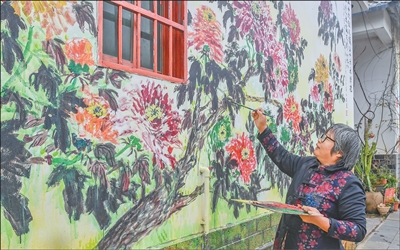
艺术改变乡村

Search documents
“寻宝”碧山村 遇见慢时光(艺术改变乡村)
Ren Min Ri Bao· 2025-10-22 22:21
Core Insights - The article highlights the transformation of Banshan Village into a creative rural destination, integrating cultural experiences with tourism [1][2] - The village has successfully preserved its historical architecture while adapting it for modern cultural activities, such as the Banshan Bookstore and fish lantern workshops [1][2] Summary by Sections Cultural and Historical Significance - Banshan Bookstore, located in a former Qing Dynasty ancestral hall, retains its original structure while incorporating movable bookshelves to display literature related to Huizhou architecture and culture [1] - The bookstore serves as a cultural space that connects the memories of local villagers with the experiences of visitors [1] Tourism and Visitor Experience - Tourists are actively engaged in hands-on activities, such as making fish lanterns, which are a traditional craft passed down through generations [2] - The immersive experience of creating and lighting their own fish lanterns has become a popular attraction for visitors [2] Economic Development and Innovation - Banshan Village has developed a unique tourism model that includes homestays, cultural creative districts, ancient scenic tours, educational bases, and wellness retreats [2] - Currently, the village boasts 42 various homestays and dining establishments, along with 11 creative shops, contributing to its status as a creative rural hub [2]
来,看看咱村的艺术范儿(艺术改变乡村)
Ren Min Ri Bao· 2025-09-01 22:41
Core Viewpoint - The transformation of Qianyongdong Village into "898 Art Village" showcases the successful integration of art and culture into rural life, attracting tourism and enhancing the local economy [2][3][5] Group 1: Development of the Art Village - The idea to create an art village emerged in late 2019 when local entrepreneurs collaborated with artists to revitalize the village through wall paintings and artistic activities [2] - The village gained popularity with the introduction of vibrant wall murals, such as the "Squirrel Eating Corn," which became a tourist attraction, leading to increased visitor traffic [2][3] - The village was officially named "898 Art Village," reflecting its unique identity and connection to the local area [3] Group 2: Cultural and Economic Impact - The art village faced challenges such as limited income and high operational costs, prompting a strategic shift towards cultural industry development by the end of 2022 [3] - In 2023, the village was included in provincial and municipal cultural industry development projects, enhancing its profile and support [3] - The establishment of new cultural venues, such as the Chufeng Mushi Museum and provincial performance centers, has revitalized the art village and attracted more visitors [3] Group 3: Community Engagement and Future Aspirations - The integration of art into daily life has fostered community engagement, with villagers participating in cultural events and forming artistic groups [3] - The former principal of the village school has adapted to the changes by running a delivery service, demonstrating the economic diversification resulting from the art initiative [3] - Future plans include creating an open platform for art, aiming to further enrich the village's cultural narrative and community involvement [5]