行业周期影响

Search documents
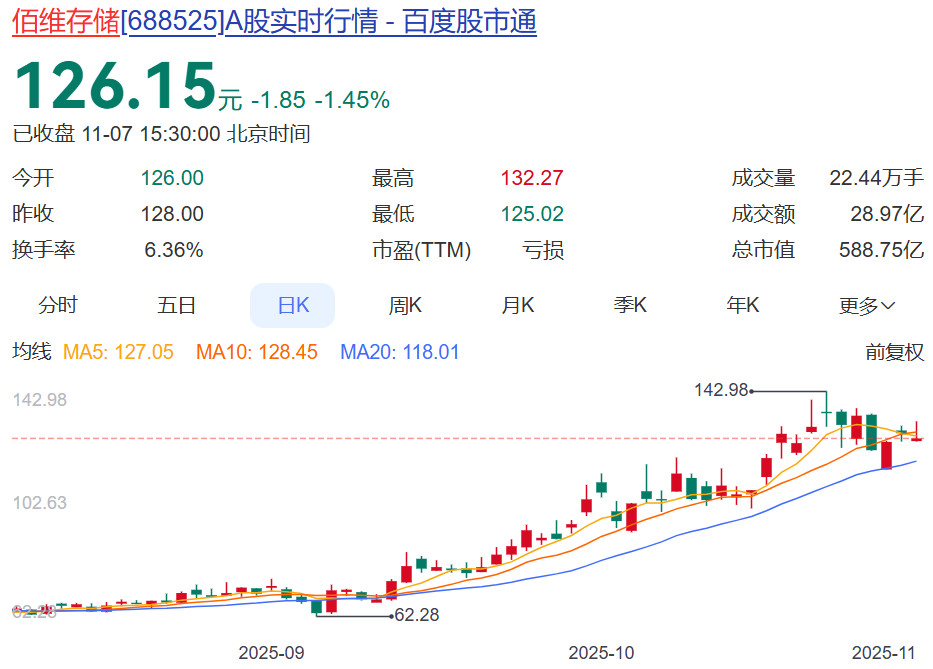
37岁“创二代”,冲击港股IPO!公司业绩剧烈波动,客户包括谷歌、小米等,市值近600亿元
Mei Ri Jing Ji Xin Wen· 2025-11-07 15:45
Core Viewpoint - The storage chip industry remains vibrant, with Baiwei Storage (688525.SH) pursuing a listing on the Hong Kong Stock Exchange after nearly three years on the A-share Sci-Tech Innovation Board, amid a significant surge in its stock price and market value [1][3]. Company Overview - Baiwei Storage is the only independent storage solution provider globally with wafer-level packaging capabilities, experiencing a stock price increase of approximately 110% in 2023, with a market value exceeding 60 billion RMB [1]. - The company was founded by Sun Rixin, who transitioned from a government job to entrepreneurship in the 1990s, establishing partnerships with major semiconductor manufacturers like Intel and Micron [3][4]. - The company underwent a generational leadership transition, with Sun Chengsi, the second-generation leader, taking over as chairman and executive director, controlling 24.74% of the voting rights [4]. Financial Performance - Baiwei Storage's revenue grew from 2.986 billion RMB in 2022 to an estimated 6.695 billion RMB in 2024, but its net profit has fluctuated significantly, with a profit of 71.22 million RMB in 2022, a loss of 630.87 million RMB in 2023, and a projected profit of 135.24 million RMB in 2024 [5][6]. - The company's gross margin has also shown volatility, reflecting the cyclical nature of the storage chip industry, with DRAM and NAND Flash product prices dropping over 50% year-on-year in 2023 [6][7]. Market Challenges - The company faces challenges due to the cyclical nature of the storage chip industry, which has led to significant fluctuations in financial performance and cash flow, with net outflows reported in 2022, 2023, and the first half of 2025 [7]. - Baiwei Storage's customer and supplier concentration is high, with the top five customers accounting for 47.3% of revenue and the largest customer representing 12.6%, while the top five suppliers account for 65.6% of purchases [7].