存储芯片

Search documents
存储芯片“超级周期”还能持续多久?
硅谷101· 2026-04-12 00:00
手机和PC 今年至少会要跌5个点 但没人会在乎这个事情 就这个市场变成0 我都无所谓 因为我不做了 全球存储芯片正在经历的 40年来最严重的供需失衡 那么这轮周期 到底能够持续多久呢 我们现在的短缺的情况是 26年已经全部卖完 27年大概率也差不多卖完 可能会到2028年 才会有真正的好转 所以 这是一个接下来 两到三年短缺的一个情况 我们要扩产能也需要几年 说不定那个时候 AI这个周期就爆掉了 所以我宁可不扩产 我就很保守 我就不求挣500块钱了 我就挣100块钱 也挺好 但是呢 更值得关注的 是一个更大的问题 这个行业 会不会从此告别周期呢 或者说它把一个周期性的行业 变成一个结构性增长的行业 它就不再是一个周期了 持续很多年的话 它们的市盈率都可以再翻倍了 存储芯片价格的疯涨 当然不是没有代价的 它正在重新分配 整个电子产业链的利润 PC和手机这些厂商 现在在我们这里 它哪怕名字再响 它都没有那么大的议价权 它们现在不是那么吃香 因为它们的margin(利润) 就是比云厂商的低 就是它们(云厂商)不是很在意 到底这个内存多少钱 手机和PC大家都知道 今年至少会要跌5个点 这是没得说的 有可能会更多 但没 ...


存储价格崩盘?记者实探华强北
新华网财经· 2026-04-01 06:45
Core Viewpoint - The recent decline in memory prices is attributed to market fluctuations, but the overall supply shortage remains unchanged, with major clients accelerating purchases to mitigate ongoing shortages [1][4][9]. Group 1: Market Dynamics - The memory market has experienced a price drop of 300 to 500 yuan compared to the peak at the end of January, but the notion of widespread panic selling among individual merchants is not entirely accurate [1][4]. - The price of DDR5 32G memory modules is influenced by various factors, with current market prices for popular models ranging from 2600 to 2800 yuan, reflecting a decrease of 300 to 500 yuan from previous highs [6][8]. - Reports of panic selling in the market are linked to a new AI memory compression technology introduced by Google, which has caused some fear among traders, although the actual impact on prices has been limited [5][9]. Group 2: Supply and Demand - The storage market is expected to remain in a state of "tight balance" or even "hard shortage" for at least the next 24 months, driven by the increasing demand for AI applications [11]. - The core driver of the current price surge is the shift in demand from traditional consumer electronics to AI-related needs, which has created a structural mismatch between supply and demand [9][10]. - Analysts predict that DRAM prices will continue to rise until 2027, primarily due to high visibility in data center infrastructure demand from cloud service providers [10].

英大证券晨会纪要-20260401
British Securities· 2026-04-01 02:28
Market Overview - The A-share market is expected to experience short-term fluctuations and consolidation, with a focus on stocks that exceed performance expectations [2][4][8] - Recent trading volumes have remained around 2 trillion, indicating a slowdown in the influx of new capital, which may prolong the market's oscillation cycle [3][10] - The three major indices showed a clear trend of fluctuation and retreat, with the Shanghai Composite Index closing at 3891.86 points, down 0.80% [6][10] Sector Performance - The banking sector showed resilience, supporting the index despite a general market downturn, as high-dividend stocks are valuable in a low-interest environment [7] - The transportation equipment sector, particularly rail transport, saw gains due to significant infrastructure projects, with total investments exceeding 500 billion [7] - Conversely, sectors such as coal, wind power equipment, and battery materials experienced declines, reflecting a broader market sentiment that is currently low [5][6] Economic Indicators - The latest manufacturing PMI data has returned to the expansion zone, ending two months of contraction, which has positively impacted market sentiment [4][8] - The current period is characterized by the release of annual and quarterly reports, with stocks that report better-than-expected earnings likely to attract capital and drive market recovery [4][8]
告别海量研报,精准提炼投资先机,助你决策快人一步
第一财经· 2026-03-30 09:16
Core Viewpoint - The article promotes the "Smart Membership PLUS + Ace Combination," which offers a one-stop solution for investment research and announcements, aimed at making research easier and ensuring investors do not miss key opportunities [2][4]. Summary by Sections Product Highlights - The combination helps investors efficiently filter through vast amounts of information, allowing them to focus on critical investment opportunities with less time spent [4]. - The annual purchase price for the combination is as low as 16 yuan per day, available at a limited-time promotional price [5]. Target Audience - Designed for investors who lack time to sift through numerous announcements and want to capture key information efficiently [5]. - Suitable for those who find it challenging to understand announcements and wish to avoid negative surprises while seeking positive stock opportunities [5]. - Aimed at conservative investors who value information asymmetry and wish to capture market opportunities in advance [5]. Research Tool Features - The "Research Report Gold Selection" acts as a specialized filter and time compressor for investment research, helping users navigate through hundreds of reports to find the most impactful insights [7][8]. - The service filters out over 200 research reports daily, retaining only 3-5 high-quality contents, and summarizes the core logic on a single page [9]. - It provides alerts for when to take action based on institutional research windows and performance forecasts [9]. Recent Performance - The article lists several industry sectors with notable performance metrics, including: - **Optical Communication**: Average increase of approximately 130% in the first quarter, driven by AI computing demand and supply shortages [10]. - **Storage Chips**: Significant price increases in DRAM/NAND, with some stocks seeing gains of up to 120% year-to-date [10]. - **AI Agents/Computing Power**: A rise of about 165% in key stocks, reflecting the growing demand for AI capabilities [10]. - **Power Coordination**: The sector has shown strong performance, with some stocks increasing nearly 130% since early March [10]. - **Humanoid Robots/Industrial Robots**: Notable increases in stock prices, with some exceeding 20% gains year-to-date [10].

国产手机,为什么越卖越贵?
创业邦· 2026-03-30 04:15
Core Viewpoint - The article discusses the significant price increase of Chinese smartphones, which is not merely a result of greed or cost transfer, but rather a complex interplay of technology, brand narrative, user segmentation, global compliance, and geopolitical competition [61][64]. Group 1: Price Increase Trends - Major Chinese smartphone brands like vivo, Xiaomi, and OPPO are raising prices across all segments, with flagship models starting at 4399 yuan for vivo and 4499 yuan for Xiaomi [6][8]. - The price increase is described as a silent revolution, moving from high-end models to all price ranges, reflecting a shift in the market dynamics [5][8]. - Consumers express frustration over rising prices while simultaneously opting for installment plans, indicating a disconnect between income growth and smartphone pricing [10]. Group 2: Memory Chip Price Surge - The surge in memory prices is attributed to the dominance of Korean companies like SK Hynix, which have shifted their production focus to higher-margin products, leading to a supply crunch for standard DRAM and LPDDR [12][22]. - The BOM (Bill of Materials) cost for flagship smartphones is projected to increase from 18% in 2024 to 25% in 2026 due to rising memory costs [22]. - The competitive landscape has changed, with smartphone manufacturers losing bargaining power as suppliers tighten their pricing strategies [25]. Group 3: Display Technology Independence - Chinese display manufacturers like BOE are achieving technological parity with Samsung, marking a shift in the supply chain dynamics and reducing reliance on a single supplier [27][32]. - The introduction of advanced display technologies by domestic manufacturers allows smartphone brands to differentiate their products without being constrained by Samsung's supply terms [32]. - Although the cost of domestic displays is currently higher by 8%-12%, manufacturers are willing to pay for the security and independence it provides [32]. Group 4: Chipset Pricing and Self-Development - Qualcomm continues to increase prices for its chipsets, which has led to a growing concern among Chinese smartphone manufacturers about their dependency on a single supplier [38][39]. - The trend of self-developed chips is gaining momentum, with companies like Xiaomi and OPPO aiming to cover a significant portion of their flagship models with in-house solutions by 2026 [41][43]. - The strategy of gradually replacing high-cost components with self-developed alternatives is seen as a way to mitigate risks associated with reliance on external suppliers [44]. Group 5: Consumer Behavior and Market Dynamics - The average smartphone replacement cycle in China has extended from 24 months in 2019 to 30-36 months by 2026, prompting manufacturers to adjust their pricing strategies accordingly [49]. - Brands are leveraging AI capabilities to redefine the value proposition of smartphones, encouraging consumers to pay for "intelligence" rather than just hardware [50][66]. - The willingness of consumers to pay a premium for AI features indicates a shift in market expectations and the perceived value of smartphones [71]. Group 6: Future Implications - The ongoing price increases and shifts in technology are part of a broader social experiment regarding value perception in the smartphone market [73]. - The outcome of this experiment will determine which brands can sustain their presence in the market, particularly in the context of rising competition from domestic chip manufacturers and changing consumer preferences [74][75].




存储芯片,突发大消息!机构:上车机会
天天基金网· 2026-03-28 01:53
Core Viewpoint - Google's new algorithm, TurboQuant, has raised concerns about its impact on memory chip demand, leading to significant stock price fluctuations in the memory chip sector [2][3][4]. Group 1: Market Reaction - On Thursday, major memory chip stocks experienced a sharp decline, with SanDisk dropping over 11%, Micron Technology nearly 7%, and SK Hynix over 6%, resulting in a total market value loss exceeding $90 billion for major memory manufacturers [3][4]. - Conversely, on Friday, memory chip stocks rebounded, with SanDisk rising over 2% and Micron Technology up 0.50%, despite the previous day's sell-off [2][3]. Group 2: Algorithm Impact - TurboQuant, which utilizes PolarQuant and QJL technologies, claims to compress KV Cache memory usage by at least six times while achieving up to eight times performance improvement on H100 GPU accelerators [4][5]. - Analysts suggest that the algorithm primarily affects the inference stage's key-value cache and does not impact high-bandwidth memory (HBM) used for model weights, indicating that overall memory demand remains robust [5][6]. Group 3: Analyst Perspectives - Morgan Stanley noted that the market may have misinterpreted the algorithm's implications, emphasizing that the efficiency gains do not equate to a reduction in total storage demand but rather enhance throughput per GPU [5][6]. - Analysts from Lynx Equity Strategies and Wells Fargo echoed similar sentiments, asserting that the algorithm does not fundamentally alter the overall scale of hardware procurement and may actually lower service costs, facilitating broader AI deployment [6][7]. Group 4: Long-term Outlook - The memory chip supply is expected to remain tight until 2030, with significant investments in data centers projected, amounting to approximately $650 billion this year from major players like Amazon and Google [6][7]. - The anticipated growth in server DRAM demand by 39% and HBM demand by 58% by 2026 suggests that the TurboQuant optimization effects may be overshadowed by industry growth trends [6][7].

突发!存储巨头遭美国调查!
国芯网· 2026-03-27 15:26
Core Viewpoint - The article discusses the investigation initiated by the U.S. International Trade Commission (ITC) into NAND and DRAM memory chips, focusing on potential patent infringements by major companies such as Japan's Kioxia and South Korea's SK Hynix [2][4]. Group 1: Investigation Details - The investigation is based on a complaint filed by U.S. MonolithIC 3D on February 17, 2026, alleging violations of Section 337 of the Tariff Act of 1930 regarding the import and sale of certain NAND and DRAM memory chips [4]. - MonolithIC 3D is requesting the ITC to issue a limited exclusion order and a cease-and-desist order against the accused companies [4]. Group 2: ITC Process and Timeline - The ITC will determine the end date of the investigation within 45 days after the case is officially filed [6]. - Unless the U.S. Trade Representative vetoes the decision for policy reasons, any relief order issued by the ITC in Section 337 cases will take effect on the date of issuance and will be final 60 days after that date [6].
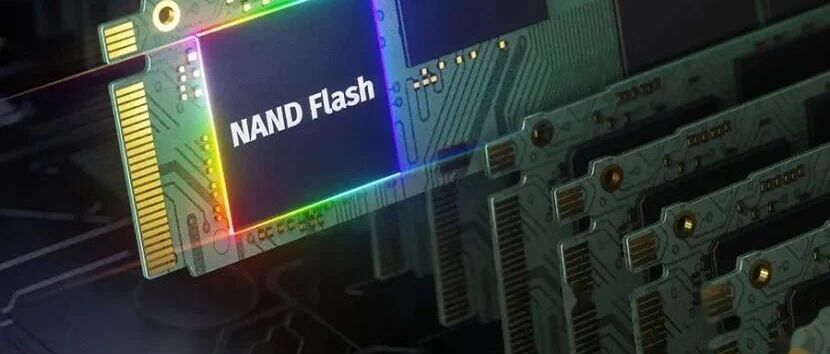
突发重磅!铠侠、SK海力士被美337调查!
是说芯语· 2026-03-27 09:53
Core Viewpoint - The U.S. International Trade Commission (USITC) has initiated a Section 337 investigation into certain NAND and DRAM memory chips based on a complaint from MonolithIC 3D Inc., alleging patent infringements related to the importation and sale of these products in the U.S. [2][3] Group 1: Investigation Details - The investigation was officially voted on March 26, 2026, under case number 337-TA-1492 [1] - The complaint was filed on February 17, 2026, and supplemented on February 25 and March 16, 2026, alleging violations of Section 337 of the Tariff Act of 1930 [2][3] - MonolithIC 3D Inc. claims infringement of eight U.S. patents and requests a limited exclusion order and cease and desist orders from the USITC [3] Group 2: Respondents and Industry Impact - The investigation targets several companies, including KIOXIA Holdings Corporation and SK hynix Inc., along with their subsidiaries [4][6] - SK hynix reported revenues of $60.64 billion in 2025, a 37.2% increase year-over-year, making it the third-largest semiconductor company globally [6] - KIOXIA is recognized as the third-largest NAND flash manufacturer worldwide, maintaining a strong position in various storage segments [6] Group 3: Procedural Aspects - The USITC will set a target date for completing the investigation within 45 days of its initiation [3][7] - Remedial orders issued by the USITC will take effect upon issuance and become final 60 days later unless disapproved by the U.S. Trade Representative [7]

谷歌发布重磅技术,存储芯片股集体下挫,佰维存储一度跌超6%
21世纪经济报道· 2026-03-27 03:10
Core Viewpoint - The article discusses the recent decline in the A-share storage chip market, highlighting the impact of Google's new compression algorithm, TurboQuant, on memory demand and the overall storage industry outlook [1][3][5]. Group 1: Market Performance - On March 27, A-share storage chips experienced a collective decline, with companies like Baiwei Storage dropping over 6% at one point, and other firms such as Jiangbolong and Zhaoyi Innovation also seeing declines of over 3% [1][2]. - The storage index showed significant drops across various companies, with Jiangbolong at -3.73%, Zhongdian Port at -3.31%, and Baiwei Storage at -3.01% [2]. Group 2: Technological Developments - Google introduced TurboQuant, a compression algorithm aimed at reducing memory requirements for AI systems, particularly addressing key-value cache bottlenecks [3][4]. - TurboQuant can compress key-value caches to 3-bit precision without retraining models, achieving approximately 6 times memory compression while maintaining model accuracy [3][4]. Group 3: Industry Outlook - Despite the recent market downturn, the long-term demand for storage chips remains strong, driven by increased investments in AI infrastructure by overseas CSPs, which is expected to boost enterprise storage demand [5]. - Analysts predict that the current storage cycle's intensity and sustainability may surpass the previous cycle, with significant profit increases for related industry chain companies [5]. - Supply constraints are expected to persist until at least the second half of 2027, despite major DRAM manufacturers planning production increases of about 26% for DRAM and 24% for NAND by 2026 [5].



TurboQuant“横空出世”,科技圈高呼“谷歌版DeepSeek”、“真实版Pied Piper”,华尔街“呵呵,抄底内存股”
硬AI· 2026-03-26 14:33
Core Viewpoint - Google's new AI memory compression technology, TurboQuant, claims to reduce cache memory usage by 6 times and improve performance by 8 times, causing significant market reactions among storage giants like Micron and SanDisk, which saw declines of over 5% [2][4][7]. However, Wall Street analysts view this as an overreaction and see it as a buying opportunity, suggesting that such efficiency improvements will not fundamentally alter hardware demand but may actually stimulate larger AI deployment scales [2][4][6]. Group 1: Market Reaction - Following the announcement of TurboQuant, the storage chip sector experienced a sharp decline, with the storage chip and hardware supply chain index dropping by 2.08% [4]. Notable declines included SanDisk down 6.5%, Micron down 4%, and Western Digital and Seagate down over 4% and 5% respectively [6][7]. - The immediate market panic was driven by concerns that TurboQuant could significantly reduce the long-term demand for storage hardware, leading to a sell-off in related assets [6][7]. Group 2: Technology Impact - TurboQuant is designed to address the key-value cache bottleneck in AI systems, achieving a remarkable 6-fold memory reduction and up to 8 times performance improvement on NVIDIA H100 GPUs compared to older 32-bit models [9][11]. - The technology employs a two-step compression method, utilizing PolarQuant and QJL algorithms to enhance efficiency without sacrificing accuracy [9]. Group 3: Analyst Perspectives - Analysts from Wall Street, including those from Lynx Equity Strategies and Wells Fargo, argue that the market's reaction to TurboQuant is exaggerated, emphasizing that advanced compression techniques will not fundamentally disrupt hardware procurement [13][15]. - Morgan Stanley highlights that TurboQuant's impact is limited to inference stages and does not affect model training or high-bandwidth memory (HBM) requirements, suggesting that the technology could actually lower costs and stimulate demand for AI applications [15]. Group 4: Long-term Demand Implications - The concept of Jevons Paradox is referenced, indicating that increased efficiency may lead to greater overall demand rather than a decrease [15]. - The technology could lower the cost of AI deployment, making it feasible for more applications that were previously cost-prohibitive, thus potentially enhancing long-term demand for memory and storage hardware [15].