行业马太效应

Search documents
华宸未来基金“空壳”之后:无基金可管,公司将走向何方?
Hua Xia Shi Bao· 2026-01-31 06:36
Core Viewpoint - Huachen Future Fund is facing significant operational challenges, including the transfer of its last remaining fund management rights to a new entity, which highlights the severe financial distress and potential dissolution of the company [2][4][7]. Group 1: Fund Management and Operations - As of January 1, 2026, Huachen Future Fund only has two active funds, with the Huachen Future Value Pioneer Mixed Fund being terminated due to insufficient scale [3]. - The remaining fund, Huachen Future Steady Income Bond Fund, is set to be transferred to the management of Fuguo Fund, which will also result in a name change to Fuguo Fengtai Bond [4]. - The company has not successfully launched any new funds for three consecutive years, indicating a critical decline in its operational capacity [2]. Group 2: Financial Performance - Huachen Future Fund's highest recorded asset size was 1.27 billion in 2023, but it plummeted to 64.3 million in 2024 and further down to 4.5 million by the end of 2025, representing a decline of over 96% in just two years [4]. - For the fiscal year 2024, the fund reported an operating income of 4.01 million, with a total loss of 20.01 million, indicating severe financial distress [7][8]. - By the third quarter of 2025, the fund's operating income was only 108.2 thousand, with losses deepening to 11.4 million, further exacerbating its financial instability [8][9]. Group 3: Shareholder Actions and Market Implications - Huachen Trust, the largest shareholder, is attempting to sell its 40% stake in Huachen Future Fund for 4.8 million, a significant discount from the previous listing price of 17.2 million [2][10][11]. - The transfer of management rights instead of liquidation is considered a rare move in the industry, reflecting the company's unique circumstances and the broader challenges faced by smaller fund management firms in a competitive market [7][9]. - The situation of Huachen Future Fund illustrates the increasing "Matthew Effect" in the industry, where smaller firms struggle to survive, potentially leading to a market consolidation towards higher-quality institutions [11].


涨幅3-25%,国星、强力巨彩等近40家企业宣布调价
Xin Lang Cai Jing· 2026-01-30 10:24
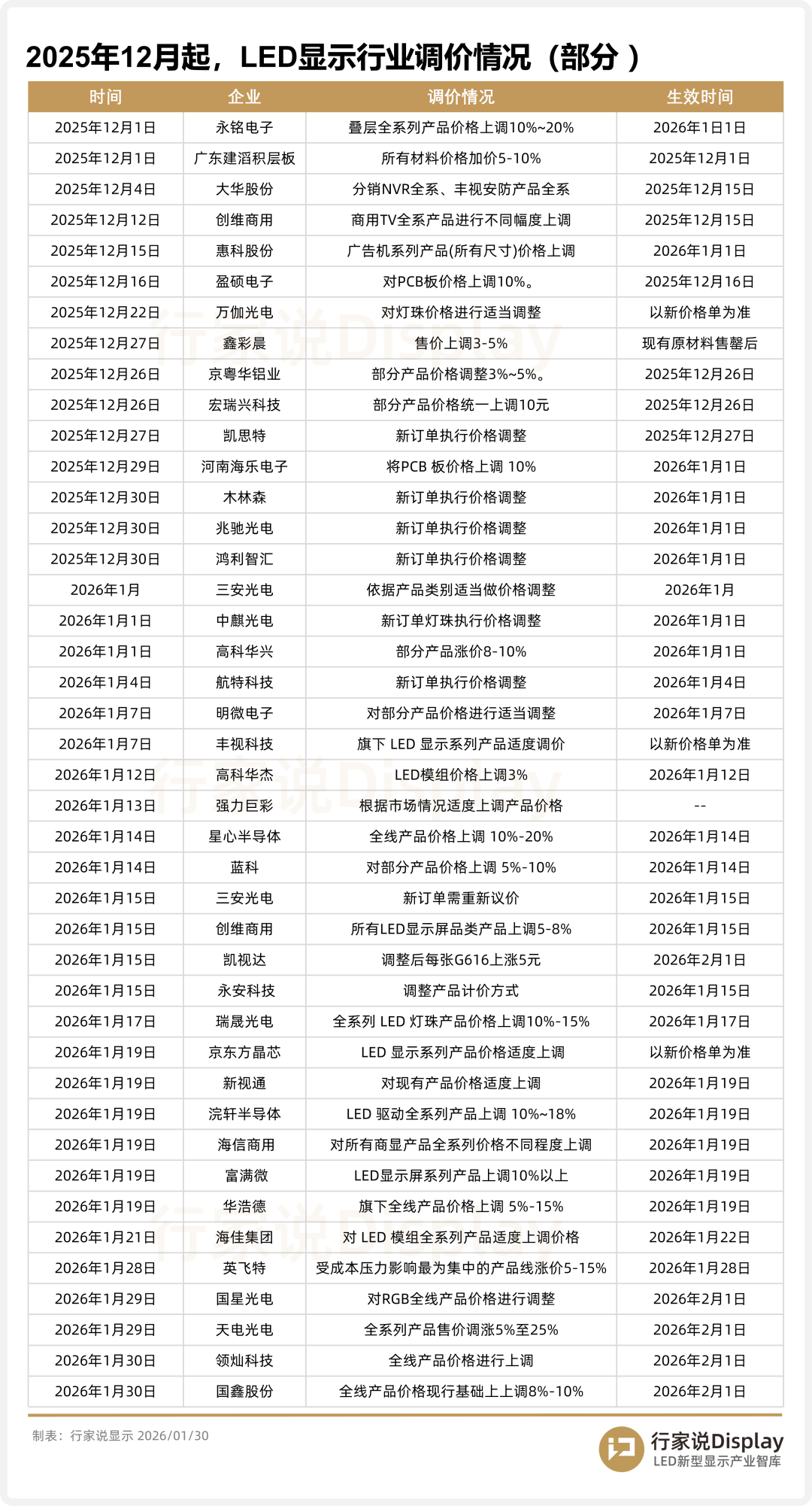
Core Viewpoint - The recent surge in precious metal prices has led to significant price increases across nearly 40 companies in the LED display industry, with adjustments ranging from 3% to 25% [1][2][9]. Group 1: Price Increases - Starting from December 2025, over 30 LED display-related companies have announced price hikes due to rising costs of raw materials [3]. - Specific companies such as Yongming Electronics and Guangdong Jiantao have raised prices by 10%-20% and 5%-10% respectively [3]. - The price adjustments are a response to the unprecedented increases in the costs of precious metals, wafers, and other key materials [2][11]. Group 2: Material Cost Increases - In January 2026, gold prices increased by over 20%, silver by more than 60%, and copper by nearly 50% compared to early 2025 [2]. - Companies like Tian Dian Optoelectronics reported a 102% increase in precious metal costs, leading to significant losses and necessitating price adjustments [9]. - The overall cost of materials has escalated to a point where existing pricing structures are no longer sustainable for many firms [2][18]. Group 3: Industry Dynamics - The current price increase trend reflects a heightened sensitivity of the LED display industry to raw material costs, with a notable synchronization in price adjustments across companies [38]. - Larger firms may leverage their supply chain advantages to mitigate cost pressures, while smaller companies face challenges in maintaining competitive pricing [38]. - The ongoing price adjustments may lead to increased industry consolidation as companies adapt to the changing market landscape [38].




“券商一哥”净赚超300亿
投中网· 2026-01-16 06:40
Core Viewpoint - The article highlights the record-breaking financial performance of CITIC Securities in 2025, marking the highest annual profit in its history, driven by a bullish A-share market and increased trading activity [5][9]. Financial Performance - In 2025, CITIC Securities achieved operating revenue of 74.83 billion yuan, a year-on-year increase of 28.75%, and a net profit attributable to shareholders of 30.05 billion yuan, up 38.46% [5][9]. - The basic earnings per share reached 1.96 yuan, reflecting a growth of 39.01% [5]. - The total asset scale of CITIC Securities increased to 2.08 trillion yuan, a growth of 21.79% compared to the previous year [8]. Market Conditions - The overall domestic capital market showed an upward trend in 2025, with significant increases in trading activity and investor confidence, leading to a notable rise in A-share indices [5][9]. - The average daily trading volume in the A-share market reached 1.98 trillion yuan, a 67% increase year-on-year, while the margin financing balance at the end of 2025 was 2.5 trillion yuan, up 36% [9]. Business Segments - CITIC Securities reported strong growth across its core business segments, including brokerage, investment banking, and proprietary trading, with brokerage fee income increasing by 52.9% to 10.94 billion yuan and investment income soaring by 190.05% to 32.84 billion yuan in the first three quarters of 2025 [11]. - In the investment banking sector, despite a generally lower number of IPOs, CITIC Securities maintained its leading position, with 17 IPOs raising 24.7 billion yuan, an 86% increase, and 41 refinancing deals raising 229 billion yuan, up 230% [12]. International Business - The international operations of CITIC Securities also showed robust growth, with its overseas subsidiary generating 1.492 billion USD in revenue, a 52.87% increase, and a net profit of 387 million USD, up 65.38% [12]. Industry Outlook - The article suggests that the recovery of the brokerage industry in 2025 is expected to benefit other firms as well, with projected net profit growth for listed brokerages of 61% year-on-year [14]. - Market experts believe that the increase in market activity and improved policy environment will drive growth in brokerage and investment banking sectors [14]. Valuation Concerns - Despite strong performance, the brokerage sector's valuation remains low historically, with the brokerage index rising only 4.05% in 2025, significantly underperforming the CSI 300 index, which rose 17.66% [15]. - Concerns persist regarding the sustainability of profit growth and the impact of declining commission rates on traditional brokerage models [15].


哈银、招联等9家消金公司亮明合作伙伴,传递哪些行业新信号
Nan Fang Du Shi Bao· 2025-07-29 08:35
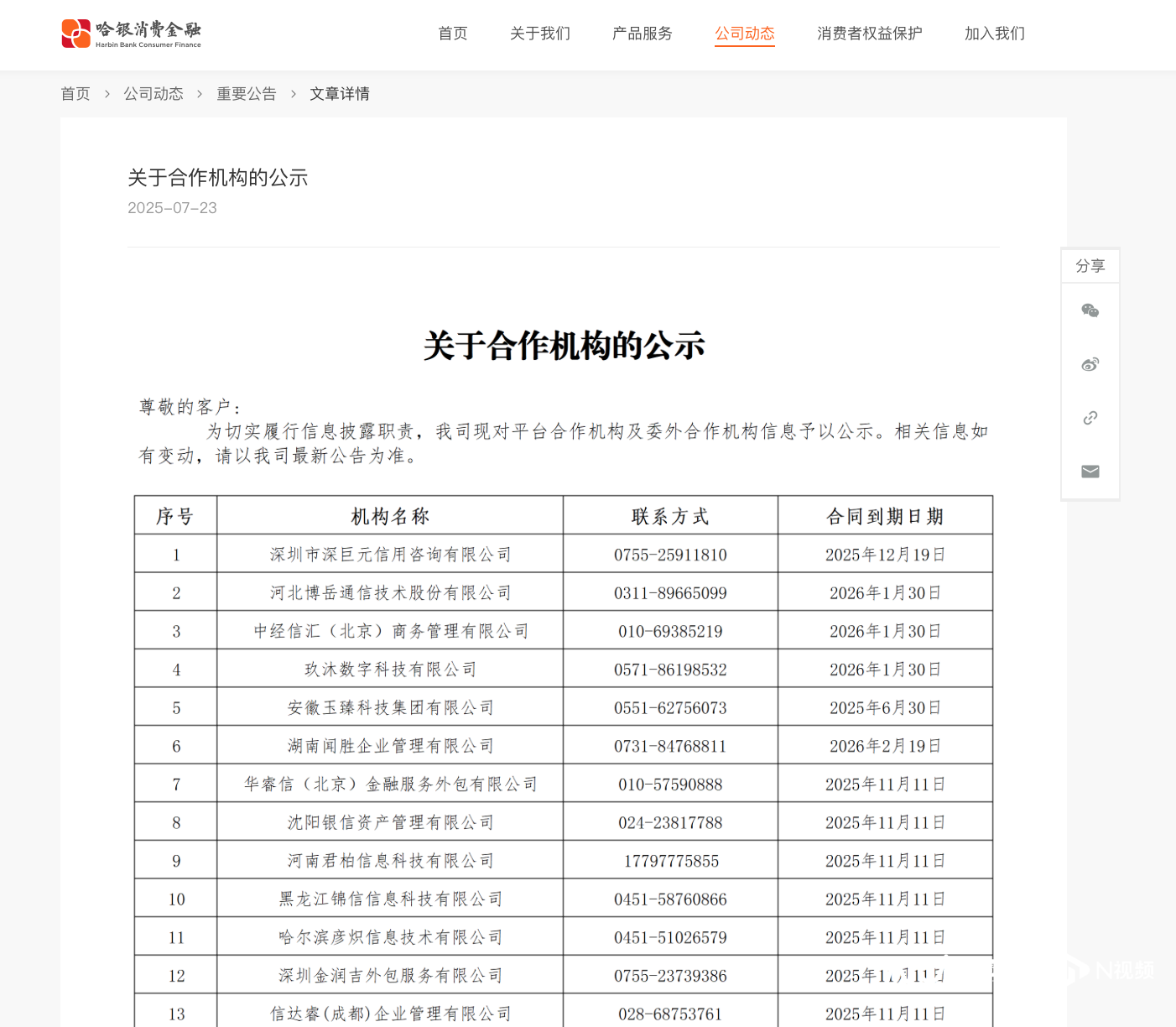
Core Insights - Two licensed consumer finance companies, Harbin Consumer Finance and Zhaolian Consumer Finance, have disclosed their loan assistance cooperation institutions, highlighting a trend towards collaboration with major internet financial firms [1][2][3] Summary by Sections Cooperation Institutions - Harbin Consumer Finance announced partnerships with 10 loan assistance institutions and 29 collection agencies, while Zhaolian Consumer Finance revealed 11 loan assistance institutions and 18 collection agencies [1][2] - The majority of loan assistance institutions listed by Harbin are affiliated with well-known internet financial companies, including Meituan, Ctrip, and Ant Group [3] Industry Trends - A total of 9 licensed consumer finance companies have publicly disclosed their cooperation institutions this year, indicating a growing trend in the industry [2][12] - The implementation of a list-based management system for cooperation platforms is expected to intensify the "Matthew Effect" in the industry, favoring larger, compliant institutions [12][20] Market Dynamics - The cooperation institutions are primarily from leading internet financial platforms, with 10 out of 11 loan assistance institutions for Zhaolian being from top-tier internet companies [10][11] - The trend towards scene-based cooperation is emerging, as consumer finance companies seek to refine their operations and target specific customer segments more effectively [20]
凯石基金董事长陈继武遭限消!公司旗下2/3产品长期跑输业绩基准,管理规模较峰值缩水逾九成
Sou Hu Cai Jing· 2025-06-13 03:36
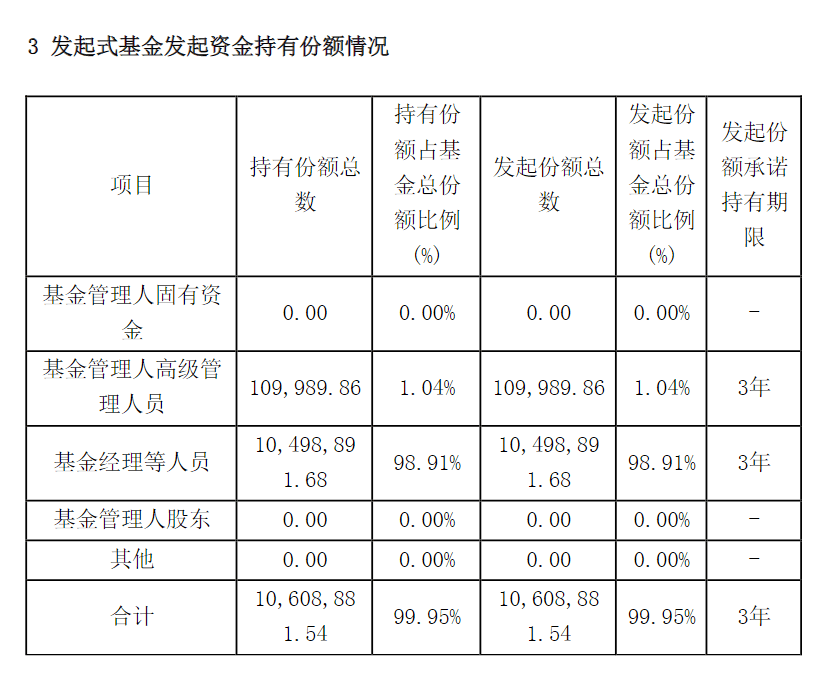
Core Viewpoint - The recent legal and operational challenges faced by Kaishi Fund and its chairman Chen Jiwu highlight the difficulties small and medium-sized public funds encounter in a competitive and heavily regulated market [6][7][8]. Group 1: Legal and Operational Challenges - Chen Jiwu, chairman of Kaishi Fund, has been subjected to consumption restrictions by the Shanghai Huangpu District People's Court, affecting his ability to engage in high-cost activities [1]. - Kaishi Wealth, a professional fund sales institution, has faced termination of business relationships with multiple public funds, including China CITIC Prudential Fund and Xinjiang Qianhai United Fund [2]. - Kaishi Fund Management Co., Ltd. has multiple equity freezes totaling over 300 million yuan, with the latest freeze lasting until 2027 [2]. Group 2: Financial Performance and Product Line - As of March 31, 2025, Kaishi Fund's total assets under management have plummeted to 117 million yuan, a decline of over 90% from its peak of 1.429 billion yuan in Q3 2019 [3]. - The company has seen a significant reduction in its product line, with several funds being liquidated since its establishment in 2017 [3]. - The recent launch of the Kaishi Yuanxin Mixed Fund raised only 10.61 million yuan, with no external subscriptions, indicating a lack of investor confidence [3]. Group 3: Industry Context and Future Outlook - The situation of Chen Jiwu and Kaishi Fund reflects the broader challenges faced by small public funds amid increasing market concentration, where top firms hold over 80% of market share [6][7]. - As of the end of 2024, Kaishi Fund's scale was merely 19 million yuan, ranking last among similar "private-to-public" companies, while competitors like Pengyang Fund exceeded 124.8 billion yuan [7]. - Industry experts suggest that building differentiated competitive advantages and addressing historical issues like equity freezes are crucial for the survival of small public funds [7].