
要素集聚

Search documents
以高水平科技自立自强引领新质生产力发展
Xin Lang Cai Jing· 2026-02-08 21:39
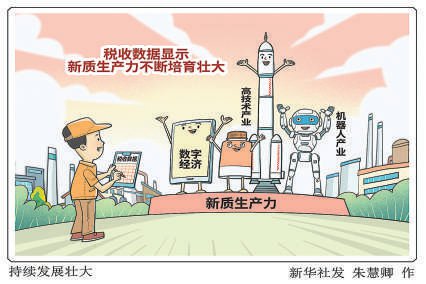
Group 1 - The core viewpoint emphasizes the need for high-level technological self-reliance and the development of new quality productivity as a direction for current and future technological innovation and industrial upgrading in China [3][4] - China's economy is transitioning from factor-driven to innovation-driven growth, necessitating higher quality in technology supply and addressing challenges in supply chain security and high-quality development [3][4] - The relationship between technological self-reliance and new quality productivity is dialectical, with the former directly influencing the emergence and transformation of new technologies and industries into productive forces [4] Group 2 - In 2024, China's total R&D investment is expected to exceed 3.6 trillion yuan, a 48% increase from 2020, with an R&D intensity of 2.68%, surpassing the EU average [4] - China's ranking in comprehensive innovation capability has improved from 14th in 2020 to 10th in 2024, with the country leading the world in high-level international journal publications and international patent applications for five consecutive years [4] - The rise of new quality productivity is exemplified by China's dominance in the global sales of new energy vehicles, steady progress in the commercial operation of the C919 aircraft, and the expanding scale of the artificial intelligence industry [4] Group 3 - The strategy involves collaborative efforts across four dimensions: original innovation, integration of production and innovation, aggregation of elements, and regional collaboration to build a comprehensive support system [5][6][7] - Strengthening original innovation is crucial, focusing on basic research and application-oriented research, particularly in foundational disciplines and cutting-edge fields like artificial intelligence and quantum computing [5] - Deepening the integration of production and innovation is essential for the practical application of technological achievements, requiring collaboration between enterprises, universities, and markets [6] Group 4 - Optimizing the innovation ecosystem involves efficient allocation of innovation resources, addressing uneven distribution and accessibility issues, and enhancing support for small and medium-sized enterprises [6][7] - Promoting regional collaboration is key to balanced development, necessitating the establishment of regulatory frameworks for cross-regional cooperation, resource sharing, and talent mobility [7] - The implementation of policies to support young researchers and startups, along with the demonstration role of resource-rich areas, is vital for fostering a collaborative and innovative environment [7]

聚焦| 怎样理解推动创新资源向企业集聚
Xin Lang Cai Jing· 2025-12-09 13:36
Core Viewpoint - The central idea is to promote the aggregation of innovation resources towards enterprises, enhancing their role as the main body of technological innovation and improving their innovation capabilities and competitiveness [1][5]. Group 1: Strengthening Enterprise-Driven Collaborative Innovation - Enterprises are encouraged to collaborate closely with universities and research institutions to address industry needs and jointly conduct research and talent cultivation [2][6]. - Establishing innovation consortia led by leading technology enterprises to enhance risk-sharing and benefit-sharing mechanisms [2][6]. - Empowering enterprises with decision-making rights in national technology plans to directly apply technological innovations to products, thereby increasing market competitiveness [2][6]. Group 2: Promoting Talent Flow to Enterprises - The shortage of innovative talent in enterprises is identified as a major constraint on innovation capabilities [3][7]. - Implementing mechanisms to facilitate the two-way flow of talent and breaking down institutional barriers to enhance talent availability [3][7]. - Encouraging research personnel from universities and research institutions to engage in technology innovation and transfer within enterprises [3][7]. - Supporting enterprises in attracting and nurturing high-level innovative talent and establishing incentive measures linked to innovation performance [3][7]. Group 3: Multi-faceted Promotion of Resource Aggregation - Optimizing policies to support high-tech enterprises and specialized small and medium-sized enterprises to enhance their innovation capabilities [4][8]. - Constructing an innovation resource allocation mechanism centered on enterprises and improving fiscal and tax support policies [4][8]. - Strengthening financial support for enterprises and expanding diverse financing channels to foster more technology-driven small and medium-sized enterprises [4][8]. - Encouraging local governments to establish technology development funds aimed at enterprises to conduct foundational research and technological breakthroughs [4][8].