读心术

Search documents
斯坦福推开思维之门,人类最后的隐私边界告急
3 6 Ke· 2025-08-21 10:06
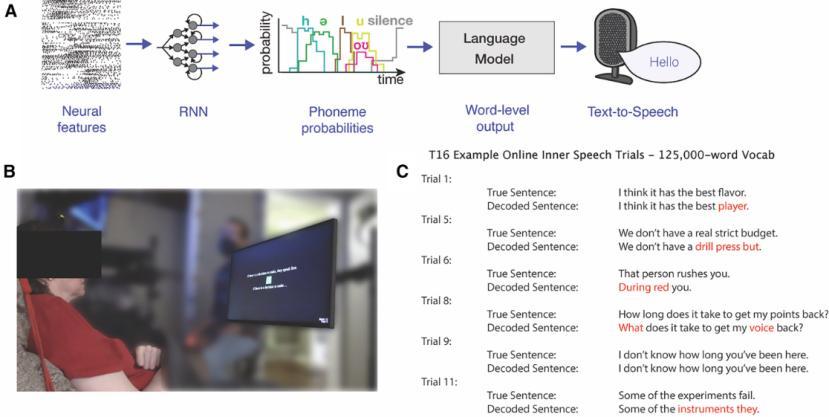
Core Viewpoint - The recent breakthrough in brain-computer interface (BCI) technology by Stanford University scientists has successfully decoded human inner speech into text, raising both hope for communication in patients with speech impairments and ethical concerns regarding mind-reading technology [1][5][9]. Group 1: Technological Breakthrough - Stanford's research marks a historic achievement in BCI, enabling the decoding of brain activity related to inner speech with a high accuracy of 74% [3][5]. - The study involved implanting silicon-based electrode arrays in the brains of two volunteers with amyotrophic lateral sclerosis (ALS), allowing their thoughts to be translated into text at a rate exceeding 60 words per minute [1][5]. - This advancement represents a significant leap from previous BCI applications, which primarily focused on decoding motor intentions rather than abstract thoughts [6][8]. Group 2: Ethical and Legal Implications - The emergence of this technology has sparked a complex public reaction, balancing excitement for aiding speech-impaired individuals against concerns over privacy and the potential for unauthorized mind-reading [5][10]. - A recent UN report emphasized that mental privacy should be regarded as a fundamental human right, advocating for legal frameworks to protect individuals from unauthorized access to their neural data [11][14]. - California has enacted the most comprehensive neurodata privacy legislation to date, highlighting the urgent need for legal systems to keep pace with technological advancements [14].