质量与股息成长因子

Search documents
把握质量与股息成长因子,构建美股防御性资产配置
Xin Lang Cai Jing· 2025-12-05 04:09
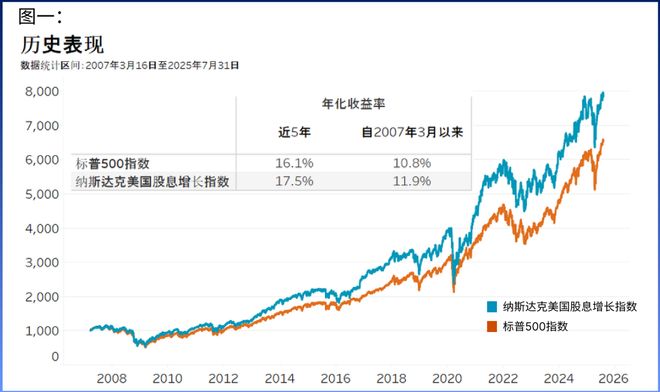
Core Insights - The article emphasizes the importance of selecting defensive and long-term growth potential U.S. stocks in the context of increasing market volatility and uncertainty due to factors like interest rate cuts and global trade wars [1][2]. Group 1: Market Performance - Over the past two decades, the U.S. stock market has experienced significant adjustments, including the 2008 financial crisis, the 2020 COVID-19 pandemic, and the 2022 Russia-Ukraine conflict, leading to heightened market volatility [2]. - The Nasdaq U.S. Dividend Growth Index has consistently outperformed the S&P 500 by approximately 1.1 to 1.4 percentage points in annualized returns, showcasing its stability and resilience during various market cycles [2][14]. Group 2: Index Characteristics - The Nasdaq U.S. Dividend Growth Index demonstrates superior downside protection during bear markets, with a win rate increasing from 32% in bull and correction phases to 66% in bear markets, achieving an excess return of 2.2% [4]. - The index employs a quality screening and dividend growth factor strategy, focusing on companies with stable revenue and dividend growth, making it suitable for investors seeking long-term stable returns amid market fluctuations [9][14]. Group 3: Asset Allocation Strategies - Investors can adopt differentiated risk and return management strategies based on their age, investment goals, and risk tolerance, with three asset allocation combinations corresponding to growth, balanced, and defensive styles [7]. - Increasing the allocation of the Nasdaq U.S. Dividend Growth Index from 25% in a growth style to 75% in a defensive style may slightly sacrifice returns but can reduce annualized volatility by 2%, thereby enhancing the Sharpe ratio of the investment portfolio [7]. Group 4: Fund Performance - As of July 31, 2025, the ETF tracking the Nasdaq U.S. Dividend Growth Index (code RDVY) has reached a total asset management scale of $15 billion, leading its peers in total return over five years and attracting the highest fund inflows in the same period [10]. - The index's sector weight distribution shows a significant allocation to the financial sector, approximately 30%, while maintaining a diversified exposure to the technology sector, which helps reduce volatility during economic downturns [12]. Group 5: Investment Logic - The index employs an equal-weight distribution for its top holdings, ensuring that no single tech giant dominates the portfolio, which has resulted in stable annualized returns exceeding those of the S&P 500 over the past two decades [12][14]. - The systematic factor strategy of the index is designed to achieve long-term stable performance without relying on individual strong stocks, highlighting its robust stock selection logic [12][14].