贫血

Search documents
起身时突然“眼前发黑”?建议及时排查这5种病
Xin Lang Cai Jing· 2026-01-17 16:39
Core Viewpoint - The article discusses the phenomenon of temporary vision loss or dizziness, known as "transient blackout," which can occur when a person stands up quickly after bending down or sitting for a while. It highlights that while this can be a normal response due to blood pressure changes, it may also indicate underlying health issues. Group 1: Medical Conditions Associated with "Transient Blackout" - Postural hypotension can cause dizziness and temporary vision loss, especially in older adults due to impaired blood pressure regulation [3] - Conditions like hypoglycemia and anemia can also lead to dizziness, but these symptoms can occur in various situations and require careful differentiation [4] - Cervical spondylosis is often related to prolonged neck positions or improper neck movements [5] - Brain diseases such as tumors, strokes, or arteriosclerosis can lead to insufficient blood supply to the brain, resulting in transient blackout [6] - Heart issues, including congenital heart defects and valve diseases, can obstruct blood flow and potentially lead to fainting [7] Group 2: Seasonal Risks and Vulnerable Populations - The risk of experiencing dizziness and transient blackout increases in winter due to blood vessel constriction in low temperatures, making it harder for individuals with postural hypotension to adapt [9] - The consequences of falling during winter are more severe due to slippery surfaces and heavier clothing, increasing the risk of fractures and slower healing [10] - High-risk groups during winter include individuals over 65, those with chronic diseases like diabetes and hypertension, long-term medication users, sedentary individuals, and those frequently exposed to temperature changes [11][12][13] Group 3: Prevention and Immediate Response - To prevent transient blackout, individuals should slow down when changing positions to allow the body to adjust [14] - If a blackout occurs, it is advised to remain calm, hold onto nearby objects for support, and perform specific actions to alleviate symptoms, such as squatting or lying down with legs elevated [14][15] - For those frequently experiencing transient blackout, it is crucial to avoid alcohol, excessive heat, and maintain a balanced diet with regular exercise, while also being cautious during physical activities [16]
起身时“眼前发黑” 建议排查5种病
Xin Lang Cai Jing· 2026-01-15 16:20
Group 1 - The phenomenon of "blackout" when standing up quickly is due to a temporary drop in blood pressure, known as "transient blackout" in medical terms [1] - This occurs because blood vessels in the legs are compressed during prolonged squatting, leading to reduced blood flow when standing up quickly [1] - The brain's signal to adjust blood flow and stabilize blood pressure is slower than the physical movement, resulting in insufficient blood supply to the brain and eyes [1] Group 2 - Some cases of "blackout" may indicate underlying health issues such as orthostatic hypotension, particularly in middle-aged and elderly individuals [2] - Diagnostic criteria for orthostatic hypotension include a drop in systolic blood pressure of more than 20 mmHg or diastolic blood pressure of more than 10 mmHg within three minutes of standing [3] - Other potential causes of dizziness and instability include low blood sugar, anemia, cervical spondylosis, brain diseases, and heart problems [4]
贫血不只是“缺铁”的信号
Xin Lang Cai Jing· 2025-12-28 17:21
Core Viewpoint - The article emphasizes the importance of recognizing anemia as a significant health issue rather than a minor concern, highlighting the need for accurate diagnosis and treatment to address underlying causes of anemia [2][3][4]. Group 1: Anemia Overview - Anemia is characterized by a reduction in the number of red blood cells or hemoglobin levels, leading to symptoms such as fatigue, dizziness, palpitations, and pallor [2]. - Common causes of anemia include iron deficiency, vitamin B12 or folate deficiency, chronic diseases (such as kidney disease and cancer), blood disorders (like leukemia), and hemolytic diseases [2]. Group 2: Diagnosis and Treatment - Blood specialists conduct thorough evaluations of anemia patients, including dietary habits, medical history, and comprehensive blood tests to identify the underlying cause [3]. - Treatment varies based on the cause: nutritional anemia requires supplementation, chronic disease-related anemia necessitates treating the primary condition, and blood disorders may require chemotherapy or stem cell transplants [3]. - The case of Mr. Chen illustrates the critical need for immediate medical attention and proper testing to uncover serious conditions like acute leukemia, rather than self-medicating [3]. Group 3: Expert Commentary - The article provides a detailed analysis of anemia's complex causes through a case study, highlighting the risks of self-medication and the importance of a systematic approach to diagnosis and treatment [4].
血色素正常 为啥就“血虚”了
Bei Jing Qing Nian Bao· 2025-11-24 00:56
Core Viewpoint - The article discusses the distinction between "blood deficiency" in Traditional Chinese Medicine (TCM) and "anemia" in Western medicine, highlighting that they are not the same condition despite some overlapping symptoms [2][4]. Group 1: Definitions and Concepts - Western medicine defines anemia as a condition characterized by a deficiency in circulating red blood cells, leading to low hemoglobin levels below specific thresholds [4]. - In contrast, TCM's concept of "blood deficiency" refers to a state where blood is insufficient to nourish organs and meridians, diagnosed through clinical symptoms rather than laboratory tests [4]. Group 2: Symptoms and Diagnosis - Both anemia and blood deficiency can present similar symptoms such as pale complexion, dizziness, and fatigue, but TCM emphasizes a broader understanding of overall nourishment and functional status [4]. - The diagnosis of blood deficiency in TCM relies on clinical observations like pale complexion and weak pulse, rather than solely on blood test results [4]. Group 3: Historical Context - The understanding of "blood" in TCM encompasses both material and functional aspects, with historical roots tracing back to ancient texts like "Nanjing" attributed to the physician Bian Que [3]. - TCM's definition of blood includes its nourishing and moistening roles, which are considered more comprehensive than the Western definition focused on blood as a physical substance [3].
泫雅舞台上晕倒,跟我上班坐地铁晕倒是一个病?
3 6 Ke· 2025-11-11 08:33
Core Points - South Korean singer HyunA fainted during a performance at the Water Bomb Music Festival in Macau, with reports suggesting it may be due to vasovagal syncope, a common type of fainting among young people [1][3] - HyunA has previously disclosed her struggles with panic disorder and depression, and she later reassured fans that she is fine and will work on improving her physical fitness [1][6] Summary by Sections Incident Overview - HyunA collapsed on stage during her performance and was carried off by staff [1] - Initial reports indicated her condition might be vasovagal syncope, which is prevalent among young individuals [3] Medical Background - Vasovagal syncope is the most common type of fainting, accounting for over 85% of fainting incidents in individuals under 40 [4] - It is characterized by a sudden drop in blood pressure and heart rate, leading to temporary loss of consciousness [4][5] Causes and Triggers - The exact causes of vasovagal syncope remain unclear, but potential triggers include prolonged standing, pain, emotional stress, and physical exertion [5] - Studies indicate a correlation between recent weight loss and the occurrence of vasovagal syncope, with 11.9% of patients reporting significant weight loss prior to their episodes [6] Psychological Factors - HyunA's panic disorder may be linked to her fainting episodes, as studies show a higher incidence of psychological distress among those with vasovagal syncope [6] - The relationship between anxiety, depression, and vasovagal syncope is still being researched [6] Treatment and Prevention - Non-drug treatments focus on avoiding triggers and improving physical conditioning, such as tilt training to enhance standing endurance [10][11] - If fainting episodes are frequent or unpredictable, further medical intervention may be necessary, including medication or the use of a pacemaker [13]


人为什么会贫血?
Qi Lu Wan Bao· 2025-09-02 08:33
Core Insights - Anemia is a widespread blood disorder affecting approximately 1.8 billion people globally, with significant prevalence among women aged 15-49 (30%), pregnant women (37%), and children aged 6-59 months (40%) [1] - The primary regions with the highest rates of anemia are sub-Saharan Africa and Asia [1] Group 1: Causes of Anemia - Insufficient production of red blood cells due to nutritional deficiencies, particularly iron, vitamin B12, and folic acid, which are essential for red blood cell formation [5] - Destruction of red blood cells occurs too rapidly, often due to autoimmune diseases or certain dietary triggers like fava beans, which can lead to hemolytic anemia [5] - Loss of red blood cells through bleeding, which can happen during menstruation, gastrointestinal issues, or traumatic injuries, leading to acute oxygen deprivation in the body [5] Group 2: Symptoms and Prevention - Initial symptoms of anemia include fatigue, shortness of breath, and pallor, with more severe symptoms like dizziness and increased heart rate if left untreated [6] - Preventive measures include a diet rich in iron from sources like lean meats, eggs, and spinach, combined with vitamin C-rich foods to enhance iron absorption [6] - Special populations such as the elderly and pregnant women may require iron supplements or vitamin B12 under medical guidance, along with timely treatment for conditions that cause chronic blood loss [6]

血常规上的“箭头”代表什么?这4个指标很关键
Yang Shi Xin Wen· 2025-07-02 06:55
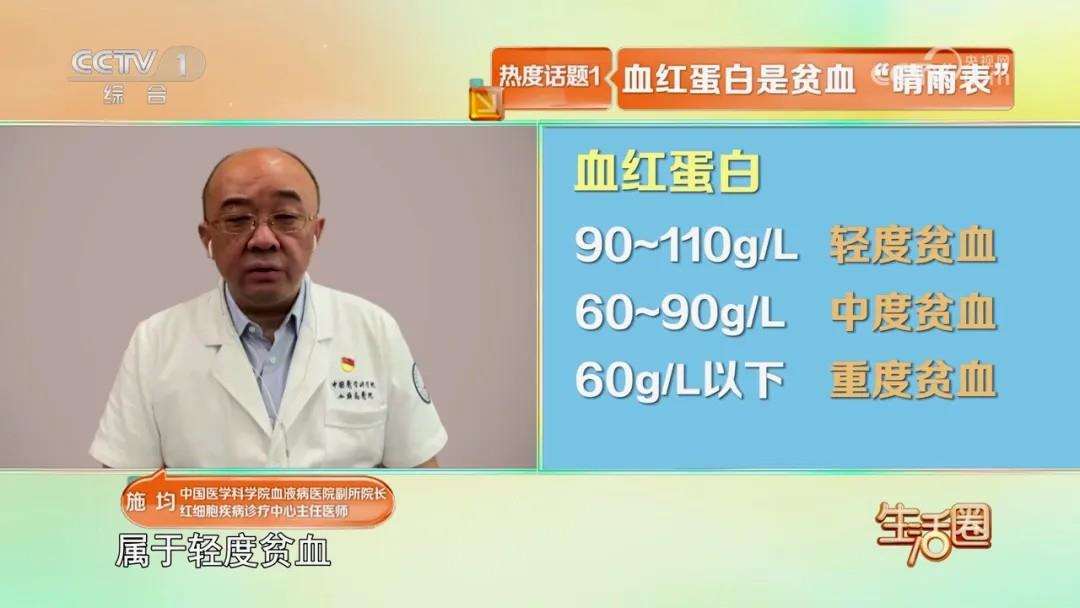
Core Points - The article emphasizes the importance of understanding key indicators in a blood routine test, specifically focusing on red blood cells, hemoglobin, white blood cells, and platelets [1][4][11] Group 1: Key Indicators - Red Blood Cells (RBC) and Hemoglobin (HGB) are crucial for oxygen transport and immune function, with normal values for males being 120-160 g/L and for females 110-150 g/L. Levels below 90 g/L indicate mild anemia, while below 60 g/L indicates severe anemia [1][4] - Platelets (PLT) play a vital role in blood clotting, with normal values ranging from (100-300)×10^9/L. Elevated levels can indicate a risk of thrombosis, while low levels increase bleeding risk [6][8] - White Blood Cells (WBC) are essential for immune defense, with normal values between (4.0-10.0)×10^9/L. Elevated levels may suggest infection, while low levels can indicate decreased immunity [11][15] Group 2: Clinical Implications - Elevated hemoglobin levels may indicate blood system diseases, while low levels suggest anemia, which can lead to serious health issues if not addressed [3][4] - Elevated platelet counts can be due to physiological factors but may also indicate underlying conditions if persistently high [7][9] - White blood cell count changes can signal infections, with specific patterns indicating bacterial or viral infections [12][14] Group 3: Testing Considerations - The article advises on pre-test preparations, such as avoiding high-fat and high-protein foods, alcohol, and ensuring good sleep to enhance test accuracy [19][20] - Post-test care includes monitoring for any adverse reactions and consulting a doctor for abnormal results [23]