资金占用清收

Search documents
清收20亿!*ST华微、ST东时绝处逢生,监管以退促改见实效
2 1 Shi Ji Jing Ji Bao Dao· 2025-08-21 05:24
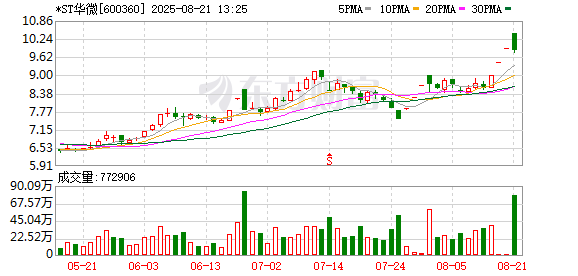
Core Viewpoint - Two listed companies in the Shanghai market, *ST Huamei and ST Dongshi, successfully resolved risks of delisting by recovering nearly 2 billion yuan in misappropriated funds, exemplifying the regulatory approach of "promoting reform through delisting" [2][3] Group 1: Company Actions - *ST Huamei faced a misappropriation of 1.491 billion yuan by its controlling shareholder and was ordered to rectify the situation within six months. After failing to meet the deadline, its stock was suspended from trading starting August 13, 2025. The company quickly responded by transferring shares to repay a total of 1.556 billion yuan, including interest, by August 18 [4][5] - ST Dongshi, under pressure from regulatory authorities, initiated a pre-restructuring process to introduce investors to compensate for 387 million yuan in misappropriated funds. The controlling shareholder's majority stake was frozen, but with local government support, the company managed to recover the funds through a combination of compensation and debt transfer agreements [5][6] Group 2: Regulatory Environment - The regulatory framework has evolved since 2003 to address the issue of misappropriation of funds by major shareholders, with significant measures introduced in 2022 and 2024 to enhance oversight and impose stricter penalties for non-compliance [6][9] - The current regulatory logic emphasizes that delisting is a means to an end, focusing on encouraging companies to proactively resolve issues rather than solely relying on punitive measures [2][6] Group 3: Broader Market Implications - The successful cases of *ST Huamei and ST Dongshi reflect a broader trend in the market where companies are actively working to rectify issues and improve their fundamentals, presenting potential investment opportunities for investors [3][7] - Other companies, such as ST Xintong and *ST Moden, have also managed to escape delisting risks through proactive reforms, indicating a shift towards a more regulated and transparent market environment [7][9]