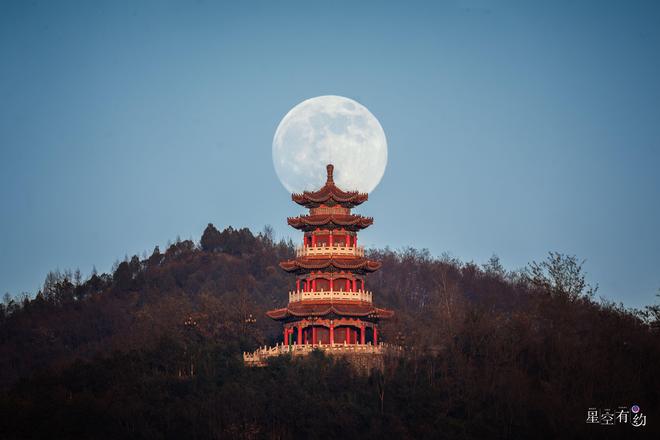
超级月亮

Search documents
2026首个“超级月亮”现身夜空,年度最大满月年末见
Yang Shi Xin Wen· 2026-01-04 06:06
Core Viewpoint - The recent appearance of the "supermoon" on January 3, 2026, has sparked curiosity about its frequency and scientific definition, as it is often perceived as occurring more frequently than expected [1][3]. Group 1: Definition and Characteristics - The term "supermoon" is not a scientific definition but rather a popular term that corresponds to the professional term "perigee full moon" [3]. - The moon orbits the Earth in an elliptical path, with the closest point called perigee and the farthest point called apogee. A full moon occurring near perigee is termed a "supermoon" [3][5]. - The visual effect of a "supermoon" is most pronounced when the full moon coincides closely with the time the moon reaches perigee [5][8]. Group 2: Frequency and Observations - The perception of frequent "supermoons" is attributed to increased public attention and a broad definition of the term [8]. - In reality, a true "supermoon" occurs only once a year, with the next one in December 2026 [5][7]. - The current "supermoon" is considered less significant compared to those in November and December 2025, as it occurred over a day and a half after reaching perigee [8]. Group 3: Distance and Size - The average distance from the Earth to the moon is approximately 384,400 kilometers, with the closest distance being around 350,000 kilometers. The recent "supermoon" was about 360,000 kilometers away, which is still relatively close [8].

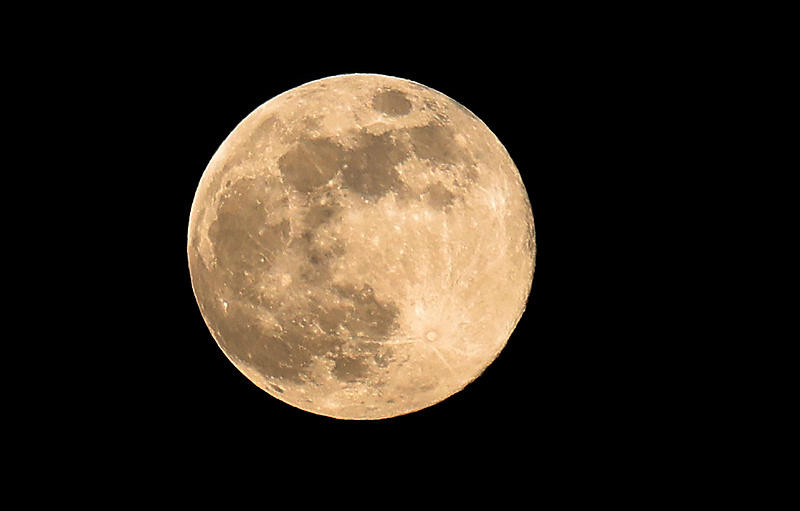
我喜欢你,换个说法就是,今晚的月亮好美(等你来晒图)
Xin Lang Cai Jing· 2026-01-04 04:33
Group 1 - The first "Supermoon" of 2026 appeared in the night sky of Urumqi on January 3, generating excitement among the public to capture the moment with cameras and smartphones [1][7] - In 2025, there were three "Supermoons," while 2026 will have two, occurring on January 3 and December 24, with the December moon being the largest of the year [7] Group 2 - The article encourages readers to share their photos of the "Supermoon" in the comments section, highlighting the romantic aspect of capturing celestial events [1]
2026首个“超级月亮”现身夜空 年度最大满月年末见
Xin Lang Cai Jing· 2026-01-04 00:25
Core Viewpoint - The occurrence of the "supermoon" phenomenon is more frequent recently, leading to public curiosity about its scientific definition and frequency [1][3]. Group 1: Definition and Characteristics - The term "supermoon" is not a scientific definition but rather a popular term that corresponds to the professional term "perigee full moon" [3]. - A supermoon occurs when a full moon coincides with the moon being at its closest point to Earth, known as perigee [3][5]. - The moon's orbit around Earth is elliptical, causing variations in distance, with the closest point being approximately 350,000 kilometers [8]. Group 2: Frequency and Observations - The perception of frequent supermoons is attributed to increased public attention and a broad definition of the term [8]. - In 2026, the first supermoon was observed on January 3, but the most significant supermoon of the year will occur in December [5][7]. - The January supermoon was approximately 360,000 kilometers away from Earth, which is relatively close, but not as extreme as the supermoons observed in late 2025 [8].
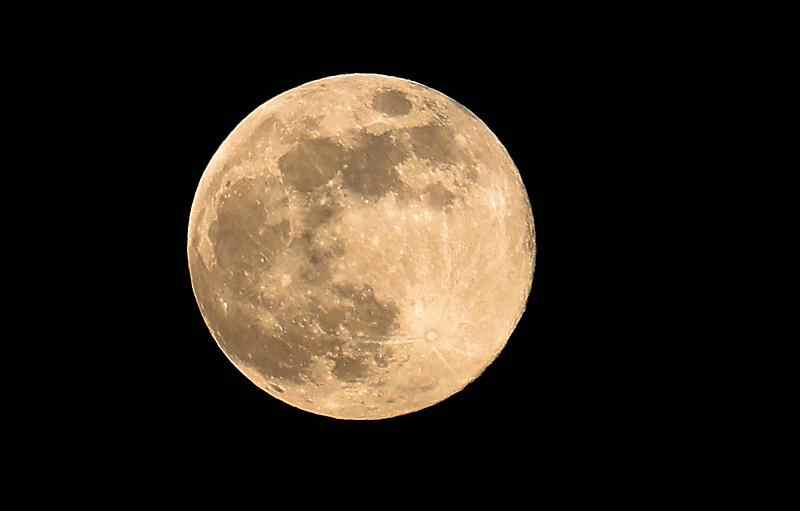
超级月亮 现身天宇
Xin Lang Cai Jing· 2026-01-03 23:23
Group 1 - The article discusses the occurrence of the first supermoon of 2026, which took place on January 3, and highlights that there will be two supermoons in that year, with the second one on December 24 [3]
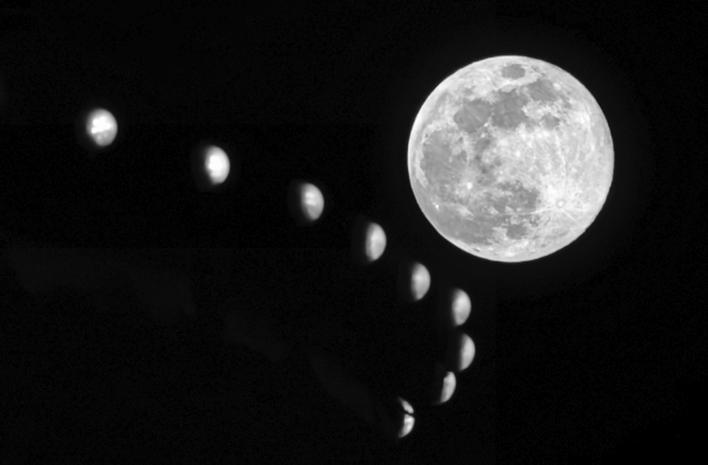
2026年首个超级月亮现身天宇
Xin Lang Cai Jing· 2026-01-03 19:17
Group 1 - The article discusses the occurrence of the first supermoon of 2026, which took place on January 3 [2] - It explains that a supermoon refers to a full moon that occurs at the closest point to Earth in its orbit [2] - The article mentions that there will be two supermoons in 2026, with the second one occurring on December 24 [2]
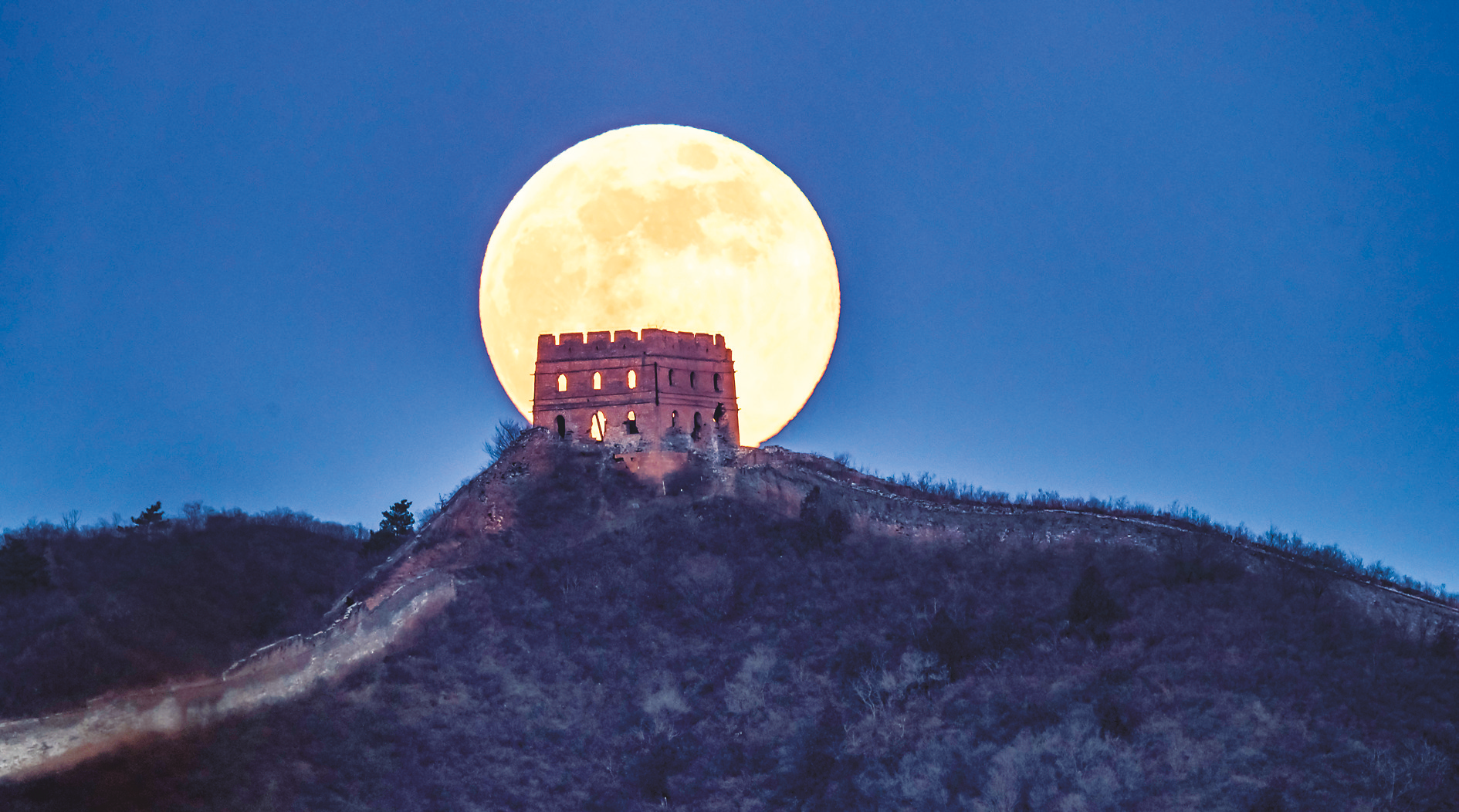
2026年首个“超级月亮”升上天空
Xin Lang Cai Jing· 2026-01-03 14:07
Group 1 - The article discusses the occurrence of the first "supermoon" of 2026 on January 3, which is characterized by the moon appearing larger and brighter due to its proximity to Earth [2][4][5] - In 2025, there were three "supermoons," while in 2026, there will be two, occurring on January 3 and December 24, with the December moon being the largest of the year [2][11] - The phenomenon of a "supermoon" is explained as a full moon that occurs near the perigee of the moon's elliptical orbit around Earth [2]
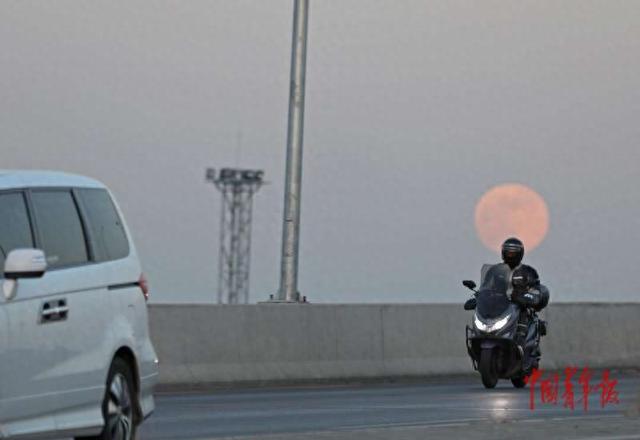
今年首个“超级月亮”今天将现身夜空
Xin Lang Cai Jing· 2026-01-02 17:26
Core Viewpoint - The first "supermoon" of 2026 will occur on January 3 at 18:03, providing an opportunity for the public in China to enjoy a larger and brighter moon shortly after sunset [1] Group 1: Supermoon Characteristics - A "supermoon" refers to a full moon that occurs near the moon's perigee, making it appear larger and brighter due to the elliptical orbit of the moon around the Earth [1] - In 2026, there will be two supermoons, with the second one on December 24, which will be the largest full moon of the year [1] Group 2: Viewing and Photography Tips - To capture the best view of the supermoon, it is recommended to observe it as it rises, as it may appear larger due to visual illusions caused by the horizon and atmospheric effects [2] - For photography, using a medium to long focal length lens is advised to make the moon appear larger in images, and the best time for combining subjects with the moon is during the blue hour, shortly after sunset or before sunrise [2]
2026年首个“超级月亮”3日将现身夜空,如何赏拍?
Xin Lang Cai Jing· 2026-01-02 07:09
Group 1 - The first "supermoon" of 2026 will appear on January 3 at 18:03, and it will be visible shortly after sunset in China if the weather is clear [1] - A "supermoon" occurs when a full moon coincides with the moon's perigee, making it appear larger and brighter than usual [1] - In 2026, there will be two supermoons, with the second one on December 24, which will be the largest full moon of the year [1] Group 2 - The visual perception of the moon changes depending on its position in the sky; it appears largest when it is near the horizon due to atmospheric effects and ground references [2] - Photography enthusiasts can capture creative moon photos by combining the moon with people, landmarks, or everyday scenes, using mid to long focal lengths for better results [2] - The best time for capturing images that combine the moon with other subjects is during the "blue hour," shortly before sunrise or after sunset, when lighting conditions are optimal [2]
2026年首个“超级月亮”明晚登场,如何赏拍?
Xin Lang Cai Jing· 2026-01-02 06:07
Core Points - The first "supermoon" of 2026 will occur on January 3 at 18:03, visible to the public shortly after sunset if the weather is clear [1] - A "supermoon" refers to a full moon that occurs near the moon's perigee, making it appear larger and brighter than usual [1] - In 2026, there will be two supermoons, with the second one on December 24, which will be the largest full moon of the year [1] Photography Tips - The visual perception of the moon changes depending on its position in the sky; it appears largest when it is near the horizon due to atmospheric effects and ground references [2] - Creative photography ideas include interactions between people and the moon, combining the moon with landmarks, and capturing reflections of the moon in various settings [2] - For optimal photography, a medium to long focal length lens is recommended, and the best time to shoot is during the "blue hour" shortly after sunset or before sunrise for balanced lighting [2]
星空有约|2026年首个“超级月亮”将现身夜空,如何赏拍?
Xin Hua She· 2026-01-02 05:10
Group 1 - The first "supermoon" of 2026 will appear on January 3 at 18:03, and it will be visible to the public shortly after sunset if the weather is clear [1] - A "supermoon" occurs when a full moon coincides with the moon's perigee, making it appear larger and brighter than usual. In 2026, there will be two supermoons, on January 3 and December 24, with the December moon being the largest of the year [2] - The phenomenon of a "supermoon" is not rare, as there were three occurrences in 2025 [2] Group 2 - Photography enthusiasts are encouraged to capture the supermoon, with tips provided for optimal viewing and photography techniques. For instance, in Beijing, the moon will appear clearer and brighter as night falls [5] - The visual perception of the moon changes depending on its position in the sky, appearing largest when it is near the horizon due to atmospheric effects and reference points on the ground [7] - Creative photography ideas include interactions between people and the moon, combining the moon with landmarks, and capturing reflections of the moon in various settings [7][9]