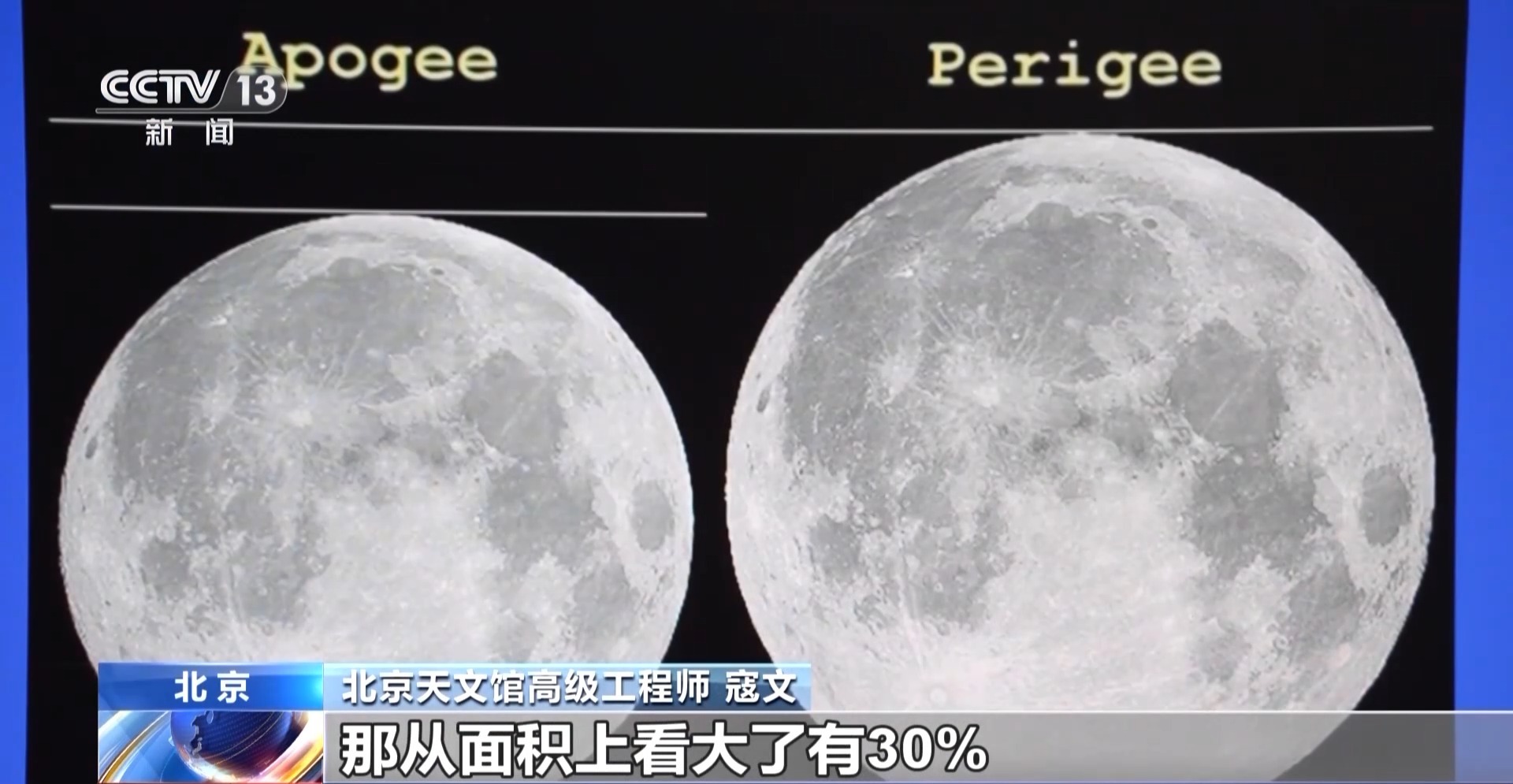
近地点满月

Search documents
2026首个“超级月亮”现身夜空,年度最大满月年末见
Yang Shi Xin Wen· 2026-01-04 06:06
Core Viewpoint - The recent appearance of the "supermoon" on January 3, 2026, has sparked curiosity about its frequency and scientific definition, as it is often perceived as occurring more frequently than expected [1][3]. Group 1: Definition and Characteristics - The term "supermoon" is not a scientific definition but rather a popular term that corresponds to the professional term "perigee full moon" [3]. - The moon orbits the Earth in an elliptical path, with the closest point called perigee and the farthest point called apogee. A full moon occurring near perigee is termed a "supermoon" [3][5]. - The visual effect of a "supermoon" is most pronounced when the full moon coincides closely with the time the moon reaches perigee [5][8]. Group 2: Frequency and Observations - The perception of frequent "supermoons" is attributed to increased public attention and a broad definition of the term [8]. - In reality, a true "supermoon" occurs only once a year, with the next one in December 2026 [5][7]. - The current "supermoon" is considered less significant compared to those in November and December 2025, as it occurred over a day and a half after reaching perigee [8]. Group 3: Distance and Size - The average distance from the Earth to the moon is approximately 384,400 kilometers, with the closest distance being around 350,000 kilometers. The recent "supermoon" was about 360,000 kilometers away, which is still relatively close [8].

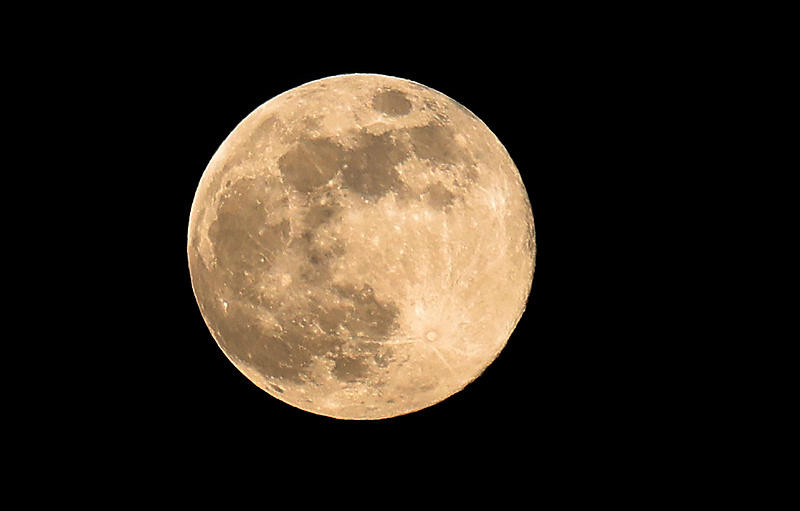
2026首个“超级月亮”现身夜空 年度最大满月年末见
Xin Lang Cai Jing· 2026-01-04 00:25
Core Viewpoint - The occurrence of the "supermoon" phenomenon is more frequent recently, leading to public curiosity about its scientific definition and frequency [1][3]. Group 1: Definition and Characteristics - The term "supermoon" is not a scientific definition but rather a popular term that corresponds to the professional term "perigee full moon" [3]. - A supermoon occurs when a full moon coincides with the moon being at its closest point to Earth, known as perigee [3][5]. - The moon's orbit around Earth is elliptical, causing variations in distance, with the closest point being approximately 350,000 kilometers [8]. Group 2: Frequency and Observations - The perception of frequent supermoons is attributed to increased public attention and a broad definition of the term [8]. - In 2026, the first supermoon was observed on January 3, but the most significant supermoon of the year will occur in December [5][7]. - The January supermoon was approximately 360,000 kilometers away from Earth, which is relatively close, but not as extreme as the supermoons observed in late 2025 [8].
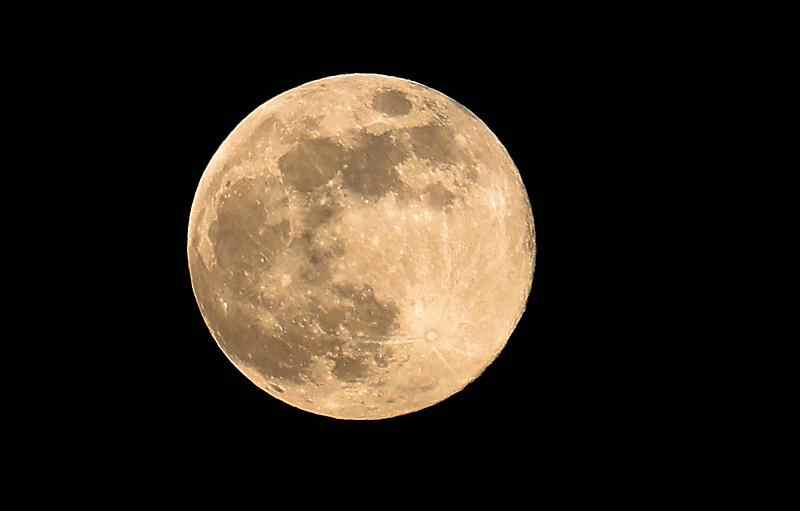
“超级月亮”即将登场,等你来赏!
Xin Hua Wang· 2025-12-02 09:57
Group 1 - The article highlights the occurrence of the second largest full moon of the year on December 5, providing an opportunity for moon enthusiasts to enjoy the view starting from the evening of December 4 [1][4] - The phenomenon of a "supermoon" occurs when a full moon coincides with the moon's closest approach to Earth, known as perigee, making it appear larger [2][4] - In 2023, there are three supermoons, occurring on October 7, November 5, and December 5, with the November full moon being the largest [4] Group 2 - Observers may find it challenging to notice the size differences between full moons, but those with experience can discern variations through careful observation and comparison [7] - The optimal time for viewing the full moon on December 5 is shortly after sunset on December 4, as the moon will appear round and bright, resembling a delicate silver plate [7]
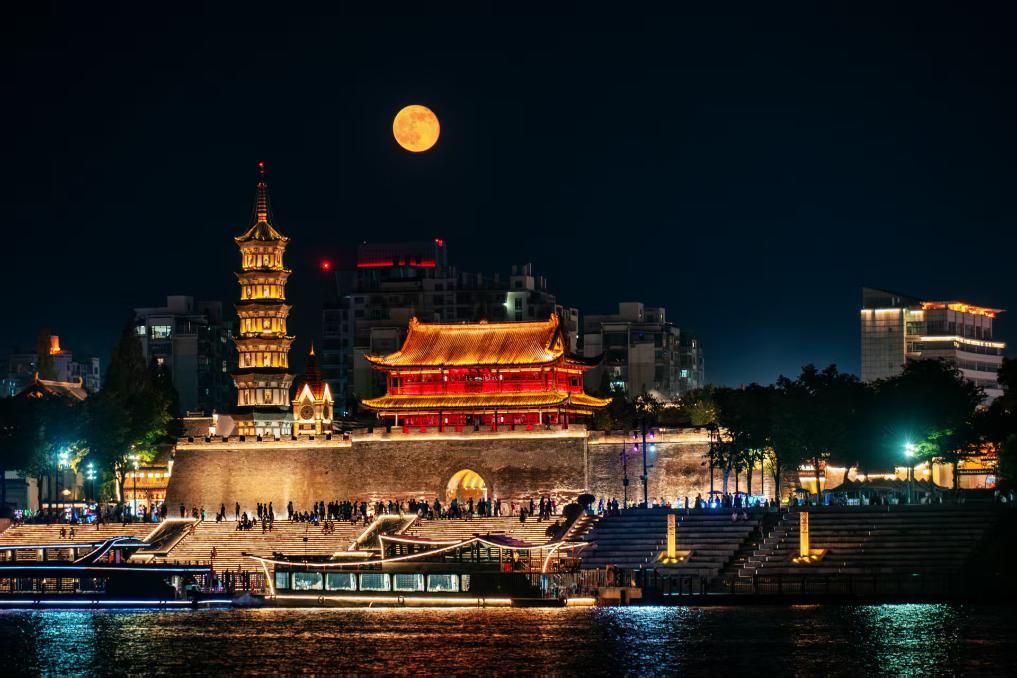
今年“个头”最大的“超级月亮”即将“上线”
Xin Hua She· 2025-11-03 08:26
Core Viewpoint - The "Supermoon" phenomenon will occur on November 5, 2024, marking the largest full moon of the year, providing an excellent opportunity for moon gazing if the weather permits [1]. Group 1: Astronomical Explanation - The term "Supermoon" refers to a full moon that occurs when the moon is near its perigee, the closest point to Earth in its elliptical orbit, which is less than 360,000 kilometers away [2]. - The farthest point in the moon's orbit is called apogee, where it is over 400,000 kilometers away from Earth [2]. - The visual size of the moon appears larger at perigee compared to apogee, following the principle of "near big, far small" [2]. Group 2: Upcoming Supermoons - The two largest perigee full moons in 2025 will occur on November 5 and December 4, with the November moon being slightly larger, both having an angular diameter of nearly 34 arcminutes [6]. Group 3: Viewing Recommendations - The optimal time to view the Supermoon is one hour after sunset, with the moon appearing golden as it rises and becoming brighter as night progresses [7]. - Photographers are encouraged to capture creative images by incorporating unique landscapes during the moonrise [7].
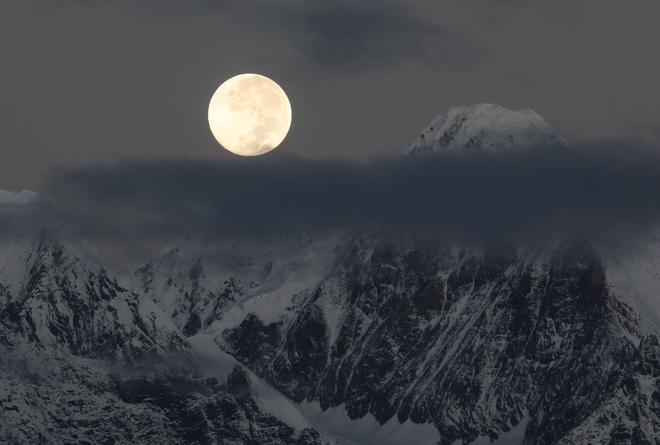
年度最大超级月亮11月5日登场,这份观测指南请收好
Yang Shi Wang· 2025-11-01 00:47
Core Points - The largest "supermoon" of the year is predicted to occur on November 5, with the moon reaching its fullest form at 21:19 and closest to Earth at approximately 357,000 kilometers on November 6 at 6:27 [1][11] - The term "supermoon" is not a scientific term but describes the phenomenon when the moon is at its perigee and full [5][11] - The best time to observe the supermoon is within one hour after sunset, as the moon appears larger due to the "moon illusion" effect when it is near the horizon [6][10] Observation Details - The sunset in Beijing on November 5 is around 17:04, with the moon rising at approximately 16:40 and setting the next morning at 7:32 [10] - Ideal observation locations include high points in cities, landmark buildings, or open areas like mountains or beaches [10] - No special equipment is needed to enjoy the supermoon, but binoculars or small telescopes can enhance the viewing experience by revealing surface details [10] Scientific Explanation - The supermoon phenomenon occurs when the moon is at its perigee, which is typically less than 360,000 kilometers from Earth, coinciding with a full moon [11][12] - The moon's elliptical orbit causes variations in distance, with a complete cycle taking about 27.5 days, while the lunar phases cycle takes about 29.5 days [11][12] - In 2025, there will be three supermoons, occurring on October 17, November 5, and December 5 [13]