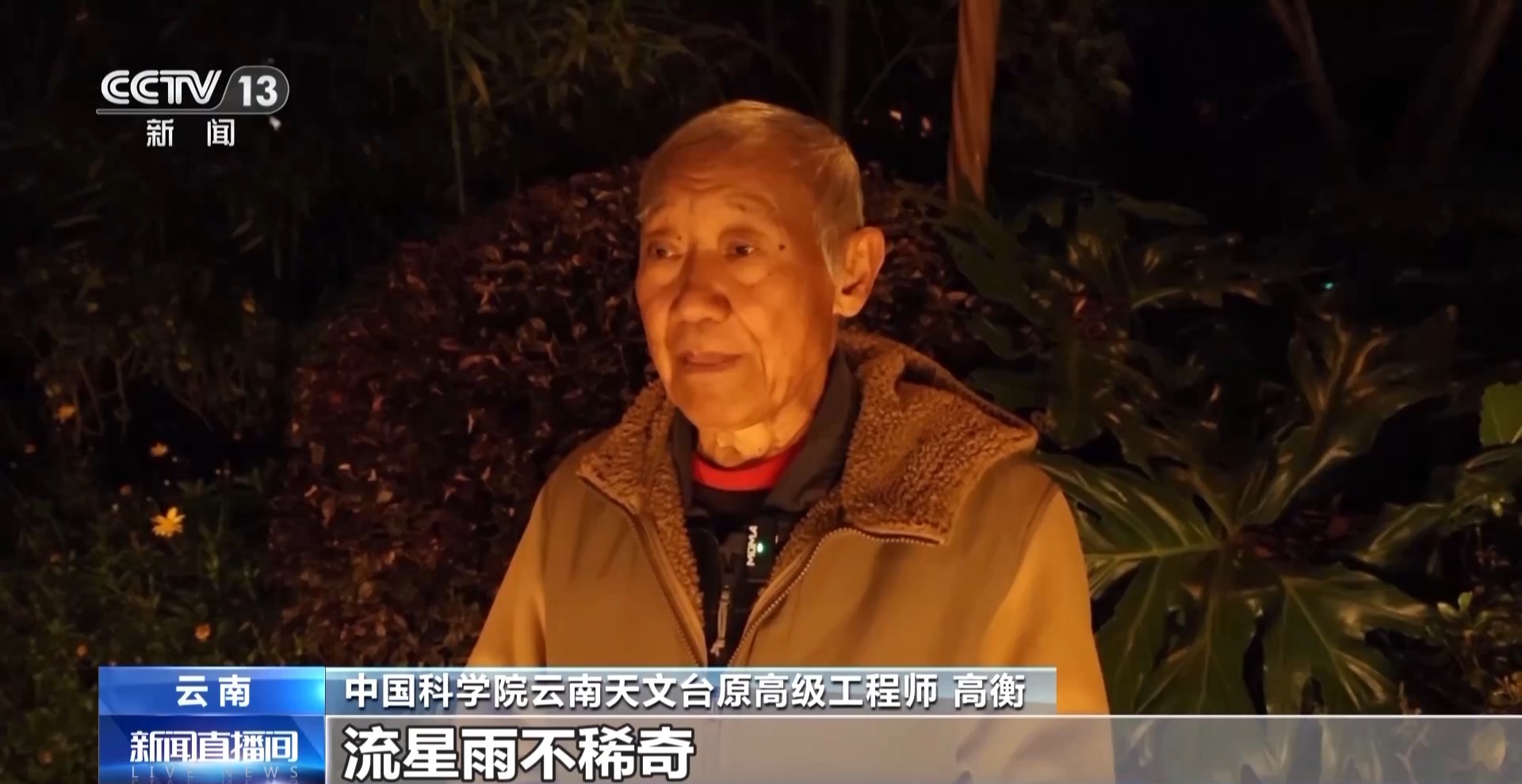
超级月亮

Search documents
抬头看!2026年首个“超级月亮”现身夜空
Xin Lang Cai Jing· 2026-01-04 00:25
Core Points - The first "supermoon" of 2026 appeared on January 3, characterized by a full moon occurring near the moon's perigee, making it appear larger and brighter than usual [3][7] - In 2026, there will be two supermoons, with the second one on December 24, which is expected to be the largest full moon of the year [7] - The supermoon can be observed with the naked eye, and its appearance changes as it rises, transitioning from a warm red to a cool gray color [7] Group 1 - The term "supermoon" refers to a full moon that occurs when the moon is near its closest point to Earth [3] - The supermoon phenomenon is not rare; there were three supermoons in 2025 [7] - The brightness of the moon increases as it reaches its highest point in the sky, minimizing atmospheric interference [7] Group 2 - The Quadrantids meteor shower, the first of 2026, will peak on the morning of January 4, coinciding with the supermoon [9][10] - Observers are encouraged to watch for fireballs during the meteor shower, which can be seen from the night of January 3 to the morning of January 4 [10]

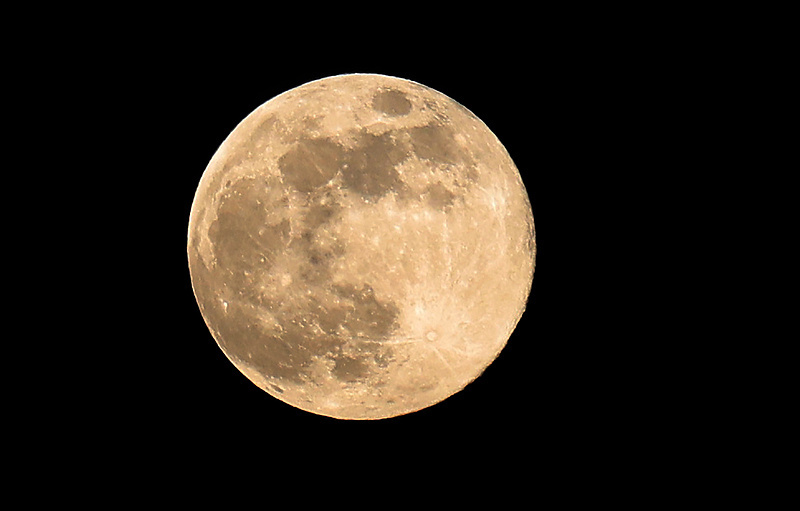
就在今晚,记得抬头看!
Xin Lang Cai Jing· 2026-01-03 12:02
Core Viewpoint - The first "supermoon" of 2026 will occur on January 3 at 18:03, providing an opportunity for the public in China to enjoy a visually striking full moon shortly after sunset [1]. Group 1: Definition and Occurrence - A "supermoon" refers to a full moon that occurs near the perigee of the Moon's orbit, making it appear larger and brighter than usual [3]. - In 2025, there were three supermoons, while 2026 will have two, on January 3 and December 24, with the December supermoon being the largest of the year [3]. Group 2: Viewing and Photography Tips - To capture the best view of the supermoon, it is recommended to observe it as it rises, as it will appear larger due to a visual illusion caused by the horizon [5][7]. - Photography enthusiasts are advised to use mid to long focal lengths for capturing the moon, and the best time for combining the moon with subjects is during the "blue hour," shortly before sunrise or after sunset [9].
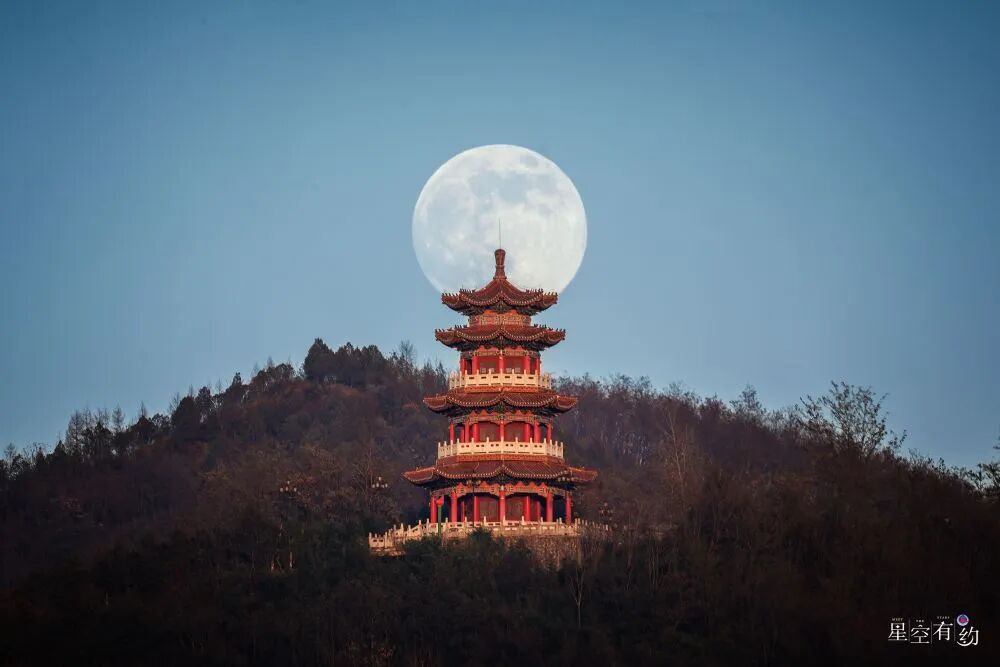
星空有约|2026年首个“超级月亮”将现身夜空,如何赏拍?
Xin Hua She· 2026-01-02 05:10
Group 1 - The first "supermoon" of 2026 will appear on January 3 at 18:03, and it will be visible to the public shortly after sunset if the weather is clear [1] - A "supermoon" occurs when a full moon coincides with the moon's perigee, making it appear larger and brighter than usual. In 2026, there will be two supermoons, on January 3 and December 24, with the December moon being the largest of the year [2] - The phenomenon of a "supermoon" is not rare, as there were three occurrences in 2025 [2] Group 2 - Photography enthusiasts are encouraged to capture the supermoon, with tips provided for optimal viewing and photography techniques. For instance, in Beijing, the moon will appear clearer and brighter as night falls [5] - The visual perception of the moon changes depending on its position in the sky, appearing largest when it is near the horizon due to atmospheric effects and reference points on the ground [7] - Creative photography ideas include interactions between people and the moon, combining the moon with landmarks, and capturing reflections of the moon in various settings [7][9]
视频丨超级月亮、流星雨、星月童话 本月“天象大戏”轮番上演
Yang Shi Xin Wen Ke Hu Duan· 2025-12-01 06:25
Core Viewpoint - December features several astronomical events including the Geminid meteor shower, supermoon, and conjunctions of planets, providing significant opportunities for public engagement in astronomy [1][12][19]. Group 1: Geminid Meteor Shower - The Geminid meteor shower is noted for its stability and high flow rate, with a peak zenithal hourly rate of about 150 meteors [3]. - The peak viewing time for the Geminid meteor shower is around December 14 at 4 PM Beijing time, making the night of December 14 to the early morning of December 15 ideal for observation [7]. - The meteors are characterized by their slower speed, white color, and frequent bright meteors, including fireballs, making it a highly anticipated celestial event [9]. Group 2: Supermoon - A supermoon, defined as a full moon occurring near the perigee of its orbit, will be visible again on December 5, following the largest supermoon of the year on November 5 [12][13]. - The November supermoon appeared 14% larger in diameter and about 30% larger in area compared to a full moon at apogee [15]. - The December supermoon, occurring around 7:14 AM on December 5, is considered the second-largest supermoon of the year [16]. Group 3: Jupiter and Moon Conjunction - On December 7, a conjunction of Jupiter and the Moon will create a visually striking event known as "star-moon fairy tale," observable shortly after sunset [19][20]. - Jupiter will rise from the northeastern horizon approximately two hours after sunset, with a brightness of about -2.6 magnitude, while the Moon will be just past full [22]. - This event can be easily observed without staying up late, providing a unique astronomical experience for the public [24].