跨市场融资

Search documents
欧林生物拟“A+H”两地上市:业绩上市即巅峰净利率低于行业 控股股东递表前大规模减持
Xin Lang Zheng Quan· 2025-12-05 02:46
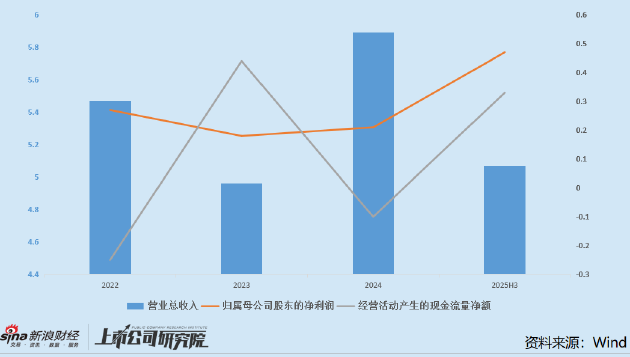
Core Viewpoint - A domestic innovative vaccine company, Olin Bio, is exploring cross-market financing by applying for a dual listing on the Hong Kong Stock Exchange after its initial public offering on the Sci-Tech Innovation Board in 2021, amidst increasing competition and market differentiation in the vaccine industry [1] Financial Performance - Olin Bio achieved a net profit of 108 million yuan in its first year of listing in 2021, but subsequent years saw a decline in net profit, with figures of 26.58 million yuan, 17.56 million yuan, and 20.76 million yuan projected for 2022 to 2024, despite a slight revenue increase from 547 million yuan to 589 million yuan [2] - The company's main revenue sources are its three vaccines, with the adsorbed tetanus vaccine accounting for 90.99% of total revenue in 2024, highlighting a significant reliance on a single product [2] Cash Flow and Receivables - Olin Bio's cash flow situation is deteriorating, with trade receivables rising from 492 million yuan in 2022 to 665 million yuan by Q3 2025, consistently exceeding 90% of revenue [3] - The efficiency of collections is weakening, with accounts receivable turnover days increasing from 272.29 days in 2022 to 327.91 days in Q3 2025, leading to ongoing pressure on operating cash flow [5] Profitability Metrics - The company maintains a high gross margin of 92% to 94%, but its net profit margin remains low at 2% to 5%, significantly below comparable companies in the industry, which exceed 20% [6] - High sales and research expenses are compressing profits, with sales and distribution expenses consistently over 50% of revenue, reaching 48.56% in the first three quarters of 2025 [6][7] Research and Development - Olin Bio has a research expense ratio exceeding 20%, with annual R&D spending over 100 million yuan, as it develops new vaccine candidates that require substantial ongoing investment [8] Fundraising and Shareholder Actions - The company plans to use funds from its IPO for various developmental projects, including clinical trials and production upgrades, but recently terminated an A-share fundraising plan, raising concerns about funding gaps [9] - Prior to the IPO, the controlling shareholder significantly reduced their stake, raising questions about confidence in the company's future and valuation [10][11]


行情不好时,股市融资的 3 个禁忌,老股民都在躲
Sou Hu Cai Jing· 2025-07-19 11:37
Group 1: Financing Mechanism - The financing target stocks will be adjusted regularly, with stocks meeting market capitalization, liquidity, and financial health standards potentially being added, while those with deteriorating performance or insufficient liquidity will be removed [1] - Stocks removed from the financing list cannot be bought on margin, but existing positions can be held, requiring closure or conversion to self-owned funds within a specified period, usually one month [1] Group 2: Extension Operations - An extension can be applied for within five trading days before the financing term expires, with a maximum extension of six months and a cumulative limit of three extensions [1] - The application for extension requires a guarantee ratio of no less than 150%, and the stock must still be on the financing target list [1] Group 3: Collateral Replacement Rules - Self-owned funds can be replaced with eligible securities as collateral, provided the new collateral's value after adjustment is not less than the original collateral [2] - For example, if 1 million yuan in cash is used as collateral, it can be replaced with stocks valued at no less than 1 million yuan after adjustment, considering the adjustment rates of different stocks [2] Group 4: Interest Payment Methods - Interest payments can be made monthly or as a lump sum at maturity, with monthly payments deducted on a fixed date [3] - If the account lacks sufficient funds for monthly interest, the unpaid portion will accrue compound interest, increasing future repayment pressure [3] Group 5: Special Transaction Rules - Stocks bought through block trading must be held for over one month to qualify as collateral, with a lower adjustment rate compared to regular trades [5] - When participating in block trades, the transaction price must be within a reasonable range of the closing price on that day to avoid being classified as abnormal trading, which could affect financing eligibility [5] Group 6: Cross-Market Financing Differences - The financing target range differs slightly between the Shanghai and Shenzhen markets, with some stocks listed as financing targets in only one market [6] - Funds cannot be directly used across markets and must be adjusted through the transfer of collateral, making the process relatively complex [6] Group 7: Impact of Special Events on Financing - During the suspension of a target stock, interest must still be calculated normally, and selling the stock to improve the guarantee ratio is not allowed [7] - If a stock resumes trading and experiences consecutive price drops, institutions may adjust the stock's adjustment rate, leading to a sudden drop in the guarantee ratio, necessitating an emergency liquidation plan [7] Group 8: Financing Strategy Optimization - In the early stages of a bull market, a gradual financing approach is recommended, starting with a 30% financing ratio and increasing to 50%-60% as trends confirm [8] - In a bear market, it is advisable to reduce the financing ratio to below 20% to lock in profits, while in a volatile market, a pulse financing strategy should be employed, using 10%-20% financing only for clear short-term opportunities [8]