轻重资产结合模式

Search documents
无锡杀出60亿储能黑马,成立6年冲刺港股IPO,毛利率腰斩
2 1 Shi Ji Jing Ji Bao Dao· 2025-12-03 06:45
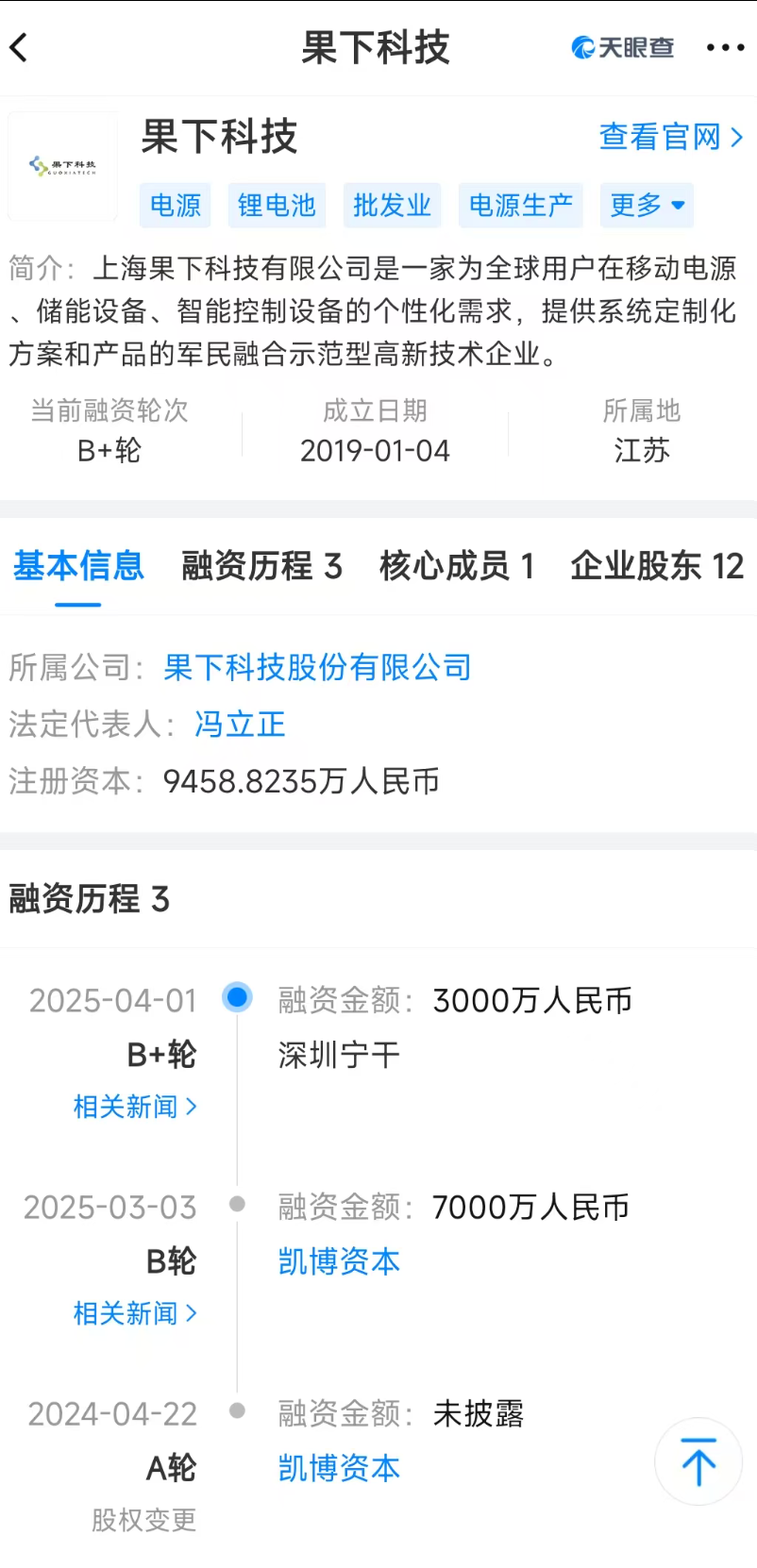
Core Viewpoint - The article highlights the emergence of Guoxia Technology as a "quasi-unicorn" in the competitive energy storage sector, achieving a valuation of 6 billion yuan and annual revenue of 1 billion yuan within just six years of establishment [1][4]. Company Overview - Guoxia Technology has seen its revenue grow from 142 million yuan in 2022 to 691 million yuan in the first half of 2025, marking an almost fivefold expansion [5]. - The company operates under a light asset model, focusing on ecological collaboration to reduce costs and avoid heavy capital investments [7]. Financial Performance - Despite significant revenue growth, Guoxia Technology's gross margin has nearly halved, dropping from 25.1% in 2022 to 12.5% in the first half of 2025 [5]. - Net profit growth has lagged behind revenue growth, with a net profit of 5.575 million yuan in the first half of 2025, reflecting a mere 13.5% increase [5]. Market Dynamics - The energy storage sector is experiencing intense price competition, with average bidding prices for domestic storage systems expected to drop from 1.6 yuan/Wh in 2022 to as low as 0.65 yuan/Wh by 2025 [4]. - The competition has extended internationally, with companies reducing prices by up to 30% for large projects in Europe and the Middle East [4]. Business Model and Strategy - Guoxia Technology's strategy involves acting as a system integrator without owning factories or manufacturing cells, relying on partnerships with companies like Keli Yuan and Zhongchuang Innovation to secure resources [8]. - The company’s revenue from projects, such as the 240MWh project in Huai'an, contributed significantly to its income, although the gross margin for similar projects was only 9.7% in the first half of 2025 [8]. Industry Trends - The article discusses three distinct business models in the energy storage sector: Guoxia Technology's light asset model, Haibo Shichuang's combination of light and heavy assets, and Ningde Times' full industry chain approach [10][11]. - The ongoing low-price competition is seen as a necessary phase for industry transformation, driven by overcapacity and technology homogenization [11].