边缘人工智能(Edge AI)

Search documents
2026年及未来:边缘人工智能(AI)变革之路
EDGEAI· 2026-03-12 01:35
Investment Rating - The report highlights Edge AI as the fastest growing segment within the AI market, with a projected CAGR of 37% through 2030, significantly outpacing the overall AI market's CAGR of 28% [3][8]. Core Insights - Edge AI is emerging as a transformative technology, shifting the paradigm from "cloud-first" to a balanced approach where edge computing plays a crucial role in real-time decision-making and low-latency applications [10][11]. - The report identifies three main drivers for the growth of Edge AI: the explosion of data generated at the edge, advancements in compute performance through Neural Processing Units (NPUs), and the unsustainable energy consumption of cloud AI [11][14]. - By 2034, it is projected that there will be 40.6 billion IoT devices globally, with 75% of data being created at the edge, indicating a significant market opportunity for Edge AI [11][12]. - The report anticipates that by 2026, Edge AI will become a key differentiator for IoT original equipment manufacturers (OEMs), with a broad wave of IoT devices embedded with Edge AI capabilities [24][25]. Summary by Sections Introduction - The report discusses the limitations of cloud-only architectures and the growing need for speed, resilience, and privacy in business applications [5][7]. Edge AI Drivers - The first driver is the vast amount of data generated by connected devices, which Edge AI can effectively utilize [11]. - The second driver is the surge in compute performance, enabling a significant increase in edge learning use cases, with the market for edge AI devices projected to reach nearly 5.7 billion by 2031 [12]. - The third driver is the unsustainable energy consumption of cloud AI, with data centers consuming a large portion of community electricity budgets [14]. Applications and Use Cases - Edge AI is poised to impact various industries, including defense, manufacturing, mobility, retail, food service, agriculture, and medical technology, by providing real-time processing and enhancing operational efficiency [31][33][39]. - Specific applications include real-time quality control in manufacturing, autonomous vehicle decision-making, and precision farming in agriculture [37][39]. Future Outlook - The report predicts advancements in generative and agentic Edge AI, sensor-to-server orchestration, and neuromorphic computing, which will enhance the capabilities and applications of Edge AI [27][28]. - The growth of developer communities and industry support around Edge AI is expected to accelerate innovation and deployment in the coming years [25][26].
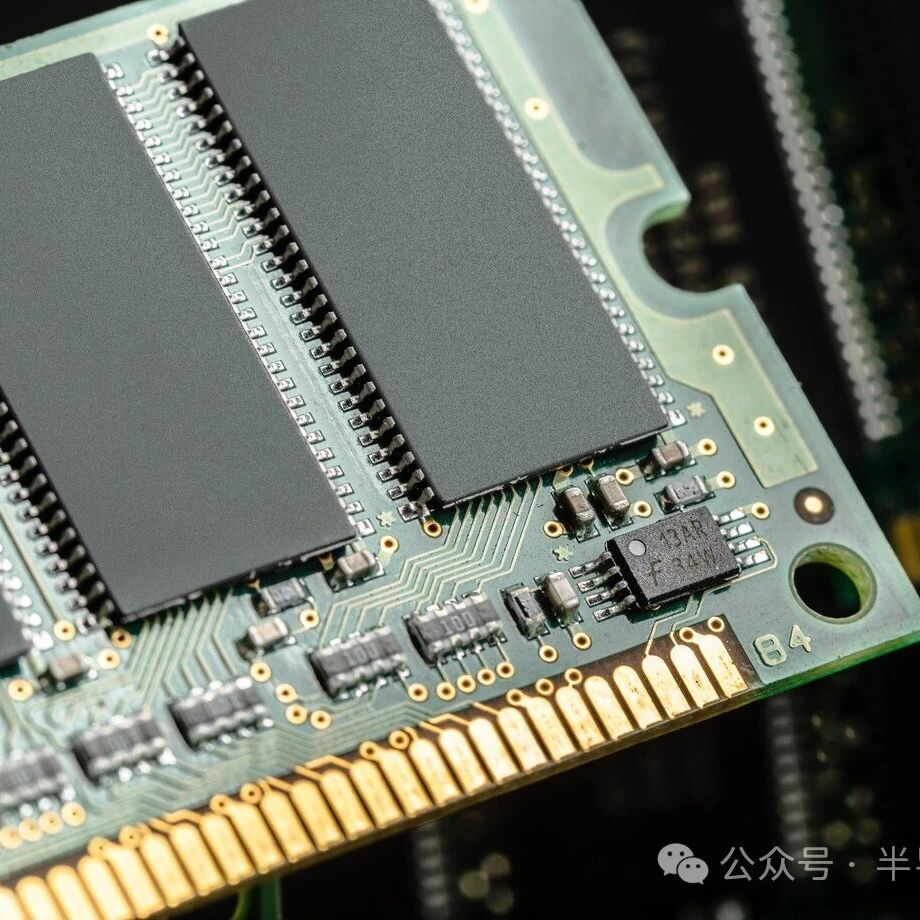
eNVM,发展现状
半导体行业观察· 2025-11-07 01:00
Core Insights - The article emphasizes that we are in the era of artificial intelligence, where data is crucial for innovation, and embedded non-volatile memory (eNVM) is a foundational technology that retains information without power [2][6] - By November 2025, the eNVM market is expected to grow rapidly, driven by the surge in edge data and the increasing application of AI functionalities in microcontrollers (MCUs) and system-on-chips (SoCs) [2][6] Market Growth and Projections - The embedded emerging NVM market, including MRAM, RRAM, and PCM, is projected to exceed $3 billion by 2030, indicating strong demand as eFlash becomes less applicable in certain areas [2][3] - The automotive industry remains a core market for eNVM, with significant growth expected in secure integrated circuits (ICs) and industrial MCUs by 2025 [4] Technological Advancements - Advanced nodes are pushing MRAM, ReRAM, and embedded PCM to the forefront, with manufacturers expanding embedded solutions from 28/22 nm to 10-12 nm platforms [3][4] - Companies like TSMC, Samsung, and STMicroelectronics are actively developing and mass-producing these technologies, with TSMC preparing for 12 nm FinFET ReRAM/MRAM by 2025 [3][4] Applications and Use Cases - eNVM is being recognized as a practical alternative to EEPROM/OTP in analog, power management, and mixed-signal designs, especially where cost, durability, and data retention are critical [4] - The role of eNVM is expanding from mere storage to being part of computing architectures, particularly in low-power edge AI inference applications [5][6] Challenges and Solutions - Challenges include integrating eNVM at advanced logic nodes while balancing durability and data retention to meet automotive reliability standards [5] - The availability of PDK/IP is improving, and production capacity is gradually increasing, addressing these challenges [5]

【招商电子】Qorvo FY26Q1跟踪报告:CQ2营收超指引上限,持续推进战略转型及产品结构升级
招商电子· 2025-08-15 09:50
Core Viewpoint - Qorvo reported a decline in revenue for FY26Q1, but exceeded previous performance guidance in terms of revenue, gross margin, and earnings per share [2][9] Financial Performance - FY26Q1 revenue was $819 million, down 7.63% year-over-year and 5.86% quarter-over-quarter; Non-GAAP gross margin was 44%; Non-GAAP diluted earnings per share was $0.92; Non-GAAP net profit was $86 million, up 2.38% year-over-year but down 35.33% quarter-over-quarter [2][9] - The company had a net inventory balance of $638 million, a decrease of $89 million year-over-year [2][9] Segment Performance - In FY26Q1, revenue from the ACG, HPA, and CSG segments was $571 million, $137 million, and $110 million respectively; ACG revenue declined 11.06% year-over-year and 1.6% quarter-over-quarter; HPA revenue increased 6.2% year-over-year but decreased 26.7% quarter-over-quarter; CSG revenue decreased 4.3% year-over-year but increased 8.9% quarter-over-quarter [3][12][15] - The defense and aerospace sector showed strong double-digit growth, driven by increased defense spending from the U.S. and allied nations, with expectations for continued year-over-year growth [3][12] Business Outlook - For FY26Q2, the company expects revenue of $1.025 billion (with a variance of $50 million), down 2.1% year-over-year but up 25.15% quarter-over-quarter; Non-GAAP gross margin is projected to be between 48% and 50% [4][10] - The company plans to exit low-margin businesses, which is expected to improve overall gross margins; the ACG segment is anticipated to see a slight decline in revenue, while CSG is expected to achieve low single-digit growth [4][11] Strategic Initiatives - The company is optimizing its business layout and has closed or is in the process of closing facilities in North Carolina and Costa Rica, reallocating production to higher-utilization wafer fabs, which is expected to positively impact gross margins [4][16] - Qorvo is focusing on high-value product categories and has made significant strides in expanding its defense and aerospace business, with potential opportunities exceeding $20 billion in the sales pipeline [3][19][33] Market Developments - The company has secured design wins in the automotive sector, including partnerships with leading manufacturers for ultra-wideband technology [17] - In the consumer electronics market, Qorvo has won design orders for Wi-Fi 7 modules for augmented reality glasses and is supporting major AR and VR headset suppliers [18] - The defense and aerospace market continues to expand, with a sales pipeline exceeding $7 billion, driven by U.S. defense budget increases and strategic importance to the Department of Defense [19][33]