酒店代订风险

Search documents
花3300元找代订,到店发现钱房两空,酒店代订到底靠不靠谱?
Xin Jing Bao· 2025-08-27 03:05
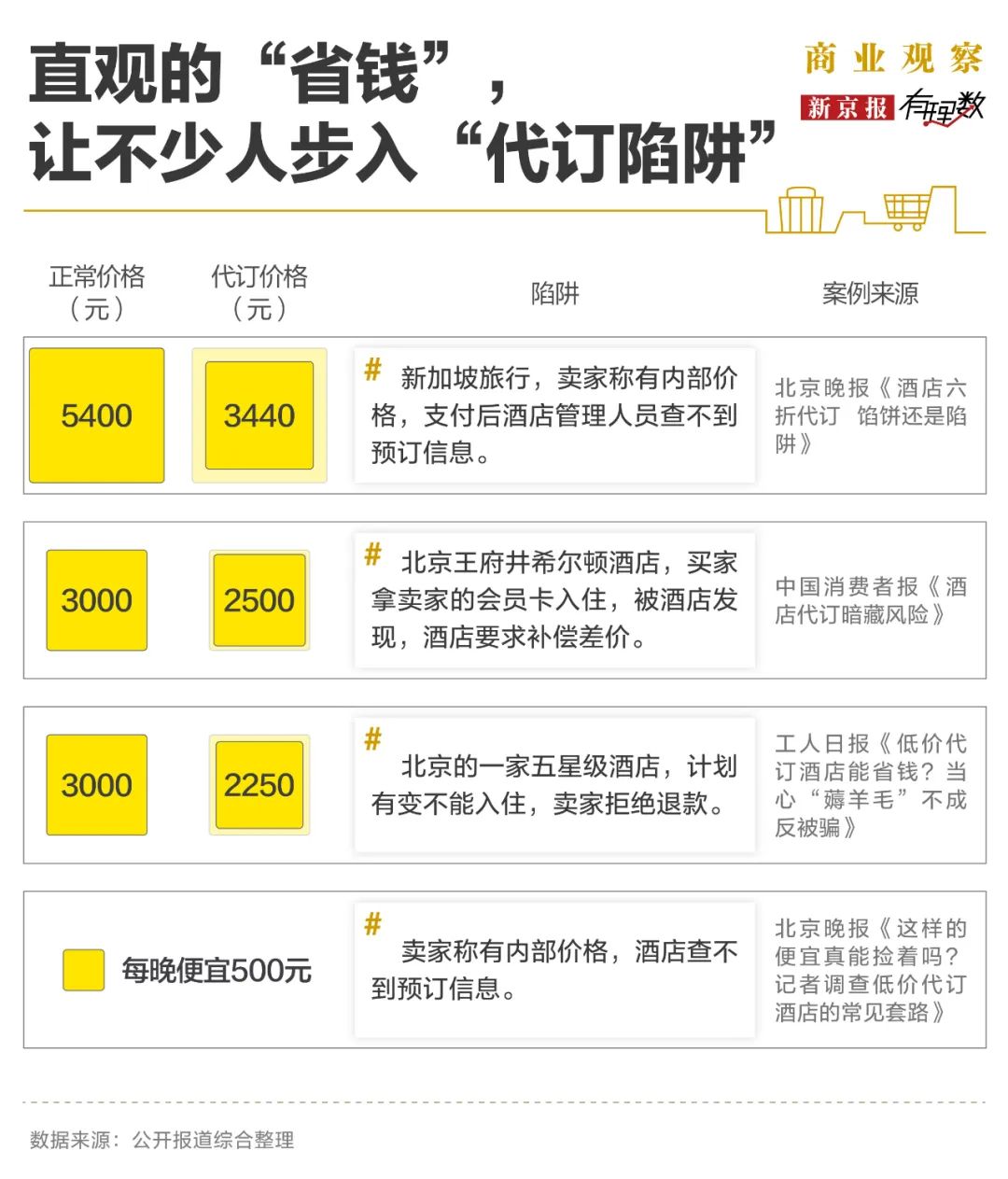
Core Viewpoint - The article discusses the rising trend of hotel booking through intermediaries on second-hand trading platforms, highlighting the significant price discounts offered compared to official rates, while also exposing the associated risks and scams involved in such transactions [1][2][8]. Group 1: Price Discounts and Consumer Behavior - During peak travel seasons, hotel prices soar, leading consumers to seek "hotel booking agents" who claim to offer internal or negotiated rates, typically 50% to 70% lower than official prices [1][2]. - Many consumers are attracted by the potential savings, with examples showing discounts of hundreds to thousands of yuan for multiple nights [2][4]. - The allure of substantial savings often leads consumers to overlook the risks, with some successfully booking hotels at significantly reduced rates while others face cancellations or scams [2][4][10]. Group 2: Risks and Scams - Numerous complaints have emerged regarding hotel booking scams, with a significant portion of consumers reporting issues such as being unable to check in and not receiving refunds, accounting for over 36% of complaints [12][13]. - Scammers often use tactics like fake positive reviews and promises of refunds to gain consumer trust, only to disappear after the transaction [9][10]. - The methods employed by scammers vary, with domestic scams often involving order cancellations or fake confirmations, while international scams may involve credit card fraud [12][20]. Group 3: Consumer Protection and Awareness - Consumers are advised to be cautious and verify bookings directly with hotels, as many booking agents operate in a gray area of legality, making it difficult to recover lost funds [8][20]. - Platforms have begun to take action against fraudulent listings, but the effectiveness of these measures is limited, and consumers often find themselves without recourse after being scammed [20][22]. - The article emphasizes the importance of consumer awareness and the need to choose legitimate booking methods over risky shortcuts [22].

花3300元找酒店代订,到店发现“钱房两空”,代订到底靠不靠谱?
Xin Jing Bao· 2025-08-27 02:29
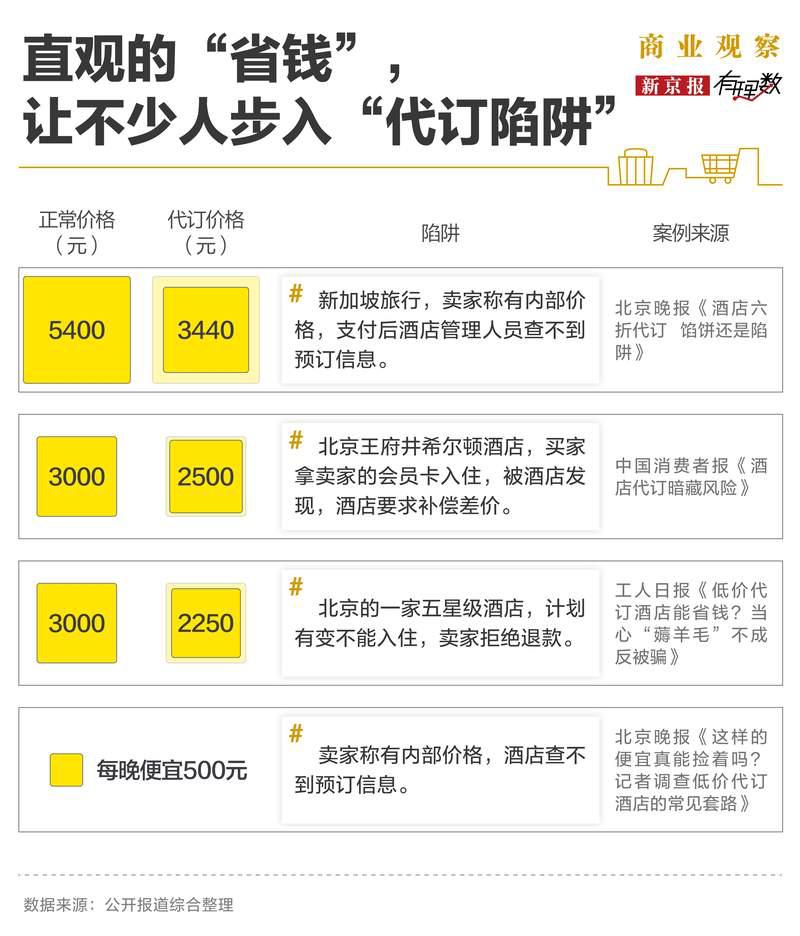
Core Viewpoint - The article discusses the risks and temptations associated with hotel booking through third-party platforms, highlighting the significant price differences and potential scams involved in such transactions [1][2][8]. Price Discrepancies - Many consumers are attracted to the substantial savings offered by hotel booking agents, with discounts ranging from 50% to 70% off official prices, leading to savings of hundreds or even thousands of yuan [1][2][4]. - Examples include a hotel in Singapore priced at 5,400 yuan being offered for 3,440 yuan, and a Beijing hotel originally priced at 3,000 yuan being available for 2,500 yuan through a booking agent [3][4]. Consumer Experiences - While some consumers report successful bookings at significantly reduced prices, many others have faced issues such as cancellations upon arrival, being asked to pay additional fees, or losing their deposits entirely [1][10][12]. - A notable case involved a consumer who lost 1,600 yuan due to a booking agent's failure to settle hotel payments, leading to a negative travel experience [10][12]. Booking Agent Tactics - Booking agents often use various tactics to attract customers, including claims of "internal prices" and offering additional perks like complimentary breakfasts or late check-outs [4][8]. - However, these agents may exploit loopholes in hotel booking systems, such as using employee discounts or engaging in fraudulent activities like credit card theft [8][12]. Common Scams - The article outlines several common scams associated with hotel bookings, including the use of stolen credit card information, fake booking confirmations, and the cancellation of reservations after receiving payment [13][18]. - A significant portion of complaints involves consumers arriving at hotels only to find their reservations were never made, leading to financial losses and inconvenience [14][19]. Platform Limitations - Many booking scams occur on second-hand trading platforms, where sellers can easily manipulate their reputations through fake reviews and data [21][23]. - Even when complaints are validated by the platforms, recovering lost funds can be challenging due to the inability to contact the sellers [21][23]. Consumer Caution - The article emphasizes the importance of consumer awareness and caution when considering hotel bookings through unofficial channels, as the risks often outweigh the potential savings [26].