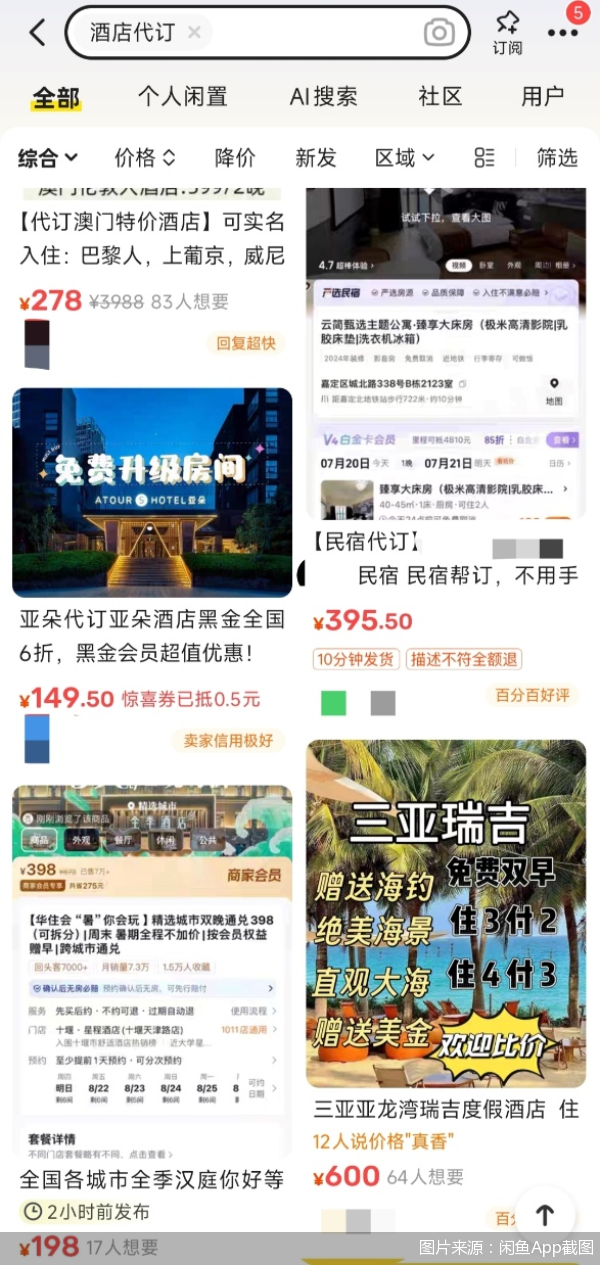
酒店代订服务

Search documents
以案说法:春节订房如何避开这些“坑”?
Xin Lang Cai Jing· 2026-02-14 01:55
Group 1 - The article highlights the increase in hotel booking disputes during the peak travel season, particularly issues like "temporary price hikes" and "order cancellations" [1] - It discusses the risks associated with pre-sale models such as "buy now, pay later," where consumers may face challenges like booking difficulties or unexpected price increases due to unilateral cancellations by hotels [1] - The article emphasizes the importance of thoroughly reading terms and conditions before making purchases and keeping records of transactions to protect consumer rights in case of disputes [1] Group 2 - The article raises concerns about the reliability of "low-price booking" services found on second-hand platforms, which can lead to significant financial losses and potential fraud [2] - It advises consumers to be cautious of offers that are significantly below market prices and to prioritize booking through official hotel channels or reputable platforms [2] - The article stresses the need for consumers to clarify cancellation and modification policies when using personal booking services to ensure financial safety [2] Group 3 - The article discusses the complexities of online booking systems involving multiple parties, which can lead to disputes and accountability issues [3] - It highlights a case where a consumer faced issues due to a travel agency's data error, resulting in a court ruling that emphasized the importance of consumer rights and the obligation of service providers to inform customers [3] - The article recommends that consumers verify booking details through official hotel channels and retain evidence of transactions to effectively assert their rights in case of disputes [3]
节前预订酒店如何不“翻车”
Xin Lang Cai Jing· 2026-02-10 23:14
Core Viewpoint - The article discusses the rising hotel booking volume as the longest Spring Festival holiday approaches, highlighting consumer concerns about issues such as "temporary price increases," "multiple sales of the same room," and "layered order subcontracting" [1] Group 1: Consumer Rights and Legal Cases - A case is presented where a consumer, Wang, purchased a hotel voucher for 328 yuan, but was denied check-in due to the hotel’s breach of contract, leading to a court ruling in favor of Wang for triple damages [4][6][7] - The article emphasizes the legal obligations of businesses under the Consumer Rights Protection Law and the Civil Code, mandating that businesses must fulfill their commitments to consumers regarding service quality and pricing [5][7] - The article warns consumers about the "prepay and enjoy later" hotel booking model, which, while attractive, can lead to various issues such as unavailability of reservations, unexpected price hikes, and unclear terms [5][7] Group 2: Risks of Low-Price Hotel Booking - A case involving Zhang, who used a second-hand trading app for a hotel booking, illustrates the risks of low-price hotel bookings, where the intermediary failed to deliver on promised services, resulting in additional costs for the consumer [8][9] - The article highlights the potential for fraud in low-price hotel bookings, where individuals may misrepresent their ability to secure discounted rates, leading to financial losses for consumers [10][11] - Consumers are advised to be cautious when using second-hand platforms for hotel bookings, as these transactions may violate hotel membership agreements and lead to denied check-ins or loss of benefits [11] Group 3: Legal Framework and Consumer Protection - The article outlines the legal framework governing online hotel bookings, emphasizing the complexity of relationships among service providers, intermediaries, and consumers, which can complicate claims for damages [13] - It discusses the legal recourse available to consumers under the Consumer Rights Protection Law, allowing them to seek compensation from both the service provider and the platform if their rights are violated [13][14] - The article concludes with a reminder for all parties involved in hotel bookings to adhere to legal standards and contractual obligations, encouraging consumers to verify bookings through official channels and retain evidence for potential disputes [16]

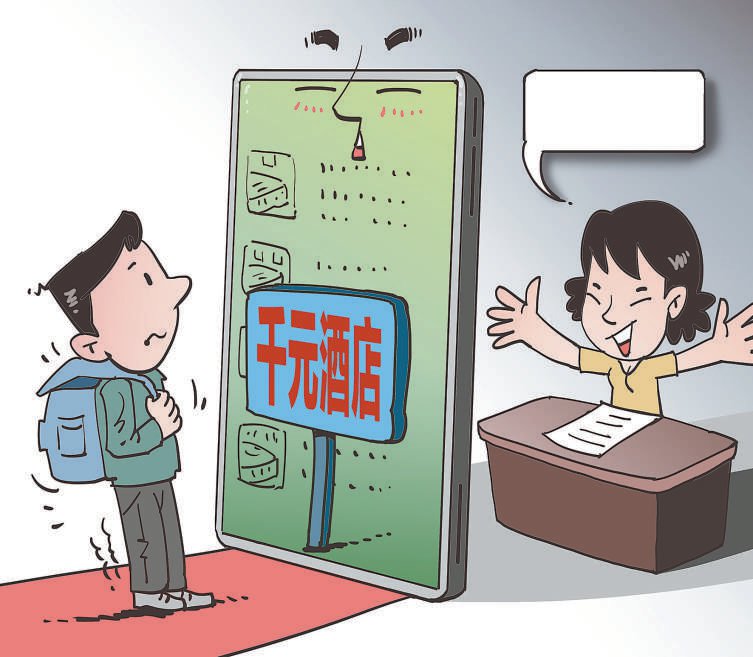
有人“香到爆”,有人“伤到哭” 低价酒店代订背后:是馅饼还是陷阱?
Mei Ri Jing Ji Xin Wen· 2025-09-10 13:57
Core Viewpoint - The article highlights the emergence of a gray industry chain in hotel booking, characterized by extremely low prices that attract consumers but often lead to risks such as fraud and legal issues. This trend is particularly noticeable as the 2025 National Day holiday approaches, leading to a surge in hotel bookings and complaints related to booking services. Group 1: Low-Price Booking Trends - Hotel booking services are being offered at significantly reduced prices, such as 450 yuan for a hotel originally priced at 1999 yuan and 899 yuan for a hotel originally priced at 2999 yuan, with discounts reaching as high as 70% [1] - Complaints regarding booking services have surged, with over 1700 complaints on the Black Cat Complaints platform, more than half of which are related to hotel booking issues across platforms like Xianyu, Taobao, and Xiaohongshu [2] Group 2: Types of Booking Services - The hotel booking market is categorized into three main types: 1. Illegal bookings using stolen credit card information, which may lead to legal disputes for consumers [3] 2. Bookings made by high-level members using points or discounts, which violate membership agreements [3] 3. Bookings from agreement companies that purchase rooms in bulk at discounted rates and resell them [3] Group 3: Pricing Mechanisms and Market Dynamics - Agreement companies often sell rooms at prices significantly lower than those on hotel group websites or OTA platforms due to long-term agreements and bulk purchasing [4] - For example, a company may sign a contract for 100 rooms at a total price of 1 million yuan, and if not all rooms are sold by the contract's end, they may sell remaining rooms at a steep discount, such as reducing a 1000 yuan room to 500-600 yuan [5] Group 4: Challenges in Monitoring and Regulation - Hotels struggle to monitor and prevent fraudulent bookings due to the lack of integrated booking systems across cities, making it difficult to identify suspicious activities [6] - The presence of agreement companies complicates the identification of legitimate bookings, as these companies often use different accounts or aliases to continue their operations [7] - To combat these issues, hotels and platforms are implementing joint monitoring systems and educating consumers on fraud prevention, but the gray market persists due to ongoing demand from consumers seeking lower prices [7]
有人“香到爆”,有人“伤到哭”,揭开低价酒店代订幕后
3 6 Ke· 2025-09-10 09:22
Core Insights - The article highlights the emergence of a gray market for hotel bookings in China, characterized by extremely low prices that attract consumers but often lead to issues such as cancellations and refunds [1][4][10] - The hotel booking industry is facing challenges from various illegal and unethical practices, including credit card fraud and unauthorized use of membership benefits, which complicate the landscape for both consumers and legitimate businesses [4][8] Group 1: Market Dynamics - The hotel booking market has seen a rise in "super low-price" booking services, with discounts reaching as low as 75% off the original price, leading to a surge in consumer interest [1][6] - The low prices are often a result of a complex distribution chain involving hotels, intermediary companies, and various online platforms, creating a web of interests that complicates regulation [1][6][10] - The article identifies three main categories of low-price bookings: illegal credit card use, personal actions by high-tier members, and agreements with companies that purchase rooms in bulk [4][6] Group 2: Consumer Experiences - Many consumers have reported negative experiences with low-price hotel bookings, including issues like being denied rooms upon arrival and difficulties in obtaining refunds [3][4] - Complaints related to hotel bookings have surged, with over 1,700 complaints on platforms like Black Cat Complaints, highlighting issues such as false bookings and refusal to refund [3][4] Group 3: Industry Response - Hotels are aware of the issues caused by unauthorized bookings but face challenges in monitoring and controlling these practices due to the fragmented nature of booking systems [8][10] - The article suggests that while hotels are attempting to combat these practices through monitoring and warnings, the effectiveness is limited due to the use of aliases and multiple accounts by intermediaries [10] - Recommendations for consumers include prioritizing bookings through mainstream platforms or official hotel channels to ensure safety and reliability [10]
花3300元找代订,到店发现钱房两空,酒店代订到底靠不靠谱?
Xin Jing Bao· 2025-08-27 03:05
Core Viewpoint - The article discusses the rising trend of hotel booking through intermediaries on second-hand trading platforms, highlighting the significant price discounts offered compared to official rates, while also exposing the associated risks and scams involved in such transactions [1][2][8]. Group 1: Price Discounts and Consumer Behavior - During peak travel seasons, hotel prices soar, leading consumers to seek "hotel booking agents" who claim to offer internal or negotiated rates, typically 50% to 70% lower than official prices [1][2]. - Many consumers are attracted by the potential savings, with examples showing discounts of hundreds to thousands of yuan for multiple nights [2][4]. - The allure of substantial savings often leads consumers to overlook the risks, with some successfully booking hotels at significantly reduced rates while others face cancellations or scams [2][4][10]. Group 2: Risks and Scams - Numerous complaints have emerged regarding hotel booking scams, with a significant portion of consumers reporting issues such as being unable to check in and not receiving refunds, accounting for over 36% of complaints [12][13]. - Scammers often use tactics like fake positive reviews and promises of refunds to gain consumer trust, only to disappear after the transaction [9][10]. - The methods employed by scammers vary, with domestic scams often involving order cancellations or fake confirmations, while international scams may involve credit card fraud [12][20]. Group 3: Consumer Protection and Awareness - Consumers are advised to be cautious and verify bookings directly with hotels, as many booking agents operate in a gray area of legality, making it difficult to recover lost funds [8][20]. - Platforms have begun to take action against fraudulent listings, but the effectiveness of these measures is limited, and consumers often find themselves without recourse after being scammed [20][22]. - The article emphasizes the importance of consumer awareness and the need to choose legitimate booking methods over risky shortcuts [22].
花3300元找酒店代订,到店发现“钱房两空”,代订到底靠不靠谱?
Xin Jing Bao· 2025-08-27 02:29
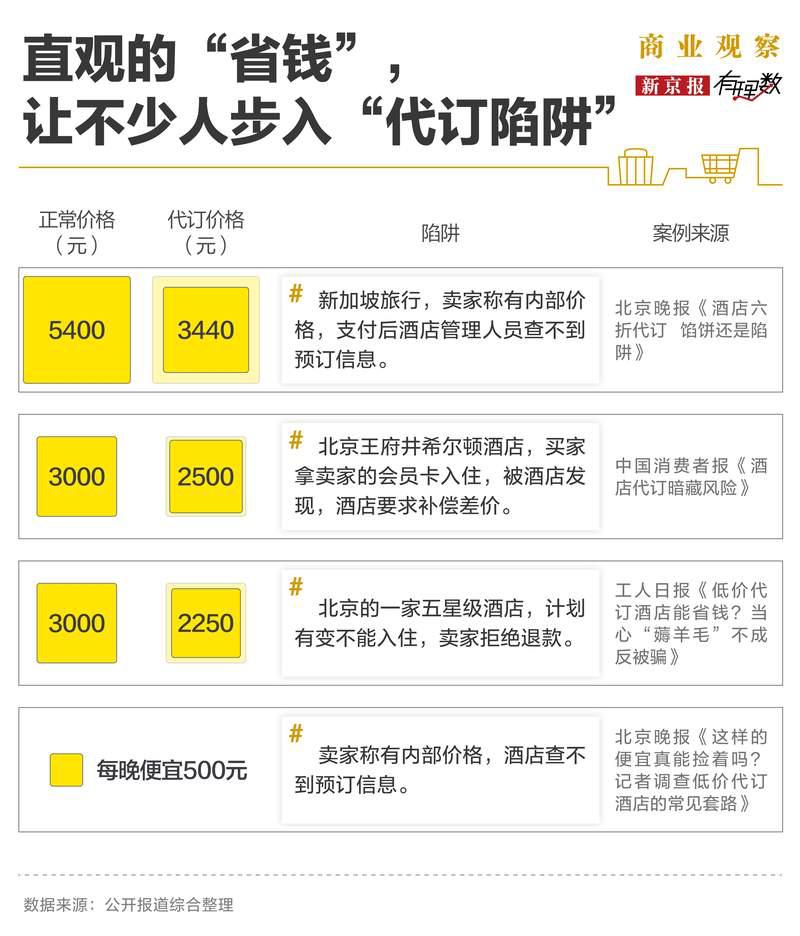
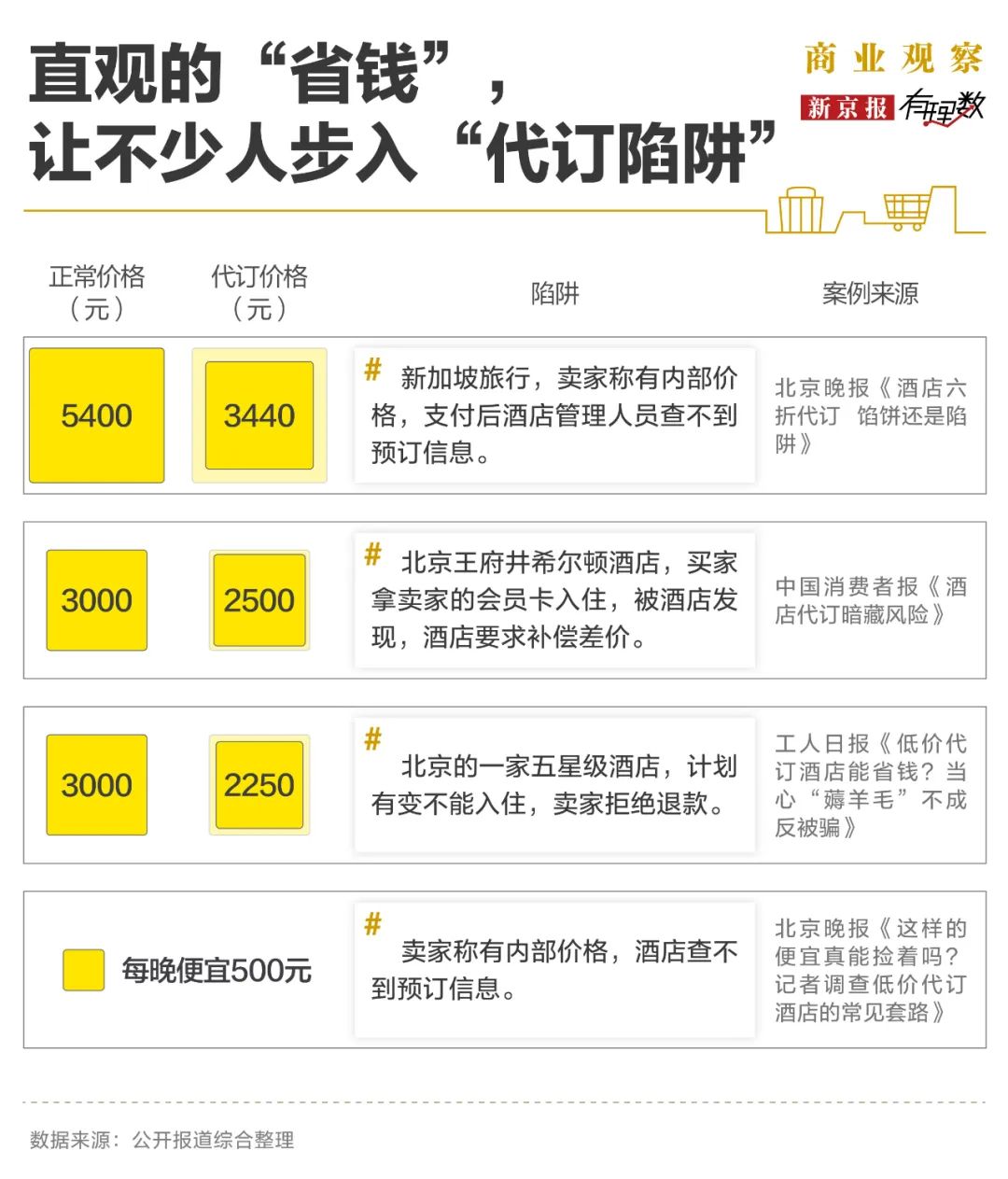
Core Viewpoint - The article discusses the risks and temptations associated with hotel booking through third-party platforms, highlighting the significant price differences and potential scams involved in such transactions [1][2][8]. Price Discrepancies - Many consumers are attracted to the substantial savings offered by hotel booking agents, with discounts ranging from 50% to 70% off official prices, leading to savings of hundreds or even thousands of yuan [1][2][4]. - Examples include a hotel in Singapore priced at 5,400 yuan being offered for 3,440 yuan, and a Beijing hotel originally priced at 3,000 yuan being available for 2,500 yuan through a booking agent [3][4]. Consumer Experiences - While some consumers report successful bookings at significantly reduced prices, many others have faced issues such as cancellations upon arrival, being asked to pay additional fees, or losing their deposits entirely [1][10][12]. - A notable case involved a consumer who lost 1,600 yuan due to a booking agent's failure to settle hotel payments, leading to a negative travel experience [10][12]. Booking Agent Tactics - Booking agents often use various tactics to attract customers, including claims of "internal prices" and offering additional perks like complimentary breakfasts or late check-outs [4][8]. - However, these agents may exploit loopholes in hotel booking systems, such as using employee discounts or engaging in fraudulent activities like credit card theft [8][12]. Common Scams - The article outlines several common scams associated with hotel bookings, including the use of stolen credit card information, fake booking confirmations, and the cancellation of reservations after receiving payment [13][18]. - A significant portion of complaints involves consumers arriving at hotels only to find their reservations were never made, leading to financial losses and inconvenience [14][19]. Platform Limitations - Many booking scams occur on second-hand trading platforms, where sellers can easily manipulate their reputations through fake reviews and data [21][23]. - Even when complaints are validated by the platforms, recovering lost funds can be challenging due to the inability to contact the sellers [21][23]. Consumer Caution - The article emphasizes the importance of consumer awareness and caution when considering hotel bookings through unofficial channels, as the risks often outweigh the potential savings [26].
高端酒店集体封杀闲鱼「代订」!5%折扣值吗?
Bei Jing Shang Bao· 2025-08-21 05:04
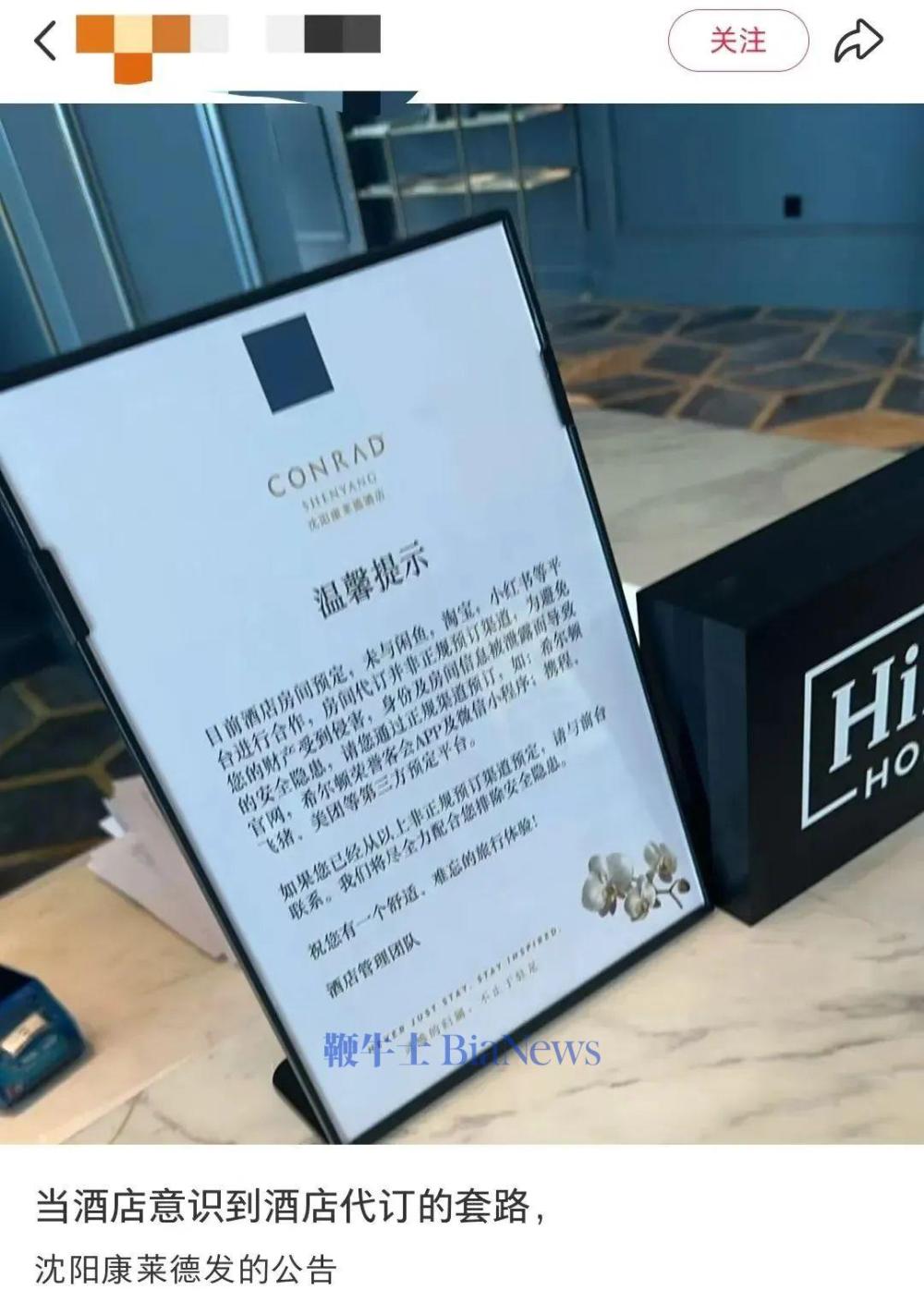
Core Viewpoint - High-end hotels are collectively rejecting low-price booking services from platforms like Xianyu, citing risks to their pricing systems and consumer safety [1][4][7]. Group 1: Hotel Responses - Multiple high-end hotels have issued consumer warnings stating they do not collaborate with platforms like Xianyu and recommend booking through official channels [1][4]. - Hotels are facing increasing consumer complaints regarding unauthorized booking services, prompting them to take a stand against these platforms [4][7]. - Major hotels, including the Sanya Edition and Hangzhou Hyatt, have confirmed they only partner with recognized OTA platforms and not with Xianyu [7][9]. Group 2: Pricing Discrepancies - A price comparison revealed that bookings through Xianyu were approximately 5% cheaper than official channels, with specific examples showing a price difference of 283 yuan during peak season [3][9]. - The practice of unauthorized low-price bookings is disrupting the established pricing structure of hotels, leading to potential revenue loss [13][14]. Group 3: Consumer Risks - Consumers using unauthorized booking services face significant risks, including potential privacy breaches and difficulties in claiming refunds [11][13]. - Instances have been reported where consumers unknowingly checked into rooms that had been pre-registered by unauthorized agents, raising safety concerns [11][13]. - The lack of accountability from unauthorized booking agents complicates the situation, as consumers may find it challenging to assert their rights [13][20]. Group 4: Industry Challenges - The hotel industry is struggling to combat the gray market of unauthorized bookings, which has become a complex issue with multiple layers of transactions [16][19]. - Hotels are exploring methods to trace unauthorized bookings back to their sources, but the effectiveness of these measures remains uncertain [19][20]. - Experts suggest implementing a blacklist system for known unauthorized agents to prevent future bookings and protect consumer interests [20].
高端酒店集体向低价代订说“不”
Bei Jing Shang Bao· 2025-08-20 13:39
Core Viewpoint - High-end hotels are collectively rejecting low-price booking services from platforms like Xianyu, citing risks to consumer safety and the integrity of their pricing systems [1][4][5] Group 1: Consumer Complaints and Hotel Warnings - Many high-end hotels are issuing warnings against low-price booking services on platforms like Xianyu due to consumer complaints about potential risks [4][5] - Hotels emphasize that they have not partnered with these platforms and advise consumers to book through official channels to avoid financial and personal safety risks [4][5] - A survey of various high-end hotels confirms that they do not collaborate with Xianyu and highlight the risks associated with non-official booking channels [4][5] Group 2: Risks of Low-Price Booking - Low-price booking services pose significant risks to consumers, including potential privacy breaches and difficulties in claiming rights [7][8] - Instances of consumers facing security concerns after using these services have been reported, highlighting the dangers of unauthorized bookings [7][8] - The lack of accountability from booking intermediaries can lead to situations where consumers are left without accommodations despite having paid for their bookings [8][9] Group 3: Impact on Hotel Operations - Unauthorized low-price bookings disrupt the pricing structure of hotels, leading to revenue loss and damaging brand reputation [9][10] - The prevalence of low-price offers undermines the hotels' commitment to price consistency and optimal pricing guarantees [9][10] - The existence of a gray market for hotel bookings complicates the identification of legitimate orders, making it challenging for hotels to manage their sales channels effectively [10][11] Group 4: Recommendations for Addressing the Issue - Hotels are encouraged to implement a blacklist system to prevent known unauthorized booking agents from making reservations [10][11] - Suggestions include using electronic vouchers linked to user information to reduce the resale of promotional offers [11] - Industry experts call for government regulation of the hotel booking market and the establishment of guidelines for second-hand and social platforms to mitigate unauthorized booking services [11]