银行网点结构优化

Search documents
银行今十条:数字人民币1月1日起计付利息;农商行头部阵营形成“五强”格局;新疆银行注册资本增至122亿元...
Jin Rong Jie· 2026-01-04 14:13
Group 1 - The People's Bank of China conducted a 365 billion yuan 7-day reverse repurchase operation, resulting in a net withdrawal of 433.6 billion yuan [1] - The People's Bank of China issued the "Non-Bank Payment Institutions Classification Rating Management Measures" to enhance supervision of non-bank payment institutions, effective from February 1, 2026 [2] - In 2025, the banking sector saw a net increase of 623 physical bank branches, marking the first positive growth in three years despite the closure of 7,871 branches [3] Group 2 - Ten digital RMB operating banks announced that starting January 1, 2026, they will pay interest on digital RMB wallets at the same rate as their demand deposit rates [4] - Chengdu Rural Commercial Bank announced that its total assets have surpassed 1 trillion yuan, becoming the fifth rural commercial bank in China to reach this milestone [5] - Xinjiang Bank received approval to increase its registered capital from 7.906 billion yuan to 12.222 billion yuan [6] Group 3 - Baoding Bank's plan to change its registered capital was approved, allowing it to raise 250 million shares [7] - Ningbo Tongshang Bank was approved to issue capital instruments not exceeding 2 billion yuan, including perpetual bonds and subordinated bonds [8][9] - The Dongguan Financial Regulatory Bureau and other departments will pilot real estate trust property registration in Dongguan to support the transformation of the trust business [10] Group 4 - New Era Trust's 100% equity is being offered for transfer for the third time, with a base price of approximately 1.851 billion yuan, consistent with previous offers [11]






2025年银行网点关闭7871家,新开8494家
21世纪经济报道· 2026-01-04 12:00
Core Viewpoint - The transformation of the banking industry in 2025 is evolving from superficial adjustments of branches to deep structural optimization, characterized by a "slimming and muscle-building" approach, where inefficient branches are closed while new, specialized branches are established to reconstruct offline value [1][5]. Group 1: Branch Closure and Establishment - In 2025, a total of 7,871 bank branches were closed, while 8,494 new branches were established, resulting in a net increase of 623 branches, marking the first positive growth in branch numbers in three years [1][5]. - The closure rate of bank branches accelerated in 2024, with 2,483 branches closed compared to 2,649 in 2023, indicating that the total number of closures in 2025 exceeded the sum of the previous two years [2][5]. - Inner Mongolia had the highest number of branch closures due to regulatory approvals for mergers and dissolutions, totaling 2,400 branches, linked to the large-scale integration of local rural credit systems [2]. Group 2: Impact of Digital Banking - The rise of mobile banking has led to a significant decline in the business volume of traditional branches, with some experiencing a drop of over 70% in counter services [3][6]. - The operational costs of individual branches can reach several million yuan annually, contributing to a cost-revenue imbalance as transaction volumes decrease [3]. Group 3: Future Branch Strategy - Banks are focusing on transforming branches into multifunctional service points, emphasizing wealth management, corporate finance, and community services, creating an integrated "finance + lifestyle" service space [5][7]. - Over 90% of branches have implemented smart teller machines, and some have introduced innovative service models like remote video customer service and VR experience zones [6]. - The trend towards specialized branches aims to enhance brand reputation and customer retention, although challenges such as high costs and variable usage rates exist [7]. Group 4: Regulatory Guidance and Market Trends - The financial regulatory authority is guiding banks to ensure the availability of physical branches in rural areas while balancing economic and social benefits, avoiding excessive competition and financial exclusion [6]. - The future of bank branches, especially in first- and second-tier cities, is expected to see a continued reduction in numbers, but at a slower pace, with a more refined and scientific layout and differentiated operations among branches [7].

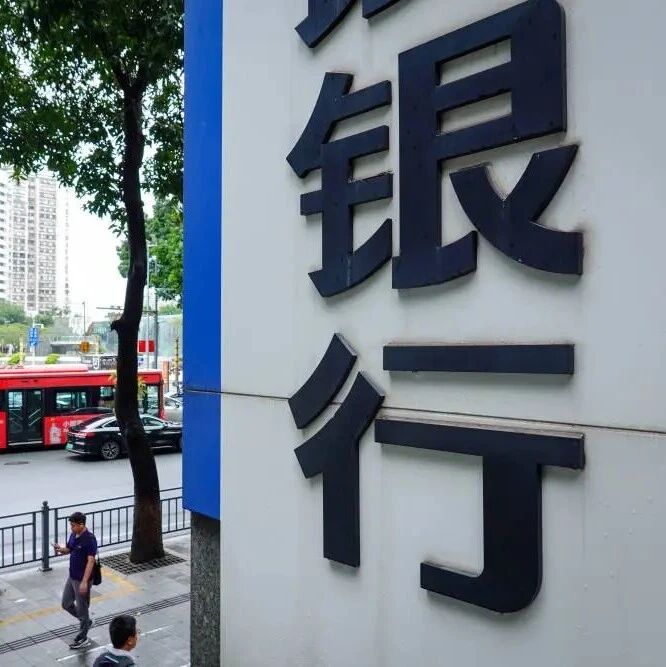
银行网点布局逻辑变了:年内近万家退出,也有新增超7000家
21世纪经济报道· 2025-12-10 07:13
Core Viewpoint - The banking industry is undergoing a transformation from superficial adjustments of branches to deep structural optimization, focusing on a precise "slimming and strengthening" action by closing low-efficiency branches while reconstructing offline value with specialized layouts [1][4]. Group 1: Branch Exit Data - As of December 8, 2023, a total of 9,661 bank branches have been approved for exit this year, with 1,580 branches completing the exit approval in the first quarter alone, marking a significant acceleration in the industry's "slimming" process [1][4]. - Among the branches closed, over 80% are rural commercial banks, indicating a concentrated effort in this sector [4]. Group 2: Digitalization Impact - The primary reason for the accelerated exit of bank branches is the impact of digitalization, with the highest number of branch closures due to regulatory approvals for mergers or dissolutions occurring in Inner Mongolia, totaling 139 branches [5]. - The proliferation of mobile and online banking has led to a noticeable decline in business volume at traditional branches, particularly in cash and basic counter services [5]. Group 3: Operational Efficiency - Traditional bank branches face severe cost-revenue imbalances, with annual operating costs for a single branch reaching several million yuan, while transaction volumes have dropped by over 70% in some cases [6]. - Banks are increasingly focusing on transforming branches into comprehensive, ecological, and intelligent service points, as highlighted by various bank executives in their annual reports [6]. Group 4: Branch Optimization Strategy - The trend is shifting from "quantity expansion" to "structural optimization," with banks reducing physical branches to control operational costs while investing in intelligent and experiential branches [9]. - Future branch layouts will emphasize wealth management, corporate finance, and community services, creating integrated "finance + lifestyle" service spaces [9]. Group 5: Innovative Service Models - Over 90% of bank branches have implemented smart teller machines, with some introducing remote video customer service and VR experience zones [10]. - Banks are developing specialized branches, such as automotive finance branches, to cater to specific customer needs and enhance service offerings [10]. Group 6: Future Outlook - The future of bank branches is envisioned as interactive points for customer engagement and brand representation, with a need to balance costs and customer experience [12]. - While the number of branches, especially in first- and second-tier cities, is expected to continue decreasing, the pace will slow, and the focus will shift to more precise and scientific layouts with differentiated operations [12].