长期资金

Search documents
银行理财积极拥抱资本市场
Jing Ji Ri Bao· 2026-01-28 22:01
Core Viewpoint - The banking wealth management sector plays a crucial role in managing vast amounts of household wealth and is increasingly important in guiding resident wealth to support the capital market and strategic emerging industries [1] Group 1: Policy Guidance - The government is encouraging wealth management companies to enhance their equity investment capabilities and issue more long-term equity products to actively participate in the capital market [1] - A joint implementation plan by six departments in January 2025 allows bank wealth management to participate as strategic investors in the private placement of listed companies, providing equal policy treatment with public funds [1] Group 2: Investment Allocation - As of the end of 2025, the total investment assets of wealth management products reached 35.66 trillion yuan, a year-on-year increase of 10.99%, with bond assets being the mainstay at 18.52 trillion yuan, accounting for 51.93% of total investment assets [2] - Equity assets, although smaller at 0.66 trillion yuan (1.85% of total), show significant growth potential, with a focus on stable, high-dividend stocks to match the low-risk preference of investors [2] Group 3: Innovation and Asset Diversification - The wealth management industry is increasingly focusing on innovative asset layouts to optimize portfolios and enhance returns, with funds being directed into key innovative sectors of the real economy [3] - Companies like Beiyin Wealth Management are targeting private equity investment opportunities in high-tech industries, while Huaxia Wealth Management is building a diversified investment system with both passive and active strategies [3] Group 4: Future Outlook - With a positive long-term economic outlook and clear prospects for the equity market, the capital market is expected to attract more long-term and patient capital, with wealth management companies committed to enhancing research capabilities and innovating product designs [4]
社保基金会:充分发挥长期资金耐心资本作用
Zheng Quan Shi Bao Wang· 2025-12-16 23:14
Core Viewpoint - The meeting led by Liu Kun emphasized the importance of the Central Economic Work Conference in shaping the economic work for 2026 and ensuring a strong start for the "14th Five-Year Plan" [1][2] Group 1 - The meeting highlighted the need for continuous learning of Xi Jinping's important speeches and the spirit of the conference, integrating it with the 20th Central Committee's fourth plenary session to enhance confidence and implement decisions [2] - It stressed the importance of prudent management of fund investments, closely monitoring domestic and international macroeconomic conditions, and effectively conducting asset allocation [2] - The meeting called for long-term planning to promote the development of the social security fund, aligning with the key tasks outlined in the "14th Five-Year Plan" and the Central Economic Work Conference [2]
社保基金会: 充分发挥长期资金耐心资本作用
Zheng Quan Shi Bao· 2025-12-16 18:03
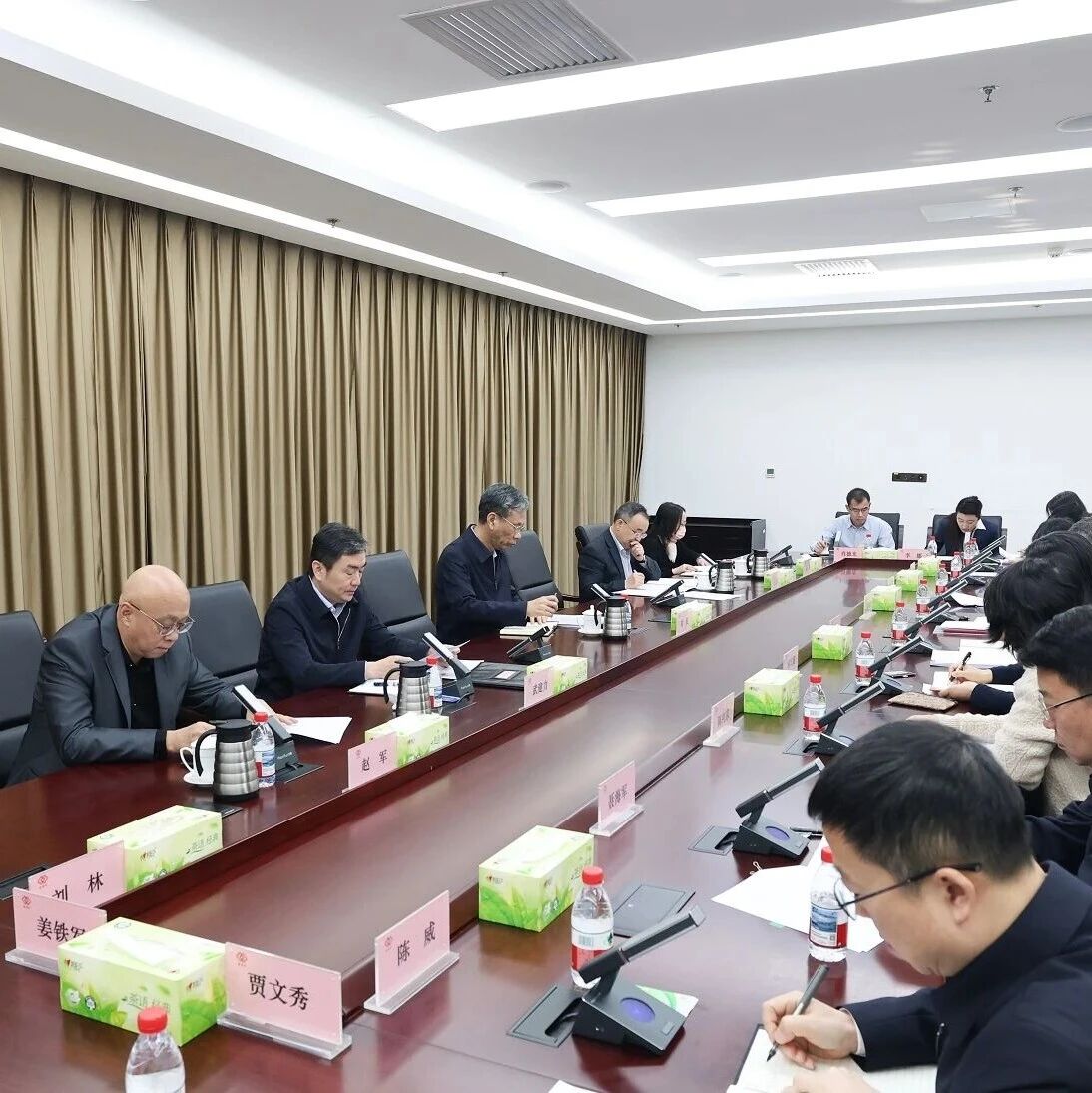
Core Viewpoint - The meeting led by Liu Kun emphasized the importance of the Central Economic Work Conference in shaping the economic work for 2026, providing strategic guidance for the upcoming "14th Five-Year Plan" [1] Group 1: Economic Strategy - The meeting highlighted the need to deeply study and implement the spirit of Xi Jinping's important speeches and the decisions made during the 20th Central Committee's Fourth Plenary Session, aiming to enhance confidence and ensure the implementation of the Party's decisions [1] - It was noted that the conference serves as a comprehensive summary of the economic work for 2025 and a profound analysis of the current economic situation, which is crucial for guiding future economic efforts [1] Group 2: Fund Management - The meeting stressed the importance of prudently managing fund investments by closely monitoring domestic and international macroeconomic conditions and capital market trends [1] - There is a focus on effective asset allocation and maintaining a balance between safety and active support for national development needs, particularly in technology and industry innovation [1] Group 3: Long-term Planning - The meeting called for a long-term strategic approach to the development of the social security fund, aligning with the key tasks outlined in the "14th Five-Year Plan" and the Central Economic Work Conference [1] - It emphasized the need for systematic planning to ensure high-quality development of the social security fund, integrating various key tasks for effective implementation [1]
社保基金会:充分发挥长期资金、耐心资本作用
Zhong Guo Zheng Quan Bao· 2025-12-16 14:06
Core Viewpoint - The meeting emphasized the importance of implementing the decisions made by the Central Economic Work Conference, focusing on prudent fund investment operations and long-term planning for the development of the social security fund [1][2]. Group 1: Economic Context - The Central Economic Work Conference is a significant meeting following the 20th Central Committee's Fourth Plenary Session, summarizing the economic work for 2025 and analyzing the current economic situation, providing strategic guidance for 2026 [1]. - The meeting recognized that during the 14th Five-Year Plan period, the achievements of the Party and the state were fundamentally due to the leadership of the Central Committee with Xi Jinping at its core and the guidance of Xi Jinping's Thought on Socialism with Chinese Characteristics for a New Era [2]. Group 2: Fund Management Strategy - The meeting highlighted the need for continuous learning of Xi Jinping's important speeches and the spirit of the conference, integrating it with the implementation of the 20th Central Committee's Fourth Plenary Session spirit to enhance confidence and proactive actions [2]. - It was stressed that fund investment operations should be conducted prudently, closely monitoring domestic and international macroeconomic conditions and capital market trends, and effectively conducting asset allocation [2]. - The meeting called for leveraging long-term funds and patient capital to serve national development needs while ensuring safety in investments [2]. Group 3: Long-term Planning - The meeting focused on long-term planning for the development of the social security fund, aligning with the key tasks outlined in the Central Economic Work Conference and the important requirements of the 15th Five-Year Plan [3]. - It emphasized the need to systematically plan the social security fund's 15th Five-Year Plan and coordinate the implementation of key tasks to promote high-quality development of the social security fund [3].
社保基金会党组:充分发挥长期资金、耐心资本作用
券商中国· 2025-12-16 11:46
Core Viewpoint - The meeting of the Social Security Fund Council emphasized the importance of implementing the spirit of the Central Economic Work Conference, which outlines the economic work for 2026 and provides strategic guidance for the upcoming year [1][2]. Group 1 - The meeting highlighted the significance of the Central Economic Work Conference as a crucial gathering post the 20th Central Committee's Fourth Plenary Session, with Xi Jinping's speech summarizing the economic work for 2025 and analyzing the current economic situation [1]. - The Council members are urged to deeply understand the decisive significance of the "two establishments" and enhance their awareness and confidence in the Party's leadership [1][2]. - The meeting called for a careful and prudent approach to fund investment operations, emphasizing the need to track macroeconomic and capital market trends closely [2]. Group 2 - The Council aims to align its operations with the "14th Five-Year Plan" and the key tasks outlined in the Central Economic Work Conference, focusing on high-quality development of the social security fund [2]. - There is a commitment to actively support national development needs, particularly in technology and industry innovation, while maintaining a safety baseline in investments [2].

机构解读绩效考核新规:破解“重规模、轻收益”顽疾,培育资本市场“长钱、稳钱”
Zhong Guo Ji Jin Bao· 2025-12-15 01:01
Core Viewpoint - The newly issued "Guidelines for Performance Evaluation of Fund Management Companies (Draft for Comments)" aims to address the issue of "heavy scale, light returns" in the public fund industry, promoting long-term investment and improving investor experience [1][4]. Group 1: Impact on Fund Industry - The guidelines propose specific requirements for compensation structure, performance evaluation, internal control, and self-regulation, which will comprehensively promote high-quality development in the public fund industry [2]. - The guidelines emphasize long-term performance evaluation, mandatory co-investment, and deferred compensation to strengthen the binding of interests and risk constraints, guiding the industry to focus on long-term investment and enhance active management capabilities [2][5]. - The guidelines signal a return to internal governance and core principles, which is expected to boost market confidence and improve the overall ecosystem of the public fund industry [2][3]. Group 2: Performance Evaluation System - The guidelines establish a performance evaluation system centered on fund investment returns, requiring that long-term performance indicators account for no less than 80% of the evaluation, thereby weakening the value of scale indicators [4][5]. - The introduction of a tiered performance evaluation mechanism will link the assessment of sales personnel to "client profit and loss," promoting a shift from a "product-driven" to a "client-centered" approach [15][21]. - The guidelines aim to create a binding mechanism that aligns the interests of fund companies, employees, and investors, enhancing the focus on long-term performance and risk control [5][19]. Group 3: Long-term Development and Market Stability - The guidelines are expected to foster the development of long-term, stable capital in the market, encouraging rational investment behaviors and reducing irrational volatility [6][12]. - By promoting long-term investment behaviors, the guidelines will help public funds become a stabilizing force in the capital market, optimizing resource allocation and improving the efficiency of capital market services to the real economy [6][12]. - The guidelines will also enhance investor confidence in long-term returns, thereby cultivating more stable long-term capital in the public fund industry [6][12]. Group 4: Industry Transformation and Challenges - The implementation of the guidelines marks a significant shift from "scale-driven" to "performance-driven" paradigms in the public fund industry, necessitating a re-evaluation of industry structure, talent ecology, and development logic [8][9]. - The core challenges in executing the guidelines include balancing short-term performance with long-term development goals, reshaping the evaluation and compensation systems, and ensuring deep collaboration among management, research, and sales teams [9][10]. - The guidelines may exacerbate the "Matthew Effect" in the industry, leading to accelerated differentiation among large, medium, and small fund companies, each facing different paths in the new landscape [12][13]. Group 5: Talent Development and Stability - The guidelines are expected to stabilize the talent pool in the fund industry by reducing the pressure on fund managers who rely on short-term performance, leading to a more rational flow of talent [13][14]. - Over the long term, the guidelines will encourage fund managers to focus on long-term performance rather than short-term incentives, enhancing the overall research and investment capabilities of the industry [14][19]. - The guidelines will promote a shift from a "star model" to a "craftsman model" in the career paths of fund managers, emphasizing the importance of platform support over short-term rewards [13][14]. Group 6: New Business Model and Client-Centric Approach - The guidelines will drive a transformation in the business model of fund companies, shifting from a product-driven approach to a service-driven one, enhancing asset allocation and investor advisory capabilities [21]. - The focus will be on creating a sustainable business model that prioritizes long-term investor satisfaction and performance, moving away from the previous emphasis on scale [19][21]. - The guidelines will facilitate a collaborative environment where investment, sales, and management teams work together towards a common goal of client profitability, enhancing internal synergy within fund companies [19][20].
中央财经大学商学院金融与财务管理系教授杨长汉:养老基金是天然的“长期资金、耐心资本”
Cai Jing Wang· 2025-05-28 04:33
Core Viewpoint - The Chinese government has issued new guidelines to enhance regulation and prevent risks in the capital market, emphasizing the importance of long-term funds, particularly pension funds, in promoting high-quality development and addressing the challenges of an aging population [1][8]. Group 1: Policy Initiatives - The "National Nine Articles" outlines the need to encourage long-term capital market participation, optimize investment policies for social security and pension funds, and enhance the flexibility of corporate and personal pension investments [1]. - The implementation plan by six departments aims to improve the management mechanisms for national social security and basic pension funds [1]. Group 2: Role of Pension Funds - Pension funds are characterized as "long-term funds" and "patient capital," designed to meet retirement needs with a focus on stable, long-term growth [3][6]. - The National Social Security Fund, established to support pension insurance during demographic shifts, has seen its assets grow to approximately 30,145.61 billion yuan by the end of 2023, with an average annual investment return of 7.36% from 2001 to 2023 [5][6]. Group 3: Investment Strategies - The focus of pension fund investments is shifting towards technology and industrial innovation, which are seen as key drivers for future economic growth [6][9]. - Recommendations include increasing equity investments, particularly in technology sectors such as semiconductors, AI, and renewable energy, while reducing allocations to cash and fixed-income assets [12][13]. Group 4: Long-term Investment Approach - Emphasizing long-term, value, and responsible investment strategies is crucial for pension funds to ensure asset preservation and growth [9][15]. - A robust investment management and assessment framework is necessary to avoid short-term market fluctuations affecting long-term strategies [15]. Group 5: Risk Management - Strengthening risk management practices is essential, including the use of quantitative risk assessment models and a comprehensive risk management system [15]. - The role of pension funds in guiding social capital towards innovative sectors is highlighted, promoting a collective effort in advancing new productive forces [15].