耐心资本

Search documents
2025年中国母基金全景报告
母基金研究中心· 2026-03-31 09:01
Core Viewpoint - The article discusses the development and current state of China's private equity mother fund industry, highlighting its rapid growth, structural changes, and the impact of government policies on its evolution [4][5][6]. Group 1: Overview of China's Mother Fund Industry - The private equity mother fund industry in China has rapidly developed due to its characteristics of diversified investment and risk reduction, but it entered a deep adjustment phase in 2019 due to internal policy impacts and external environmental shocks [4][5]. - As of December 31, 2025, there are 472 mother funds in China, an increase of 181 from the end of 2021, with a total management scale of 402.34 billion RMB, reflecting a decline of 11.92% compared to the end of 2024 [15][19]. - The total investment scale of mother funds in 2025 is 560.1 billion RMB, down 15.47% from 2024, with government-guided funds accounting for 440.8 billion RMB and market-oriented mother funds for 46.9 billion RMB [19]. Group 2: Analysis of Mother Fund Institutions - In 2025, 118 new mother funds were established, with 108 being government-guided funds and 10 market-oriented funds, totaling a scale of 800.657 billion RMB, which is a slight increase of 0.06% from 2024 [24][27]. - The average management scale of surveyed mother fund management institutions is 42.4 million RMB, with a planned management scale of 61.1 million RMB as of December 31, 2025 [45]. - The average internal rate of return (IRR) for market-oriented mother funds is 9.51%, while for government-guided funds, it is 7.26%, indicating a decline in performance metrics compared to 2024 [49]. Group 3: Current Development Trends - The mother fund industry is transitioning from a focus on direct investment to a more refined, professional, and standardized operation, becoming a stabilizing force in China's equity investment market [4][5]. - The introduction of new policies, such as the "Guiding Opinions on Promoting the High-Quality Development of Government Investment Funds," aims to enhance the operational framework for government investment funds and encourage a shift towards supporting technological innovation [63][64]. - The influx of "national team" capital, including state-owned venture capital and social security funds, is reshaping the funding structure of the mother fund industry, emphasizing long-term capital and strategic alignment with national priorities [69][70].


LP周报丨深圳新规:天使阶段取消返投
投中网· 2026-03-28 11:45
Core Viewpoint - Shenzhen's Angel Fund has implemented new guidelines that relax investment return requirements, allowing for more flexible investment strategies and aiming to attract more startups to the region [5][6][7]. Group 1: New Regulations - The new regulations eliminate the previous return requirement for angel stage investments, which was typically 1.5-2 times the investment amount, allowing General Partners (GPs) to invest based on commercial logic rather than local project constraints [6]. - The "post-benefit" model replaces the previous mandatory return with incentives for attracting invested companies to Shenzhen, enhancing the local industrial ecosystem [7]. - The fund's duration has been extended from 10 years to a maximum of 15 years, and a "continuity investment" system has been established to create a self-sustaining capital supply pool [8]. Group 2: Fund Dynamics - Shenzhen's Angel Fund has already invested in 84 sub-funds with a total investment amount nearing 8 billion yuan, indicating a robust investment environment [8]. - The establishment of new funds includes a 20 billion yuan Guangdong Robotics Fund and a 57 billion yuan national AIC industry merger fund, showcasing active fundraising efforts in the LP market [9]. Group 3: New Fund Establishments - Various new funds have been established, including a 10 billion yuan equity investment partnership by Dongfang Securities and a 20 billion yuan new energy fund in Anhui, reflecting a growing trend in regional investment initiatives [11][12][17]. - The first AIC industry merger fund in the country has been launched in Shanghai with an initial fundraising of 57.02 billion yuan, marking a significant shift in investment strategies [21]. Group 4: GP Recruitment - The Nantong Zilang Lake Mother Fund is seeking GPs to manage a total scale of 10 billion yuan, focusing on emerging industries such as AI and integrated circuits [29]. - The government investment fund in Shannan City is also recruiting GPs, with a total scale of 10 billion yuan, emphasizing market-oriented principles [30].

深圳率先“破局”:全面放宽返投
FOFWEEKLY· 2026-03-27 07:09
Core Viewpoint - The article highlights the recent policy initiatives in Shenzhen aimed at fostering the venture capital industry, emphasizing the removal of local registration requirements for fund managers and the relaxation of return investment constraints to attract global capital and enhance the growth of innovative enterprises [5][6]. Group 1: Shenzhen's New Guidelines - On March 26, Shenzhen officially released the "Shenzhen Angel Investment Guidance Fund Application Guidelines and Selection Method (2026 Edition)," which aims to improve the selection and operation of funds, enhancing the effectiveness of fiscal funds in guiding social capital towards early-stage and startup tech companies [5]. - The new guidelines fully relax return investment constraints and eliminate the hard requirement for fund managers to be locally registered, promoting a more open system to attract top institutions and professional teams to Shenzhen [5][6]. Group 2: Government Initiatives in Guangdong - The Guangdong provincial government has introduced a strategic emerging industry investment guidance fund with a total scale of 100 billion yuan, with the first phase set at 50 billion yuan, designed to operate without a fixed duration and establish a rolling investment mechanism [8][9]. - The guidance fund is structured in a three-tier system ("guidance fund - mother fund - sub-fund") to leverage fiscal funds effectively and attract private investment, while also enhancing provincial coordination in fund investment strategies [9][10]. Group 3: Encouraging Long-term Investment - The article discusses the establishment of management mechanisms for the guidance fund, including performance assessments and a long-term investment focus, which are intended to encourage investments in early-stage, small, and hard technology ventures [10]. - The launch of the Guangdong-Hong Kong-Macao Greater Bay Area Venture Capital Guidance Fund is also noted, which aims to create a benchmark for "patient capital" and professional funds, further supporting the region's innovation ecosystem [11][12]. Group 4: Future Outlook - The influx of national-level "patient capital" and regional explorations is expected to bolster confidence in the venture capital industry and promote a shift towards long-term investment philosophies across various regions [12][13].

取消返投要求,深圳这家母基金打响全国第一枪
母基金研究中心· 2026-03-27 06:58
Core Viewpoint - The newly released "Shenzhen Angel Investment Guidance Fund Application Guidelines and Selection Method (2026 Edition)" marks a significant shift in China's government guidance fund industry by eliminating the mandatory local registration requirement for fund managers and removing the return investment constraints, which is expected to stimulate the venture capital sector and attract high-quality general partners (GPs) [2][3]. Group 1: Policy Changes - The new guidelines abolish the return investment requirement, allowing for a more flexible investment environment that encourages rapid fundraising and operational deployment by sub-funds [3]. - The average return investment multiplier requirement has decreased by over 40% in the past six years, with many funds now having requirements below 1.0, enhancing the appeal to top venture capital institutions [5]. - Shenzhen's proactive measures in venture capital, including the introduction of the "Shenzhen Technology Innovation Field Tolerance for Failure Work Guidelines," reflect a commitment to fostering innovation while balancing risk [6]. Group 2: Strategic Initiatives - The "Shenzhen Action Plan for Promoting High-Quality Development of Venture Capital (2025-2026)" aims to cultivate "patient capital" and "bold capital" to support strategic emerging industries, with a goal of forming a "double ten thousand" structure by the end of 2026 [7][8]. - Shenzhen plans to establish three new mother funds focusing on cross-border early-stage investments, scientific innovation, and specialized corporate venture capital, which will complement the existing fund ecosystem [8]. - The action plan addresses practical issues in the fundraising process, including exploring the cancellation of return investment requirements for early-stage funds and promoting long-term capital sources such as insurance funds and pension funds [8][9]. Group 3: Industry Impact - Shenzhen has become a leading city for private equity funds, with its mother fund development significantly contributing to the overall growth of the venture capital landscape in China [10][11]. - The city's initiatives are expected to create a favorable investment environment, enhancing the attractiveness of Shenzhen as a hub for private equity and venture capital [11].

浙江省长发声:“我先投”
母基金研究中心· 2026-03-26 09:00
Core Viewpoint - The Zhejiang Provincial Government is committed to fostering a high-quality development environment for venture capital, emphasizing the importance of "patient capital" to support innovation and economic growth in the region [2][4]. Group 1: Government Initiatives and Fund Development - The Zhejiang Provincial Fund Group has surpassed a total scale of 3 trillion yuan, attracting over 240 venture capital institutions and supporting more than 1,800 local enterprises, with over 100 companies successfully listed [2]. - The Zhejiang Social Security Science and Technology Innovation Fund has entered a full investment phase, launching six specialized funds with a total scale of 600 billion yuan [3]. - The province has been active in establishing new funds, including three major 100 billion yuan funds focused on technology innovation, state-owned enterprise optimization, and high-quality development of listed companies [5][6]. Group 2: Fund Structure and Focus Areas - The three major fund clusters each have distinct focuses: the Technology Innovation Fund targets strategic emerging industries, the State-Owned Enterprise Fund aims to optimize state capital layout, and the High-Quality Development Fund supports IPOs and mergers [6]. - The Zhejiang Provincial Science and Technology Innovation Fund is structured to support various strategic fields, including "Internet+", life sciences, and new materials, with a focus on early to mid-stage hard technology projects [9]. Group 3: Regional Fund Activity - Local cities in Zhejiang, such as Hangzhou and Huzhou, are actively establishing sub-funds, with Hangzhou's three major funds totaling over 1 trillion yuan [7]. - The "4+1" special fund model has been introduced, aligning with the province's major industrial clusters and promoting collaboration among various levels of government and capital sources [8]. Group 4: Policy and Management Innovations - Zhejiang has implemented a pioneering investment operation guideline to encourage responsible investment practices and mitigate risks associated with venture capital [10]. - The recent "Implementation Opinions" emphasize market-oriented management of funds, allowing fund managers greater autonomy and introducing measures for underperforming funds [11].

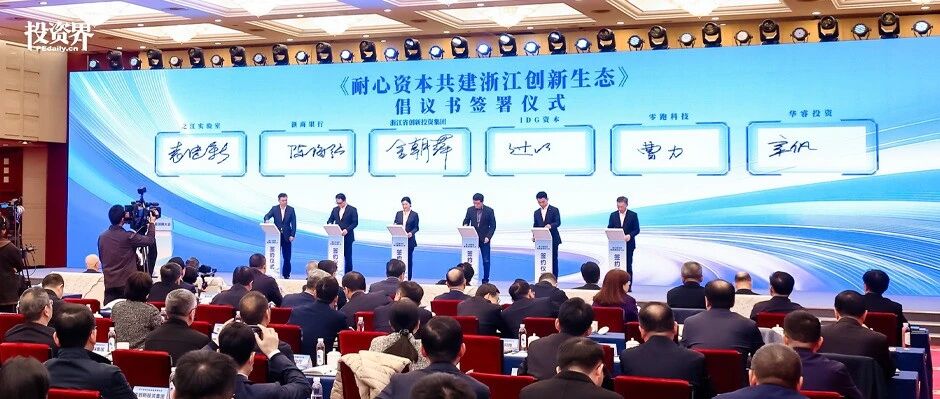
今天,投资人集体去浙江
投资界· 2026-03-24 09:37
Core Viewpoint - Zhejiang Province has established itself as a vibrant hub for venture capital and innovation, with a total provincial fund scale exceeding 3000 billion yuan, supporting over 1800 local enterprises and facilitating the successful listing of more than 100 companies [2][5][6]. Group 1: Fund Structure and Scale - The provincial fund system in Zhejiang has surpassed 3000 billion yuan, covering all stages from seed to growth and mergers [5]. - The Zhejiang Social Security Science and Technology Fund, established in October last year with an initial scale of 500 billion yuan, has already invested in 8 projects totaling 1.3 billion yuan and is in the process of selecting sub-funds exceeding 300 billion yuan [5][6]. - The "4+1" special fund group, focused on advanced manufacturing and technological innovation, has a scale of 745 billion yuan and has invested in over 500 projects totaling 450 billion yuan [6]. Group 2: Investment Philosophy and Ecosystem - Zhejiang aims to cultivate "patient capital" that allows various funds to enter, invest effectively, manage well, and exit smoothly, thereby enhancing the investment ecosystem [4][11]. - The province's fund system emphasizes long-term investment horizons, with some funds having a maximum duration of 20 years, which is rare in the current venture capital landscape [6][10]. - The government is committed to creating a supportive environment for innovation, allowing for a collaborative ecosystem where venture capital can thrive [8][10]. Group 3: Strategic Partnerships and Future Goals - Strategic partnerships have been formed, such as the collaboration between the Zhejiang Innovation Investment Group and Zhejiang University, aimed at building a robust innovation ecosystem [2][11]. - By 2030, the provincial fund scale is projected to exceed 5000 billion yuan, aiming to leverage various capital sources to invest over one trillion yuan in Zhejiang [7][11]. - The focus is on creating a conducive climate for innovation, with a significant influx of high-end resources and capital into the region [9][10]. Group 4: Case Studies and Success Stories - Companies like Blue Arrow Aerospace and Qianxun Intelligent have benefited from the provincial government's investment strategies, showcasing the effectiveness of the supportive capital environment [10]. - The collaboration between local venture capital firms and government funds has led to significant investments in emerging sectors, reinforcing Zhejiang's position as a leading innovation hub [9][10]. Group 5: Vision for the Future - Zhejiang's approach to innovation is not just about immediate gains but about building a sustainable ecosystem that fosters long-term growth and development [13][16]. - The province is committed to enhancing its core competitive advantages in technology and industry, ensuring that venture capital is willing to invest in hard technology and innovative projects [16].
国家创投引导基金,开始“招兵买马”!
证券时报· 2026-03-21 23:55
Core Viewpoint - The National Venture Capital Guiding Fund has begun recruitment just three months after its official launch, indicating a rapid acceleration in its operational pace and a strong demand for professional investment management talent [1][2]. Group 1: Recruitment and Operational Progress - The National Development and Reform Commission has initiated the second batch of public recruitment for 2026, including five positions at the National Venture Capital Guiding Fund, aiming to hire six individuals [1]. - The fund has a three-tier structure: "Guiding Fund Company - Regional Fund - Sub-Fund," focusing on key areas such as Beijing-Tianjin-Hebei, Yangtze River Delta, and Guangdong-Hong Kong-Macao Greater Bay Area [2]. - The Beijing-Tianjin-Hebei Venture Capital Guiding Fund, with a scale of 50 billion yuan, has completed its filing and signed four sub-funds and one direct investment project [2]. Group 2: Investment Strategy and Recommendations - To effectively utilize the National Venture Capital Guiding Fund, a systematic approach is needed, focusing on mechanisms, investment strategies, and ecosystem building [3]. - There is a need to enhance error tolerance and diversification mechanisms in fund performance evaluation, emphasizing overall portfolio performance rather than individual projects [3]. - The fund should adopt a "mother fund + sub-fund" model, allowing specialized GPs to manage investments in niche areas, while the guiding fund acts as a supporter and integrator [5]. - It is crucial to provide not just capital but also "scenarios" and "orders" to early-stage companies, as these can be more valuable than financial investments alone [5].
比2008年更漫长的全球VC/PE寒冬
母基金研究中心· 2026-03-18 08:56
Core Insights - The private equity industry is undergoing a deep adjustment lasting longer than the 2008 financial crisis, with Bain & Company reporting that the industry has returned less profit to investors for four consecutive years while holding $3.8 trillion in unsold assets [2] - In 2025, the allocation of private equity to net asset value remains at 14%, the second lowest level since the peak of the 2008 crisis, despite a 44% increase in transaction value to $904 billion [2] - Fundraising has declined for four consecutive years, dropping to $395 billion in 2025, a 16% year-on-year decrease, as investors demand net internal rates of return exceeding 20% [2] Fundraising and Investment Trends - Private equity firms have sold "gem" assets but struggle to offload less certain assets, with the average holding period for portfolio companies extending from 5-6 years in 2021 to approximately 7 years [3] - In 2025, the total number of transactions decreased by 6% to 3,018, indicating a slowdown in market activity [3] - The Chinese VC/PE industry has entered a cyclical downturn, facing challenges in fundraising, investment, and exit strategies, with many institutions experiencing a "zero action" state [3][4] Market Dynamics and Structural Changes - The industry is experiencing a paradigm shift affecting the entire fundraising, investment, management, and exit chain, transitioning from a quantity-driven to a quality-driven approach [4] - Over 1,000 private fund managers have been voluntarily or involuntarily deregistered in 2025, accelerating the exit of "zombie institutions" from the market [4] - The dominance of state-owned general partners (GPs) in the fundraising landscape has intensified competition for private fund managers, with over 80% of new registrations concentrated among leading institutions and state-owned platforms [5] Development of Patient Capital - State-owned limited partners (LPs) are becoming the main force in developing "patient capital" and long-term capital in China, with measures including extending the duration of existing funds and setting longer terms for new funds [6] - The development of patient capital also implies the need for improved error tolerance mechanisms, encouraging innovation and allowing for flexibility in exit strategies [7] Future Outlook - The year 2025 marks a complete overhaul of the equity investment narrative, moving away from scale-driven models to a new era driven by national strategy, supported by RMB capital and industrial logic [7] - The data recovery in 2025 signals a return of market confidence, with expectations for a structural recovery in the Chinese primary market in 2026, driven by collaboration between state-owned and private GPs [7]

顺义科创:能进能退,做一个“耐心”的产业培育者
FOFWEEKLY· 2026-03-16 10:00
Core Viewpoint - The article emphasizes the importance of being a long-term nurturer of industries rather than chasing short-term projects in a competitive market, advocating for a patient capital approach to foster sustainable growth in technology sectors [2][4]. Group 1: Industry Development and Investment Strategy - In 2025, China is accelerating its move towards the global technology frontier, with local hard-tech companies emerging in fields like AI, semiconductors, and biomedicine, supported by significant investments from state-owned enterprises [3]. - The investment strategy of Shunyi Technology Innovation Group focuses on being an "industry organizer" rather than merely a financial investor, aiming to create a complete ecosystem that integrates capital and services [7][11]. - Shunyi Technology Innovation Group has invested in 20 funds with a total scale exceeding 1000 billion yuan, contributing 2.5 billion yuan and supporting over 170 projects, showcasing its commitment to long-term industrial development [11]. Group 2: Unique Operational Model - Shunyi's operational model includes a clear division of responsibilities among its departments, ensuring a comprehensive support system for enterprises from incubation to industrialization [11]. - The "district-town linkage" model enhances Shunyi's reach in industry cultivation, with partnerships to establish town-level investment funds tailored to local industrial strengths [12]. - The focus on integrating government guidance with market mechanisms aims to create a closed-loop system of "fund + implementation + ecosystem," positioning Shunyi as a core capital engine for high-end manufacturing and technological innovation [12]. Group 3: Long-term Nurturing and Exit Strategy - The concept of "patient capital" is central to Shunyi's investment philosophy, emphasizing the need for a systematic nurturing process that respects industry rules and supports long-term growth [17]. - Shunyi's exit strategy is designed to be a natural outcome of the growth process, ensuring that exits align with the maturity of the invested enterprises [19]. - The nurturing system includes an online and offline integrated support framework, significantly reducing response times to enterprise needs and providing comprehensive assistance throughout different stages of development [18]. Group 4: Future Vision and Recommendations - The collaboration with Tsinghua alumni seed funds aims to create a high-precision radar for early detection of innovative projects, enhancing Shunyi's ability to identify and support potential industry leaders [16]. - The article advocates for a return to value creation in venture capital, encouraging more patient capital to support early-stage hard-tech projects that require long-term technological breakthroughs [23]. - The ultimate goal is to establish Shunyi as a preferred location for the industrialization of top-tier technological achievements, fostering a self-sustaining cycle of innovation and growth [16][24].

永续母基金来了
投资界· 2026-03-16 07:46
Core Viewpoint - The Xi'an High-tech Emerging Industry Investment Fund has announced a significant upgrade, expanding its scale from 50 billion to 100 billion and changing its duration from 30 years to a "long-term/perpetual" structure, marking the first "perpetual mother fund" in Shaanxi Province [5][8]. Group 1: Fund Overview - The Xi'an High-tech Emerging Industry Investment Fund was established in 2016 with an initial scale of 50 billion, focusing on strategic emerging industries and hard technology [6]. - Currently, the fund has invested in 18 sub-funds with a total scale of 167 billion, leveraging external capital by 4.9 times [6]. - The fund has supported 74 local enterprises through direct investments and has cumulatively invested in 440 projects with nearly 120 billion in total investment [6]. Group 2: Recent Developments - The fund's expansion is entirely sourced from the internal system of the High-tech Financial Control, including contributions from Xi'an High-tech Investment (10 billion), High-tech Hard Technology Group (20 billion), and High-tech Financial Services (20 billion) [8]. - The upgrade aims to create a collaborative investment ecosystem by integrating provincial, municipal, and district state-owned assets, industry investment platforms, academic think tanks, and leading enterprises [8]. Group 3: Industry Context - The concept of "patient capital" has gained traction, with the National Venture Capital Guidance Fund launched in December 2022, focusing on hard technology and having a duration of 20 years [9]. - The trend towards longer fund durations is seen as essential for supporting technological innovation and industrial development, particularly in the hard technology sector, which typically requires 10-15 years for maturation [9][10]. - The emergence of perpetual funds is expected to address the historical issue of short fund durations in RMB venture capital, allowing for sustained support of technology projects [10][11].