
长江文化发展

Search documents
量化“软实力” 长江文化发展指数勾勒流域高质量发展新图景
Xin Hua Cai Jing· 2025-11-26 09:05
Core Insights - The report titled "China • Yangtze Culture Development City Index Report 2025" was released, highlighting the correlation between cultural development and economic growth in the Yangtze River basin [1] - A comprehensive evaluation system was established, consisting of 3 primary indicators, 14 secondary indicators, and 37 tertiary indicators, assessing cities on "protection," "inheritance," and "development" [3] - The report indicates a clear trend of regional collaboration in cultural development, particularly in the Yangtze River Delta region, with Jiangsu province leading in the integration of culture and economy [4] Group 1 - The report identifies seven "benchmark cities" including Chongqing, Shanghai, Nanjing, Wuhan, Hangzhou, Suzhou, and Chengdu, all scoring above 75 points, showcasing their leadership in cultural protection, inheritance, and development [3] - Cities such as Changsha, Wuxi, and Ningbo are categorized as "growing cities," while cities like Yueyang, Kunming, and Yibin are seen as "potential cities," indicating a vibrant middle and backup force in cultural development [3] - Nanjing has been recognized for its outstanding performance in cultural inheritance, particularly in artistic creation and digital representation, maintaining a leading position in the number of cultural exhibitions and digital experiences [6] Group 2 - The report emphasizes the establishment of a cultural collaboration network based on large urban clusters, with the Yangtze River Delta cities showing significant advantages [4] - Nanjing's efforts in cross-city cultural heritage protection and resource sharing are highlighted, contributing to the collaborative development framework in the Yangtze River Delta [5] - Technological innovation is identified as a common strategy among cities to enhance cultural inheritance, with projects like Nanjing's "Digital Yangtze" and Chongqing's "Three Gorges Digital Museum" leading the way in digital cultural experiences [7]

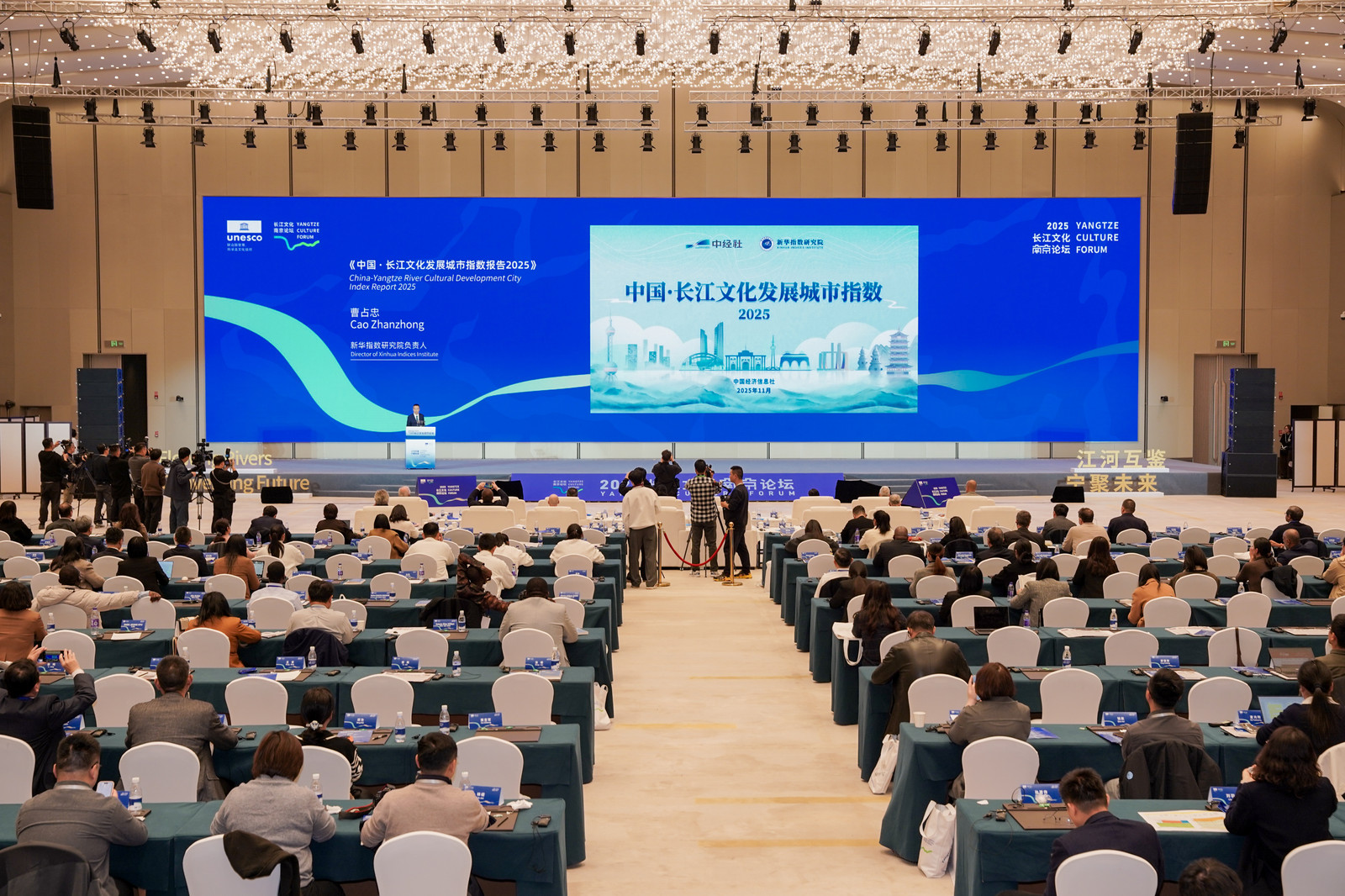
《中国·长江文化发展城市指数报告2025》发布
Nan Jing Ri Bao· 2025-11-24 02:37
Core Insights - The "China Yangtze Culture Development City Index Report 2025" highlights Nanjing as one of the seven "benchmark cities" for cultural development along the Yangtze River [1][2] - The report indicates a positive trend in the cultural development index, showcasing a virtuous cycle between economic growth and cultural preservation in benchmark cities [1] Group 1: Cultural Resources and Research - Nanjing and Wuhan are noted for their rich cultural resources and high research activity, with Nanjing's universities playing a significant role in cultural studies [2] - Nanjing has hosted numerous high-profile academic events and is actively integrating resources to expand cultural initiatives, such as the upcoming "Nanjing Yangtze Culture Civilization Practice Belt" [2] Group 2: Industrial Development and Regional Collaboration - The Yangtze River Delta is emerging as a cultural industry hub, with a shift from simple resource aggregation to deep development characterized by regional collaboration, innovative business models, and ecological empowerment [2] - The report emphasizes the importance of integrating cultural tourism within the Yangtze River basin, moving towards a more interconnected and innovative approach [2] Group 3: Ecological Development - The report highlights the integration of new development concepts along the Yangtze River, showcasing initiatives like the establishment of a provincial-level natural protection zone for the Yangtze River dolphin and a strict "ten-year fishing ban" [2] - These ecological efforts have led to an increase in the dolphin population, demonstrating effective conservation outcomes [2] Group 4: Nanjing's Cultural Identity and Innovation - Nanjing is described as "an ancient capital with new charm," focusing on ecological restoration, cultural symbol refinement, and the integration of cultural practices into daily life [2] - The city aims to stimulate innovation and release cultural value while establishing itself as a practical benchmark for cultural development [2]