间位芳纶湿纺市场

Search documents
行业聚焦:全球间位芳纶湿纺市场头部企业份额调研(附Top 5 厂商名单)
QYResearch· 2025-10-15 02:20
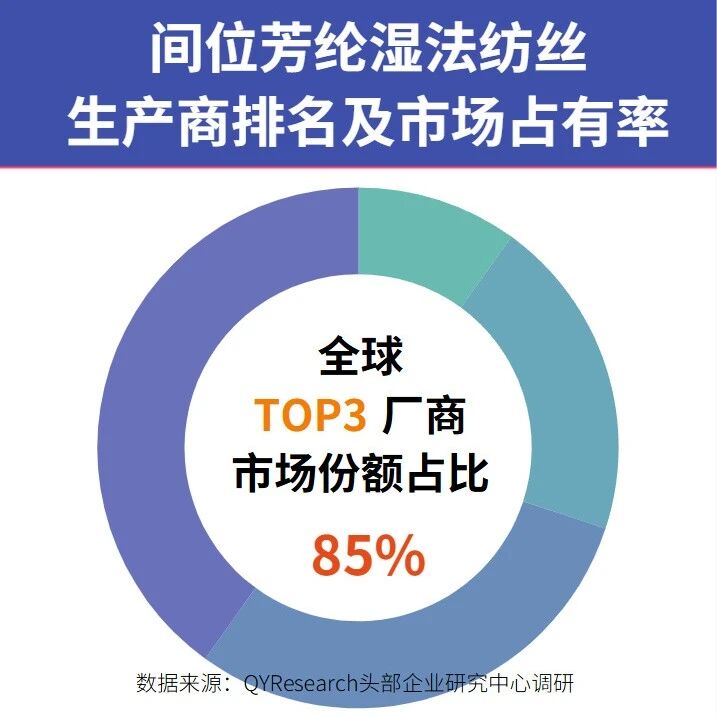
Core Viewpoint - The meta-aramid wet spinning market is a specialized segment within the advanced fiber industry, focusing on the production, application, and commercialization of fibers made from meta-aramid polymers through wet spinning technology. This market is characterized by unique properties of meta-aramid fibers, such as higher thermal stability and chemical resistance compared to para-aramid fibers, making them suitable for various industrial and protective applications [1][2]. Market Overview - The global market for meta-aramid wet spinning is projected to reach $850 million by 2031, with a compound annual growth rate (CAGR) of 6.5% in the coming years. Major manufacturers include Teijin, Huvis, Taiho New Materials, and Supermax New Materials, with the top three companies holding approximately 85% of the market share [4]. Key Players - **Teijin**: A leading manufacturer of high-performance aramid fibers, Teijin's meta-aramid products (Teijinconex®) are integrated into a broader product portfolio, emphasizing reliability and safety certifications. The company focuses on product innovation and sustainability, leveraging its extensive polymer chemistry expertise [5]. - **Huvis**: A large Korean fiber company, Huvis markets its meta-aramid products (METAONE) as high-temperature, high-safety fibers for industrial and protective markets. The company emphasizes its domestic technological leadership and aims to expand its application areas [6]. - **Taiho New Materials**: A Chinese manufacturer focused on rapid capacity expansion and supply chain integration, Taiho aims to meet the growing domestic and regional demand for meta-aramid fibers. The company emphasizes vertical integration to ensure raw material supply and maintain competitive pricing [8]. - **X-FIPER**: A smaller, specialized company focusing on meta-aramid and high-performance aramid paper production. X-FIPER's strategy revolves around niche markets, providing tailored solutions for specific applications [9]. Market Trends and Drivers - The primary driver for the meta-aramid wet spinning market is the sustained demand from safety-critical end applications requiring thermal stability and long-term heat resistance. This includes applications in firefighting gear, industrial protective clothing, and electrical insulation materials [10]. - Increasingly stringent safety and electrical standards in developed economies are enhancing the value proposition of materials that meet these regulations without complex assembly [11]. - Supply-side improvements are being driven by the limited but improving wet spinning capacity and the trend of manufacturers integrating upstream and downstream processes to enhance supply reliability [12]. - Sustainability and solvent management improvements are becoming increasingly important, with pressure from regulators and customers to reduce solvent consumption and improve recycling rates [13]. Challenges - The high capital intensity and technical complexity of wet spinning processes pose significant challenges, making market entry difficult and requiring ongoing capital investment for compliance and efficiency [14]. - Raw material security and volatility remain persistent challenges, as the supply of specific monomers and intermediates can be limited and subject to price fluctuations [14]. - Environmental regulations and community pressures complicate operations, as compliance with stricter discharge standards requires investment in advanced wastewater treatment systems [15]. - Competition from alternative materials and evolving product architectures presents another challenge, necessitating investment in differentiated products to maintain market position [16]. Future Outlook - The market is expected to experience steady incremental growth driven by safety-oriented end uses and strategic shifts influenced by capacity investments and sustainability pressures. Manufacturers demonstrating reliable supply and solvent management capabilities are likely to secure attractive contracts [16].