阁外合作

Search documents
热点问答丨日本“阁外合作”新政权隐患几何
Xin Hua Wang· 2025-10-22 00:49
Core Viewpoint - The election of Sanna Takashi as Japan's first female Prime Minister highlights the challenges and risks associated with the new "outside cabinet cooperation" model between the Liberal Democratic Party (LDP) and the Japan Innovation Party (JIP) [1][3] Election Challenges - Sanna Takashi secured 237 votes in the House of Representatives, surpassing the majority, but only received 123 votes in the House of Councillors, necessitating a second round of voting, indicating a lack of support from over half of the councillors for the new government's policies [1][2] Risks of "Outside Cabinet Cooperation" - The cooperation between LDP and JIP is characterized as a loose "outside cabinet cooperation," where JIP members do not join the cabinet but support LDP in policy and parliamentary operations [3] - JIP's demand for a reduction of approximately 10% in the number of seats in the House of Representatives and the establishment of a consultation mechanism regarding political donations reflects their strategy to maintain distance from LDP [3] Concerns Over Stability - The partnership is perceived as a temporary alliance lacking stability, with JIP's declining influence and internal issues raising concerns about the longevity of the cooperation [4] - The combined seats of LDP and JIP in both houses do not exceed half, leading to uncertainties in policy implementation [4] Internal Discontent and Criticism - Discontent within LDP regarding the cooperation has emerged, with members questioning the lack of thorough discussions on policies agreed upon with JIP [5] - Other opposition parties criticize the cooperation, noting that key policies proposed by JIP have been significantly weakened or postponed in the cooperation agreement [5]
高市早苗组阁成功,“阁外合作”埋下“短命”基因
Xin Jing Bao· 2025-10-21 10:14
Group 1 - High City Sanao has successfully formed a cabinet, becoming Japan's 104th Prime Minister with 237 votes in the first round of the House of Representatives' election, surpassing the majority threshold [1] - The political alliance with the Osaka Restoration Association is characterized as "outside the cabinet cooperation," meaning they maintain their status as an opposition party while supporting High City [2][3] - The new coalition differs fundamentally from the previous Liberal Democratic Party (LDP) and Komeito alliance, as the Osaka Restoration Association does not intend to share the same fate as the LDP in case of political scandals [2] Group 2 - High City Sanao's cabinet appointments include many veteran politicians, indicating a lack of ability to weaken the influence of traditional factions within the LDP [4] - The cabinet's composition suggests that High City may focus more on social issues rather than foreign policy, as she appointed several junior officials to key positions [5] - High City faces significant challenges in implementing her core policy proposals, such as constitutional amendments and economic growth targets, given the current political landscape and her minority government status [6]
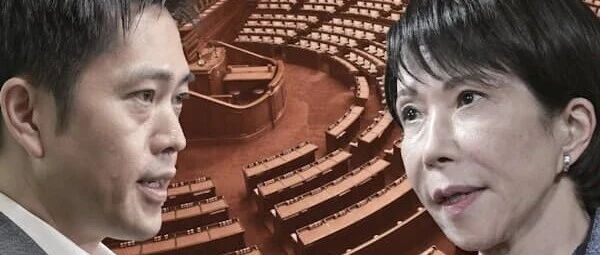
自民党与维新会联合的三种模式解析
日经中文网· 2025-10-20 03:22
Group 1 - The relationship between the Liberal Democratic Party (LDP) and the Japan Innovation Party (JIP) is strengthening, with potential cooperation models including joint cabinet members and policy agreements, which will impact the stability of governance [2][4] - On October 17, LDP President Sanae Takaichi and JIP representative Fumitake Fujita held a second policy consultation regarding the Prime Minister's nomination election and joint governance, with significant progress reported [4] - JIP's Yoshimura indicated that if an agreement on reducing the number of parliamentary seats is not reached, they will not join the ruling coalition, while LDP seeks to form a "complete version" of a coalition government [4][7] Group 2 - The "complete version" of cooperation involves signing policy agreements and having JIP members in the cabinet, which means both parties share responsibility for governance [7] - The relationship between LDP and Komeito has lasted for 26 years, with cooperation on budget proposals and election candidate recommendations, but this does not guarantee long-term governance stability [7][9] - The next level of cooperation is "outside cabinet cooperation," where no cabinet members are appointed, but policy agreements are signed, allowing participation in governance [7][8] Group 3 - The loosest form of cooperation is called "partial alliance," where the ruling party negotiates specific policies with opposition parties, often necessary when the ruling party lacks a majority [9] - The 2024 government led by Ishihara is expected to adopt this cooperative structure due to LDP and Komeito's defeat in the House of Representatives elections, leading to a minority government [9]

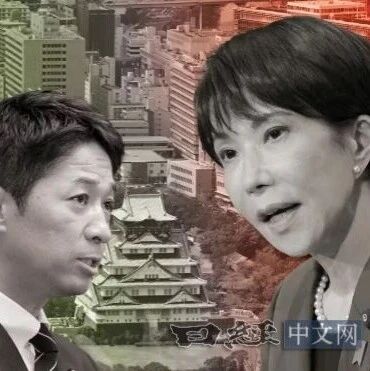
日本自民党与维新党将达成联合执政协议
日经中文网· 2025-10-20 03:22
Core Viewpoint - The Japan Restoration Party, represented by Yoshimura Hirofumi, has reached a preliminary agreement with the Liberal Democratic Party (LDP) to establish a coalition government, focusing on 12 key policy areas [2][5]. Group 1: Coalition Agreement - Yoshimura announced that the negotiations on 12 items have largely reached consensus, and a formal coalition agreement will be signed [2][4]. - The coalition is expected to be an "outside cabinet cooperation," meaning the Japan Restoration Party will not send members to the cabinet [4][5]. - A meeting between Yoshimura and LDP President Takagi Sanae is scheduled to finalize the coalition agreement [4][5]. Group 2: Policy Negotiations - The Japan Restoration Party is advocating for a 10% reduction in the number of members in the National Diet, which the LDP leadership is open to discussing under certain conditions [6]. - There is ongoing discussion regarding a two-year zero consumption tax rate on food, with potential for compromise through cross-party negotiations [6]. - The party is also pushing for a ban on political donations from corporations and organizations, which will continue to be a topic of negotiation [6]. Group 3: Political Context - The agreement with the LDP is crucial ahead of the prime ministerial nomination election scheduled for October 21, where Takagi is expected to be elected as prime minister if the agreement is finalized [5][7]. - The Japan Restoration Party's internal meetings have shown overwhelming support for the outside cabinet cooperation approach, with no significant opposition expressed [5].