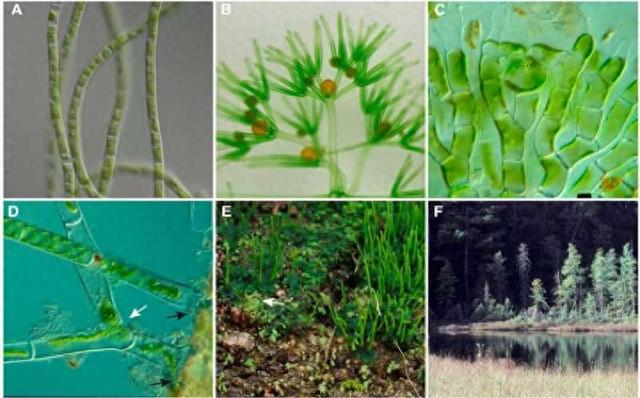
陆地植物起源

Search documents
青年学者发现已知最早轮藻化石 陆地植物起源有了关键证据
Zhong Guo Qing Nian Bao· 2025-06-09 03:46
Core Insights - The research led by Professor Liu Lijing from Northwestern University has identified the earliest known charophyte fossils in the Tarim and Ordos basins of China, pushing the geological record of these fossils back by approximately 28 million years to the Late Ordovician period [1][2]. Group 1: Fossil Discovery - The discovered fossil samples are marine charophyte calcareous thallus fossils from the early Late Ordovician carbonate strata [2]. - The team named the fossil "Miracle Tarim Charophyte," with the holotype specimen sourced from the Tarim Basin [2]. Group 2: Evolutionary Significance - The fossils exhibit features such as branched structures and differentiated nodes, closely resembling modern charophytes, indicating a conservative evolution of charophyte thalli [3]. - The research confirms the evolutionary relationship between land plants and charophytes, providing critical evidence for the hypothesis that land plants originated from charophytes during the Ordovician period [3]. Group 3: Research Background - Liu Lijing's journey began in 2010 during her doctoral studies, where she discovered numerous "bead-like" broken fossils that were not typical red or green algae [4]. - Between 2010 and 2013, she meticulously documented over 10,000 carbonate thin sections, resulting in a valuable collection of 100,000 photographs that laid the groundwork for her later discoveries [4]. Group 4: Collaborative Efforts - Liu Lijing's research has benefited from collaboration with experts from various institutions, leading to significant breakthroughs in the interdisciplinary study of algae and land plant evolution [5]. - In 2019, she published important findings on Ordovician calcified cyanobacteria, contributing to the understanding of atmospheric CO2 levels [5].


西大学者发现并命名奥陶纪“奇迹塔里木轮藻” 为陆地植物起源提供关键化石证据
Zhong Guo Xin Wen Wang· 2025-05-31 11:49
Core Viewpoint - The discovery of the oldest known charophyte fossil, Tarimochara miraclensis, in the Tarim and Ordos basins provides crucial evidence for the hypothesis that land plants originated from charophytes during the Ordovician period, pushing the timeline of charophyte existence back by approximately 28 million years [1][3][5]. Group 1: Research Findings - The study advances the geological record of charophyte fossils from the Late Silurian to the Late Ordovician, indicating a significant evolutionary step towards land plants [3][5]. - The fossil samples were found in marine carbonate rock layers from the early Late Ordovician (approximately 450 million years ago), showcasing key features of charophyte morphology [5][6]. - The research confirms the evolutionary relationship between land plants and charophytes through phylogenetic analysis of 62 traits across various plant groups [5][6]. Group 2: Scientific Significance - This discovery reveals critical morphological innovations, such as multicellular branching and ovule-like reproduction, that occurred before the early Late Ordovician, supporting the hypothesis of land plant origins from charophytes [6]. - The research team, led by Professor Shu Degan from Northwest University, marks a significant achievement in understanding the origins of algae and plants, following previous high-level research in the field of Cambrian animal origins [6].
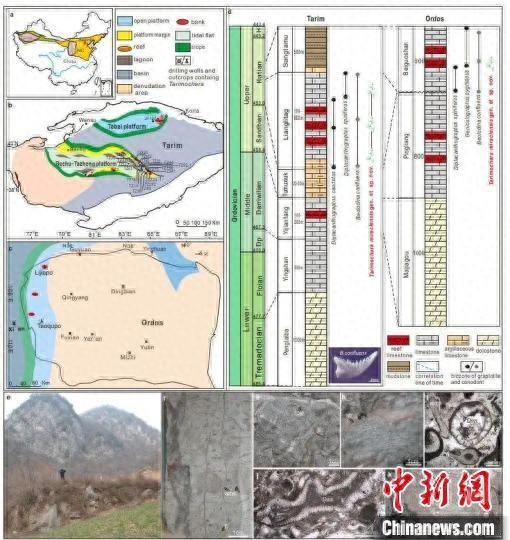
改写生命演化史 我国学者发现4.5亿年前最古老轮藻化石
Zhong Guo Qing Nian Bao· 2025-05-31 11:49
Core Insights - The article discusses the discovery of the earliest known charophyte fossils in the Tarim and Ordos basins of China, which pushes back the geological record of charophytes by approximately 28 million years to the Late Ordovician period, providing crucial fossil evidence for the hypothesis that land plants originated from charophytes [1][2][9]. Group 1: Discovery and Significance - The research published in "Nature Plants" reveals that charophyte fossils were found in carbonate rock layers from the Early Late Ordovician, indicating a significant evolutionary step towards land plants [1][7]. - This discovery challenges previous assumptions about the timeline of land plant evolution and supports the hypothesis that land plants originated from freshwater charophytes [1][2][9]. Group 2: Research Background - The lead researcher, Liu Lijing, began her investigation into these fossils in 2010 while pursuing her PhD, initially studying various algal fossils from the Tarim and Ordos basins [9][14]. - Over the years, Liu and her team conducted extensive research, analyzing over 10,000 carbonate thin sections and documenting around 100,000 images of algal fossils, which laid the groundwork for identifying the charophyte fossils [9][14]. Group 3: Evolutionary Implications - The findings indicate that key morphological innovations, such as multicellular branching and oospore reproduction, had already emerged before the Early Late Ordovician, highlighting the evolutionary link between charophytes and land plants [9][14]. - The research team confirmed the evolutionary relationship between land plants and charophytes through phylogenetic analysis of 62 traits across 13 groups of land plants and charophytes [7][9].