奇迹塔里木轮藻化石

Search documents
改写生命演化史 我国学者发现4.5亿年前最古老轮藻化石
Zhong Guo Qing Nian Bao· 2025-05-31 11:49
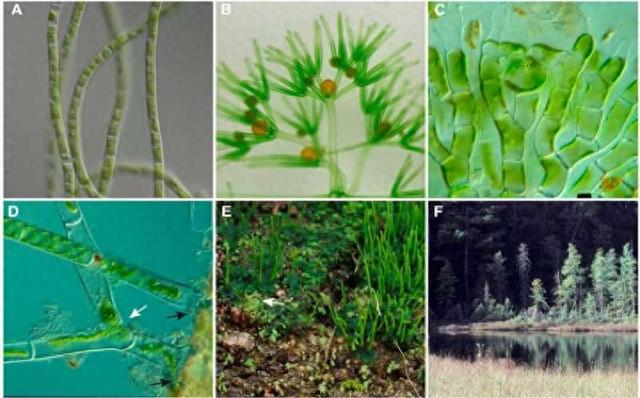
Core Insights - The article discusses the discovery of the earliest known charophyte fossils in the Tarim and Ordos basins of China, which pushes back the geological record of charophytes by approximately 28 million years to the Late Ordovician period, providing crucial fossil evidence for the hypothesis that land plants originated from charophytes [1][2][9]. Group 1: Discovery and Significance - The research published in "Nature Plants" reveals that charophyte fossils were found in carbonate rock layers from the Early Late Ordovician, indicating a significant evolutionary step towards land plants [1][7]. - This discovery challenges previous assumptions about the timeline of land plant evolution and supports the hypothesis that land plants originated from freshwater charophytes [1][2][9]. Group 2: Research Background - The lead researcher, Liu Lijing, began her investigation into these fossils in 2010 while pursuing her PhD, initially studying various algal fossils from the Tarim and Ordos basins [9][14]. - Over the years, Liu and her team conducted extensive research, analyzing over 10,000 carbonate thin sections and documenting around 100,000 images of algal fossils, which laid the groundwork for identifying the charophyte fossils [9][14]. Group 3: Evolutionary Implications - The findings indicate that key morphological innovations, such as multicellular branching and oospore reproduction, had already emerged before the Early Late Ordovician, highlighting the evolutionary link between charophytes and land plants [9][14]. - The research team confirmed the evolutionary relationship between land plants and charophytes through phylogenetic analysis of 62 traits across 13 groups of land plants and charophytes [7][9].