降水情况

Search documents
中央气象台:20日前全国大部气温显著回升 21-24日较强冷空气将影响中东部地区
Xin Lang Cai Jing· 2026-02-17 03:52
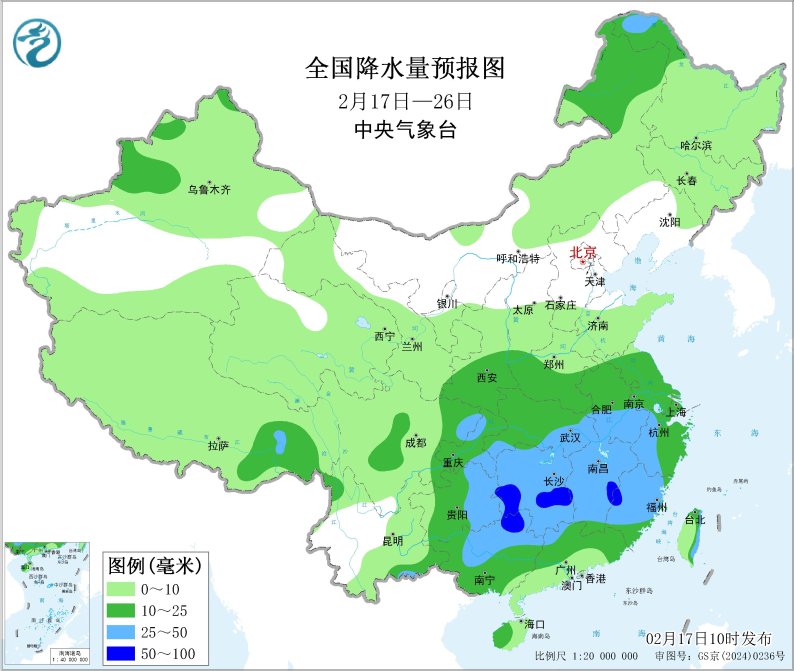
Summary of Key Points Core Viewpoint - The article discusses the recent weather patterns in China, highlighting significant temperature increases and upcoming cold air impacts on the central and eastern regions. Group 1: Recent Weather Conditions - Over the past ten days (February 7-16), most regions in China experienced below-average precipitation, with temperatures 1-2°C higher than normal, and some areas in northern Xinjiang seeing increases of 3-4°C [1][3] - Cumulative precipitation in regions like Jianghan, Jiangsu, and parts of Guangxi ranged from 5 to 20 millimeters, with some areas in northeastern Jiangnan receiving 30-60 millimeters [1] Group 2: Future Weather Forecast - In the next ten days (February 17-26), temperatures in regions such as Xinjiang, North China, Northeast China, and parts of South China are expected to be 1-3°C above normal, while areas like northern Xinjiang and Jianghan may see temperatures drop by 1-3°C [3] - From February 21-24, a strong cold air mass will affect the central and eastern regions, leading to temperature drops of 4-8°C, with some areas experiencing drops of 12-14°C, accompanied by winds of 4-6 levels, and gusts reaching up to 10 levels [5][8] Group 3: Weather Events and Impacts - Between February 17-19, most of the country will have clear to partly cloudy weather, with significant temperature rises, while northern Xinjiang and parts of Northeast China may see light to moderate snow [5] - The period from February 21-24 will bring rain and snow to various regions, with potential thunderstorms in southern areas, and dust storms in parts of Inner Mongolia [9]

我国中东部未来三天升温为主多地冲击20℃ 降水稀少天气干燥
新华网财经· 2026-02-02 12:10
Summary of Key Points Core Viewpoint - The article discusses the weather forecast for the central and eastern regions of China, highlighting a warming trend and minimal precipitation over the next few days, with specific temperature increases and weather conditions detailed. Group 1: Temperature Trends - The central and eastern regions of China will experience a warming trend from February 2 to 4, with temperatures reaching recent highs, particularly in the Yangtze River basin where many areas will approach 20°C [1][3]. - Significant temperature increases are noted, with some areas experiencing a rise of 4 to 8°C, and cities like Zhengzhou seeing temperatures above 10°C [3]. - By February 4, the highest temperatures will reach around 15°C in northern regions, with cities like Shijiazhuang and Changsha expected to hit 14°C and 20°C respectively [3]. Group 2: Precipitation and Weather Conditions - The article indicates that precipitation will be scarce in the central and eastern regions, with rain and snow primarily affecting areas like Xinjiang, Tibet, and parts of Sichuan [5][12]. - Specific forecasts include light snow or rain-snow mix in northern and eastern Tibet, southern Qinghai, and northern Sichuan, with some areas experiencing moderate snow [6][7]. - The article warns of potential fog and haze in regions such as North China and the Huanghuai area due to poor atmospheric dispersion conditions, necessitating health precautions [3][12].

未来一周气温先升10℃再降12℃,多地暖得像3月
Yang Shi Xin Wen· 2026-02-02 05:29
Group 1 - The core viewpoint of the articles indicates a significant warming trend across most regions of China, with temperatures rising by 4-10°C in many areas, particularly in the northeast and southwest [1][2] - From February 5 to 7, a cold air mass will affect the central and eastern regions, leading to a temperature drop of 6-12°C, with some areas experiencing drops of 12-16°C [1][4] - The highest temperatures are expected to reach around 15°C in northern regions and 20°C in southern regions, resembling typical mid-March weather [1][2] Group 2 - The warming trend is particularly pronounced between the Yellow River and Yangtze River, with some areas seeing temperature increases of 4-8°C, and cities like Zhengzhou experiencing temperatures above 10°C [2] - The central meteorological authority forecasts that precipitation will be scarce in the central and eastern regions, with rain and snow mainly occurring in Xinjiang, Tibet, Qinghai, and Sichuan [6] - Air quality concerns are raised due to stagnant weather conditions in regions like North China and the Huanghuai area, leading to light to moderate haze, and in some areas, heavy haze [3]

未来三天我国多地进入“升温模式” 天气干燥需注意补水润燥
Yang Shi Xin Wen· 2026-02-02 00:59
Group 1 - The core viewpoint of the articles indicates that the central and eastern regions of China will experience a warming trend over the next three days, with temperatures reaching recent highs around February 4, particularly in the Yangtze River basin where many areas will approach 20°C [1][2]. - The temperature increase in the central and eastern regions is significant, with some areas experiencing a rise of 4 to 8°C, and the maximum temperature in cities like Zhengzhou exceeding 10°C [2]. - The weather will remain stable in regions such as North China, Huanghuai, Jianghan, and Jianghuai, leading to periods of fog and haze, with some areas experiencing light to moderate haze, and localized heavy haze [2]. Group 2 - Precipitation will be scarce in the central and eastern regions, with rain and snow primarily occurring in areas like Xinjiang, Tibet, Qinghai, and Sichuan [3]. - The Central Meteorological Administration forecasts light snow or sleet in parts of northern and eastern Tibet, southern Qinghai, and northern Sichuan, with some areas experiencing moderate snow [3]. - The public is advised to stay hydrated due to the dry weather in the central and eastern regions, and to be cautious with fire and electricity safety [3].
气温升升降降 下周两股冷空气接连来袭
Xin Lang Cai Jing· 2025-12-25 12:14
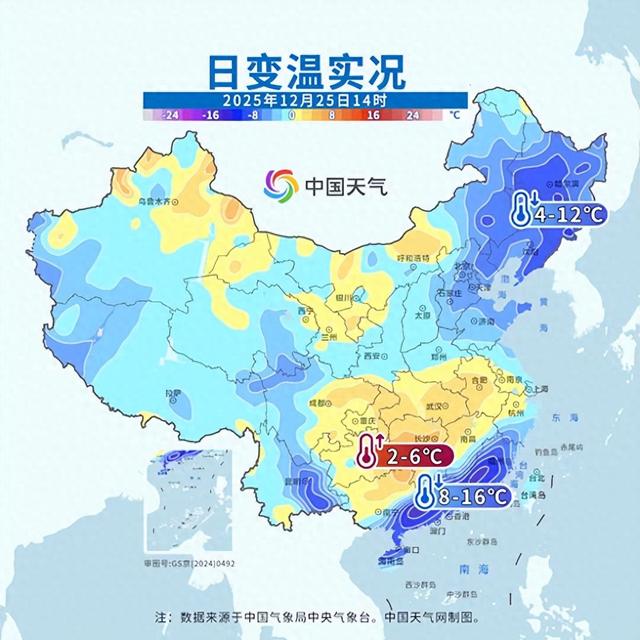
Core Viewpoint - A series of cold air masses are affecting various regions in China, leading to significant temperature fluctuations and potential precipitation events around the New Year period [1][3][6]. Group 1: Current Weather Impact - A cold air mass is currently influencing China, with noticeable temperature drops in regions such as Guangdong and Fujian, where declines exceed 12°C [1]. - The cold air's impact will end tomorrow, with temperatures expected to rebound significantly, with increases of over 8°C in many areas, and up to 15°C in the Northeast [3]. - From December 28 to 30, northern regions will experience temperature drops of 4 to 8°C, with localized areas in Northeast China seeing declines of over 10°C [4]. Group 2: Future Weather Predictions - A notable cold air mass is forecasted for December 31, 2025, to January 3, 2026, which may bring 6 to 8°C drops across most of China, with localized areas experiencing declines over 10°C [6]. - There is uncertainty regarding whether the upcoming cold air will reach the intensity of a cold wave, and the situation will be monitored closely [7]. - Following December 30, a significant precipitation event is expected in the central and eastern regions, with potential snowfall in areas such as North China and the Yangtze River basin, contingent on various meteorological factors [7].
未来十天冷空气频繁,全国大部地区降水较弱
Xin Lang Cai Jing· 2025-12-20 09:50
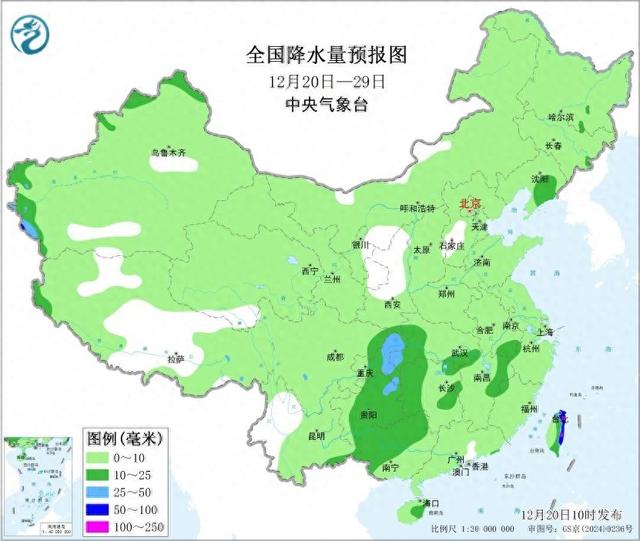
Group 1 - The expected cumulative precipitation from December 20 to 29 in regions such as Xinjiang, Gansu, Shaanxi, Inner Mongolia, Northeast China, Shandong, Jianghan, northern and western Jiangnan, South China, and eastern Southwest China is forecasted to be between 5 to 20 millimeters, with some areas in southwestern Xinjiang, southern Sichuan, Chongqing, eastern Guizhou, and Taiwan receiving 25 to 40 millimeters, and localized areas exceeding 50 millimeters [1] - The cumulative precipitation in Northeast and eastern Southwest regions is significantly above the normal levels for this time of year, with increases of 40% to 80%, and some areas experiencing more than double the usual amounts, while most other regions in the country are seeing significantly lower precipitation [2] - In terms of temperature, most regions in the country are experiencing average temperatures that are 1 to 3 degrees Celsius higher than the same period in previous years, with some areas in northern Xinjiang and the Tibetan Plateau seeing temperature increases of over 4 degrees Celsius, except for western Yunnan, northeastern Inner Mongolia, and the Northeast region where temperatures are lower than normal [4]
这都12月了,气温还能暖到破纪录?!
Yang Shi Wang· 2025-12-16 11:10
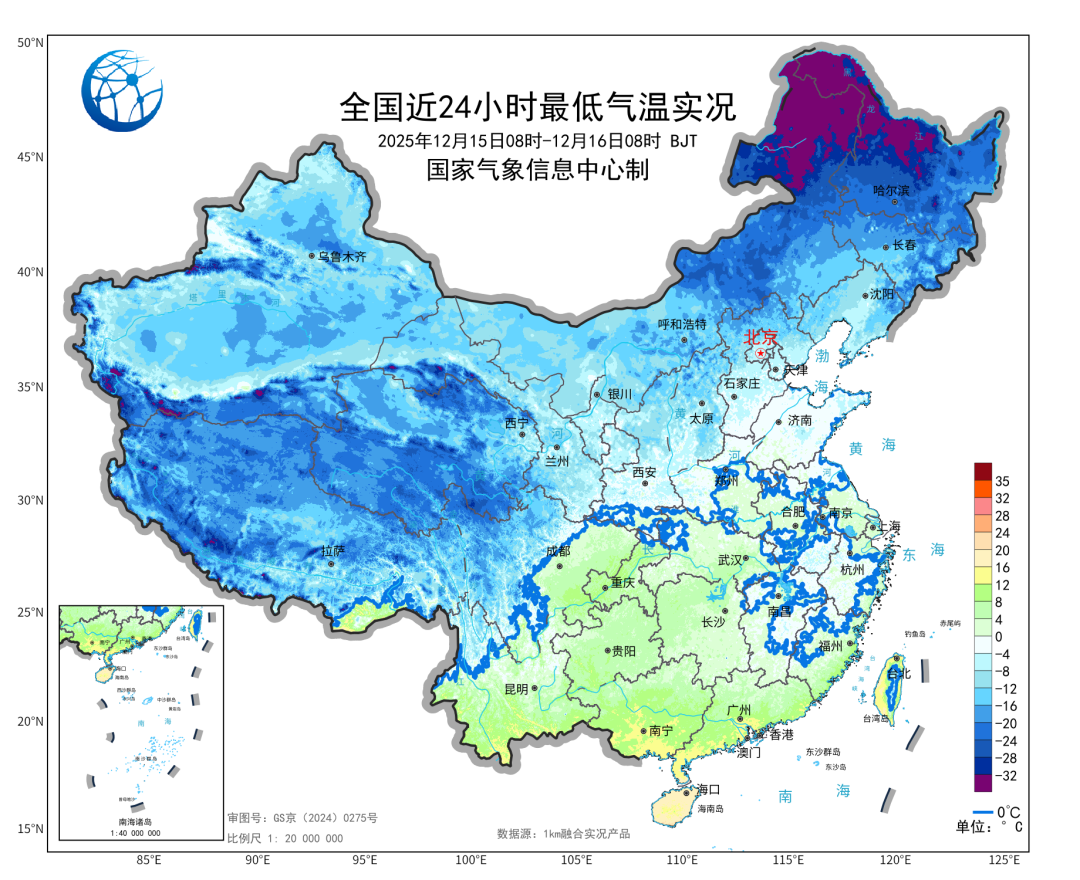
Core Viewpoint - The article discusses the extreme cold weather conditions in northern China, with record low temperatures, followed by a brief warming period before another cold front arrives. Group 1: Current Weather Conditions - The lowest recorded temperatures in northern China include -41.8℃ in Inner Mongolia's Tulihe, -41.5℃ in Heilongjiang's Huzhong, and -41℃ in Mohe, marking new lows for this winter [1] - The perceived temperature in these areas is below -45℃, indicating severe cold conditions [1] Group 2: Temperature Trends - A temperature divergence is observed across the country, with regions south of the Huai River and parts of the northwest experiencing a warming trend, while eastern Inner Mongolia and northeastern areas face a 6 to 10℃ drop due to cold air [3] - From December 18 to 19, temperatures are expected to rise significantly, with the highest temperatures reaching around 20℃ in southern Henan to northern Anhui, which is notably higher than the seasonal average [3] Group 3: Regional Temperature Changes - Notable warming is expected in northeastern and central-southern Yangtze River regions, with average temperature increases of around 10℃, and some areas exceeding 12℃ [4] - Cities like Harbin, Changchun, Shenyang, Hefei, Wuhan, and Changsha are projected to see maximum temperatures on December 19 that are 10℃ higher than the typical mid-December averages, with Hefei potentially reaching 22℃, which could break the mid-December record [5] Group 4: Future Weather Forecast - The warming trend will cease after December 19, as a stronger cold air mass will lead to noticeable temperature drops across the country [7] - Following the winter solstice, temperatures are expected to return to normal or below normal levels, reinstating typical winter conditions [7] - Precipitation is expected to be minimal, with dry and clear weather dominating most regions, although some snowfall is anticipated in northern areas, particularly in Xinjiang and Heilongjiang [7][8]
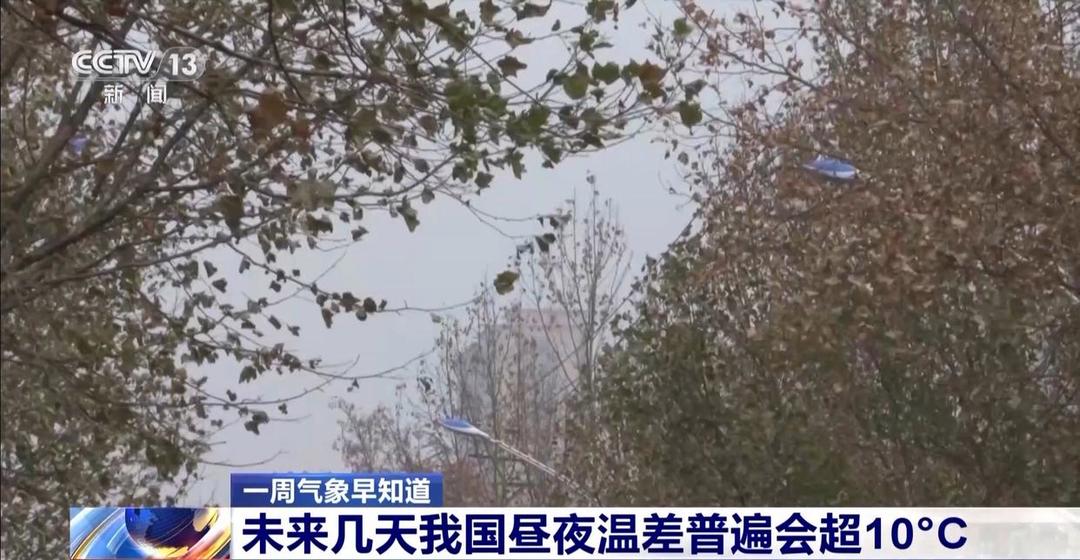
本周我国多地升温明显,昼夜温差普遍超10℃,华北到东北地区南部基本无降水
Yang Shi Xin Wen· 2025-12-15 05:09
Group 1 - This week, significant warming is expected across many regions in China, with temperature increases of 6-10°C in the central and eastern parts, and some areas in Northeast and eastern Jiangnan exceeding 12°C [1][2] - By Friday, temperatures will peak, with most of Northeast China rising above 0°C during the day, and the 10°C line reaching southern North China, while the 20°C line will extend to the Yangtze River region, with temperatures about 10°C higher than the same period in previous years [2][4] - The temperature difference between day and night will exceed 10°C in most areas, with some regions north of the Yangtze River experiencing differences of 15°C to 20°C, necessitating attention to warmth during early and late hours [4][5] Group 2 - Precipitation will initially be sparse but will increase later in the week, with overall intensity remaining low; from Monday to Wednesday, scattered rain and snow will occur in regions such as Xinjiang, Heilongjiang, Yunnan, Guizhou, Guangxi, and Hainan, with significant snowfall expected in northern Xinjiang [5][7] - By the weekend, a larger area from Huanghuai to South China will experience considerable rainfall due to the interaction of cold and warm air masses, with potential for widespread moderate rain in Jianghuai to Jiangnan [7][9] - The northern regions, including North China and southern Northeast China, will see little to no precipitation this week, with afternoon humidity levels dropping below 30%, highlighting the need for hydration and safety precautions regarding fire and electricity [9][11]
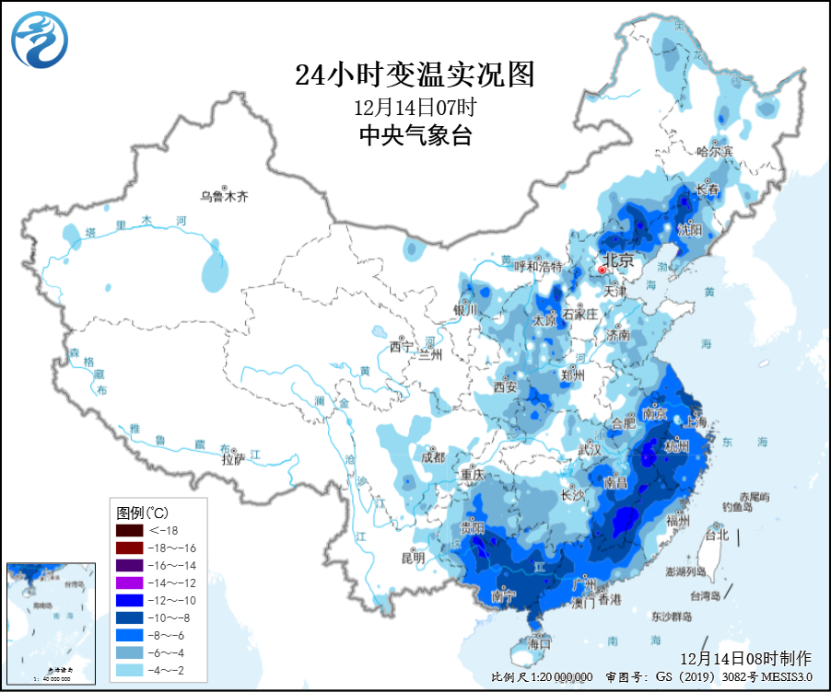
中东部大部地区气温略有反弹 未来三天全国大部地区降水较少
Yang Shi Wang· 2025-12-14 01:17
Group 1 - The central meteorological observatory reports a significant drop in temperatures across central and eastern regions of China, with decreases of 6 to 10 degrees Celsius, and in some areas, over 10 degrees Celsius [1] - A rebound in temperatures is expected in the coming days, but the public is advised to continue taking precautions against cold weather and winter illnesses due to the previous significant temperature drop [1] - A weak cold air mass is anticipated to affect eastern Inner Mongolia and northeastern regions around December 16, leading to a temperature decrease of 4 to 6 degrees Celsius [1] Group 2 - Recent weather conditions have resulted in light snow or sleet in northern Xinjiang, central Inner Mongolia, northeastern regions, and parts of Shandong and Jiangsu, with moderate to heavy snow reported in Dalian, Yantai, and Weihai [2] - The forecast for the next three days indicates sparse precipitation across most of the country, with some areas in northeastern Inner Mongolia and northern Xinjiang experiencing light to moderate snow, and localized heavy snow [2]
中东部大部降水稀少 冷空气活动较频繁
Zhong Guo Xin Wen Wang· 2025-11-19 03:06
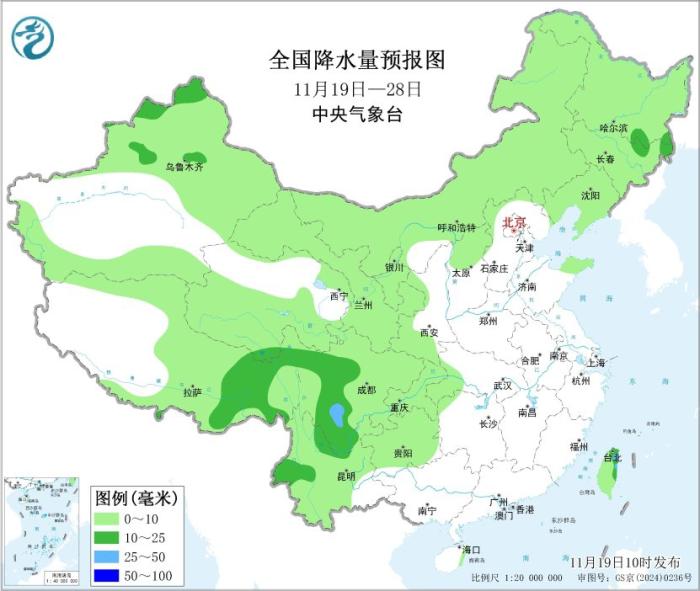
Core Points - The central meteorological station has issued a medium-term weather forecast indicating that most regions in China have experienced less precipitation over the past ten days, with significant temperature fluctuations due to cold air activity [1][3] - The forecast for the next ten days suggests frequent cold air activities, with little precipitation expected in the central and eastern regions of China [1][3] Summary by Sections Recent Weather Conditions - Over the past ten days (November 9-18), areas such as eastern Sichuan Basin, northern Hunan, southeastern Zhejiang, northern Fujian, and parts of Yunnan and Guizhou received 20-40 mm of rainfall, while southeastern Hainan and some areas in Zhejiang and Fujian saw 50-70 mm, which is 50% to 100% above the normal levels for this time of year [1] - Most other regions in China experienced below-normal precipitation during this period [1] Upcoming Weather Forecast - For the next ten days (November 19-28), regions including northern Xinjiang, the Tibetan Plateau, eastern Northwest China, northern North China, and Northeast China are expected to receive 1-5 mm of precipitation, with localized areas exceeding 10 mm. Southwestern regions may see 10-20 mm, while most of the central and eastern regions will have little to no precipitation [1][2] - Average temperatures in northern Xinjiang, most of North China, and Northeast China are projected to be 2-3°C higher than the same period in previous years, while other regions will experience temperatures 1-3°C lower than normal [2] Significant Weather Events - A strong cold air mass is expected to impact most of China from November 22-24, leading to a temperature drop of 6-8°C in most areas north of the Yangtze River, with localized drops of 10-12°C and winds of 4-6 levels [3] - Another strong cold air mass will affect the central and eastern regions around November 26, with similar temperature drops and potential for light to moderate snow in parts of Northwest China, northern North China, and Northeast China [3] Long-term Weather Outlook - For the 11-14 day forecast (November 29-December 2), areas in northeastern Inner Mongolia, Northeast China, and eastern Southwest China are expected to receive 1-5 mm of precipitation, while most other regions will see little to no precipitation [3] - Except for northern Xinjiang and Tibet, where temperatures are expected to be 1-2°C higher than normal, most other regions will experience temperatures 1-2°C lower than the historical average [3]