
集成增产技术

Search documents
科技赋能单产提升 记者探访“大国粮仓”第一线
Yang Shi Xin Wen Ke Hu Duan· 2025-10-11 11:55
Core Insights - China's high-standard farmland area has exceeded 1 billion mu, with over half of the arable land capable of irrigation and drainage, ensuring that over 95% of the crops are grown from domestically bred varieties [1] - The promotion of integrated yield-increasing technologies is essential for enhancing grain production capacity, which includes good land, good seeds, good timing, and good methods [1] - The implementation of yield-increasing actions for rice has been expanded in 2023, following successful initiatives for corn and soybeans in 2022, and for wheat and rapeseed in 2024 [1] Group 1: High-Standard Farmland - High-standard farmland provides a solid foundation for increasing yields, characterized by its flatness which facilitates the operation of harvesting machinery and reduces losses [5] - The flat terrain allows for precise irrigation and drainage, essential for the varying water needs of rice at different growth stages [5][7] Group 2: Technological Innovations - The introduction of high-quality seed varieties with high seed-setting rates and disease resistance is crucial for yield improvement [9] - Innovative sowing techniques, such as "precision strip sowing," enhance seed efficiency and increase seedling rates compared to traditional methods [9] - Improved soil quality, with enhanced water and nutrient retention capabilities, is vital for successful rice cultivation [9] Group 3: Comprehensive Agricultural Services - Establishment of agricultural service centers provides full-process socialized services, ensuring efficient drying and management of harvested rice [11] - The comprehensive management from seedling to harvesting ensures that every grain is accounted for and quality is maintained [11] Group 4: Nationwide Impact - The yield-increasing actions are being implemented in 702 counties across the country, aiming to elevate the production levels of large fields to match those of experimental fields [13]

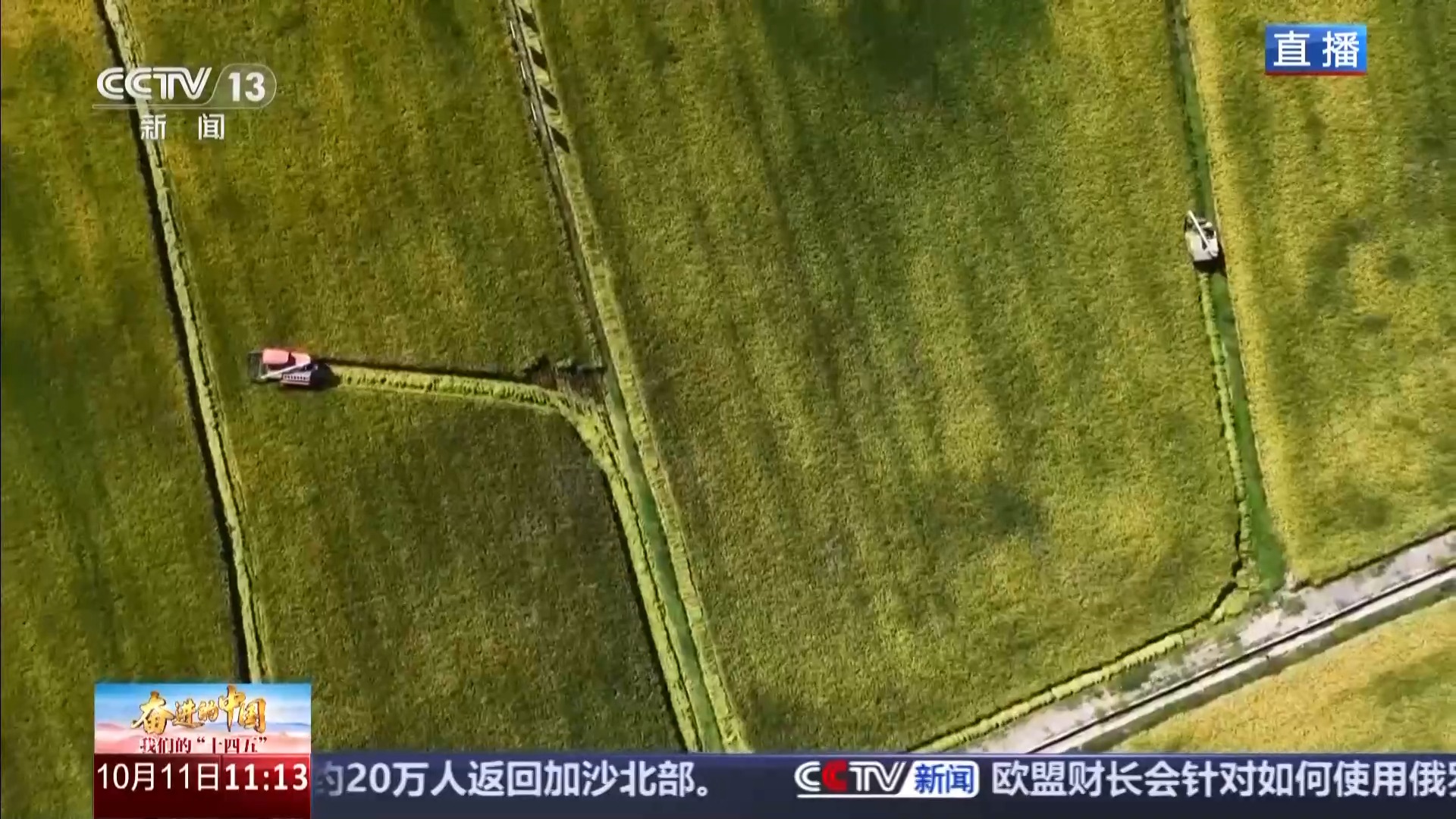
如何让每一粒粮都“颗粒归仓”?记者探访“大国粮仓”第一线
Yang Shi Xin Wen· 2025-10-11 07:29
Core Insights - China's high-standard farmland area has exceeded 1 billion mu, with over half of the arable land capable of irrigation and drainage, ensuring that over 95% of the crop varieties used are domestically bred [1][3] Group 1: High-Standard Farmland - High-standard farmland is tailored to local conditions and crops, providing a flat terrain that facilitates the operation of harvesting machinery and reduces losses during harvesting [5][7] - The flatness of the farmland is crucial for rice production, as it minimizes height differences that can lead to uneven growth due to drought or flooding [5][7] - This type of farmland allows for quick irrigation and drainage, essential for managing water levels during different growth stages of rice [5][7] Group 2: Technological Empowerment - The "Guangde Model" showcases a comprehensive approach to increasing rice yield through technological advancements [8] - The introduction of high-quality seed varieties with high seed-setting rates and disease resistance is a key factor in yield improvement [10] - Innovative sowing techniques, such as "precision strip sowing," enhance seed efficiency and increase seedling survival rates [10] Group 3: Comprehensive Agricultural Services - Establishment of agricultural service centers provides full-process socialized services, ensuring efficient drying of harvested rice [12] - The entire process from seedling cultivation to mechanized harvesting is scientifically managed to guarantee quality and yield [12] - Nationwide, 702 counties are implementing large-scale yield enhancement actions for grain and oil crops, aiming to replicate the success of demonstration fields [14]